PreK–12 Intervention and Supplemental Solutions

Trusted support when you need it most

When students need more support, educators need solutions they can trust. We help you intervene and accelerate instruction via print, digital, and hybrid formats to deliver sustainable student growth.

Built for real classrooms and backed by proof

You shouldn’t have to guess what works. Our research‑based instructional programs deliver measurable gains in literacy and math, supported by decades of classroom results and trusted implementation practices.

  • Proven impact

    Documented double-digit proficiency gains in literacy and math backed by 60+ years of research.

  • Flexible models

    MTSS/RTI-aligned targeted intervention and acceleration support for whole-class, small-group, and independent learning in the settings that work best for your school.

  • Support that lasts

    We help educators get started, stay supported, and keep instruction moving with professional learning and practical implementation.

I love the fact that there’s no guesswork... so you don’t have to have a planning session on what you’re going to teach next week. It’s based  on a scientific process, it marries well with our core curriculum, and our students know exactly what to expect. It just checks every box that we need.

Why it Works

Actionable data that supports next steps

See where students are starting and what they need next. With placement insights and progress monitoring, educators can group students, adjust instruction, and respond faster without adding unnecessary complexity.

Flexible models that fit the way schools work

Whole-class, small-group, or independent. In-school, at-home, or extended day. Our programs support a full continuum of effective models, from teacher-led to student-driven, across print, digital, and hybrid use, so your team can choose what works best for your schedule, staffing, and student needs for both supplemental and intervention use.

Support that goes beyond kickoff

Teachers deserve more than a program. They need support they can use in the moment. Our flexible professional learning models support sustained instructional growth, not just product training. In-person, virtual, on-demand, and side-by-side coaching empower teachers to apply strategies that actually transfer to the classroom.

Solutions

Programs built for every learner, every tier, every subject.

From foundational literacy to Algebra readiness — mix and match to match your MTSS framework.

  • GRADES 3–12

    Corrective Reading

    Direct Instruction reading intervention for older striving readers. Decoding and comprehension strands, scripted lessons.

  • GRADES 3–12

    Achieve3000 Literacy

    An adaptive digital literacy solution that meets students where they are with engaging fiction and nonfiction, building reading proficiency through personalized instruction and targeted skill development.

  • GRADES PREK–5

    Reading Mastery Transformations

    Comprehensive ELA rooted in the Science of Reading and Direct Instruction. Explicit, systematic instruction that flexes from core to tiered intervention.

  • GRADES K–3

    Early Interventions in Reading

    Identifies at-risk early readers and delivers clear, systematic instruction that builds foundational skills and complements any core reading program.

  • GRADES 6–12

    Read to Achieve

    Teaches the portable comprehension strategies adolescents need across science, social studies, and ELA, targeting the challenges older striving readers face.

  • GRADES PREK–1

    Language for Learning

    Builds the expressive and receptive oral language skills young children and English learners need as a foundation for reading and classroom success.

  • GRADES PREK–1

    Phonemic Awareness

    A complete early program whose lessons follow the developmental sequence for teaching every level of phonological and phonemic awareness.

  • GRADES 3–12

    Actively Learn

    A digital curriculum workspace for ELA, science, and social studies that empowers educators to build and customize instruction with standards-aligned content and tools designed to meet their unique needs.

  • GRADES K–12

    ALEKS

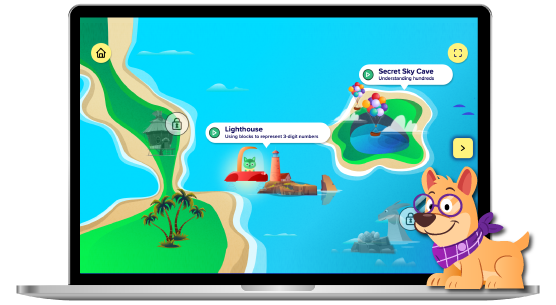
    ALEKS delivers personalized, standards-aligned math learning that pinpoints each student's needs and accelerates growth. ALEKS Adventure (K–5) engages early learners with game-like experiences.

  • GRADES PREK–8

    Number Worlds

    Research-based math intervention for students two or more years below grade level. Rebuilds foundational number sense.

  • GRADES K–8

    Connecting Math Concepts

    Direct Instruction math intervention that teaches concepts and the connections between them through explicit, step-by-step lessons, building mastery from basic facts to algebraic thinking.

  • GRADES 3–12+

    Corrective Mathematics

    Rebuilds essential math skills through seven targeted Direct Instruction modules, breaking complex concepts into clear, manageable steps for older striving students.

  • Multilingual · K–3

    Intervenciones tempranas de la lectura

    A systematic Spanish literacy framework that teaches Spanish-speaking students critical skills, from the alphabetic principle to reading connected text for meaning.

  • Grades K–5

    All Sorts

    A supplemental program that builds essential English skills while cultivating curiosity, celebrating diversity, and helping every student contribute to the classroom community.

Resources to help you plan, implement, and support growth

Explore articles and tools designed to help your team strengthen intervention, support acceleration, and implement with confidence.

Frequently Asked Questions

An intervention program in K–12 education is a targeted instructional strategy, curriculum, or set of services designed to address specific academic needs of students who are not meeting expected benchmarks or grade-level standards. The ultimate goal is to accelerate student progress so learners can perform at or above grade level, reducing the need for long-term specialized services and helping every student succeed.

Supplemental educational services are instructional programs and resources that support and extend core classroom instruction. They provide targeted intervention, additional practice, and skill reinforcement to help students improve literacy and math skills, close learning gaps, and build the confidence needed for success across academic subjects.

Intervention and supplemental instruction both provide additional learning support, but they serve different purposes. Intervention instruction is designed to help students who need targeted, intensive support to address identified skill gaps and accelerate learning. Supplemental instruction enhances core classroom teaching by providing additional practice, enrichment, or reinforcement to strengthen skills and deepen understanding for a wide range of students.

Reading intervention is a targeted, evidence-based instructional approach designed to support students who are reading below grade-level expectations. It provides explicit, systematic instruction in foundational and advanced literacy skills to close achievement gaps and help students become proficient, independent readers. Skill areas commonly addressed are phonemic awareness, phonics, fluency, vocabulary, and comprehension strategy instruction.

Math intervention is a targeted, evidence-based instructional approach designed to support students who are performing below grade-level expectations in mathematics. It provides explicit, systematic instruction to address specific skill gaps and help students build the foundational understanding needed to access grade-level math content. Skills areas commonly addressed include number sense, operations and computation, fractions and decimals, algebraic thinking, problem-solving and computational fluency.

A supplemental reading program is an evidence-based instructional program designed to support and extend core reading instruction. It provides explicit instruction, targeted practice, and skill reinforcement to help students strengthen literacy skills, build reading proficiency, and achieve reading success. Supplemental reading programs commonly develop phonemic awareness, phonics, fluency, vocabulary, comprehension, and writing.

A supplemental math program complements core math instruction through purposeful, explicit instruction and targeted skill development. It reinforces key mathematical concepts, strengthens procedural fluency and mathematical reasoning, and helps students build confidence in applying math skills.

The Multi-Tiered System of Supports (MTSS) framework applies to reading intervention by organizing support levels into tiers. Tier 1 represents high-quality instruction for all students, Tier 2 involves targeted small-group interventions for students needing additional help, and Tier 3 provides intensive, individualized instruction for those with significant difficulties. This tiered approach ensures that reading intervention support is responsive and scalable based on student performance and progress.

Supplemental education programs are designed to extend learning beyond core classroom instruction. They provide explicit, structured instruction, targeted skill development, and purposeful practice to support a wide range of learners. Some programs also include personalized learning informed by student performance data and guided by the teacher.

Top