Corrective Reading logo

Close Literacy Gaps with Powerful, Proven Intervention

Corrective Reading® is a time-tested, research-proven reading intervention solution that closes literacy gaps and builds foundational skills for students in Grade 3 and up.

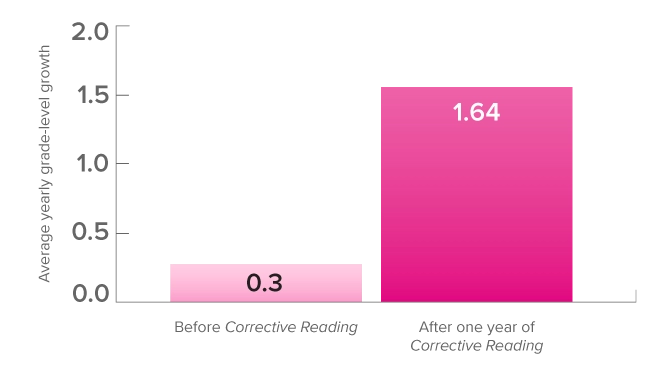
Accelerate Growth Up to Five Times in One Year

Corrective Reading empowers students to achieve mastery through research-validated teaching methods grounded in the Direct Instruction pedagogy, a proven scope and sequence of instruction, and actionable data insights—delivering measurable growth and academic confidence.

Corrective Reading Sets the Standard for Literacy Achievement

Backed by 50 years of proven success, Corrective Reading provides a unique, time-tested approach to sustainable learning growth to help you:

Accelerate Learning

  • Close gaps faster with mastery-based design: 80% review and 20% new material accelerates literacy growth and drives lasting achievement.
  • Reach every learner: Explicit, systematic instruction plus differentiated supports build skills step by step and promote sustainable success.
  • Mastery-level practice: Ample structured, skill-specific practice engages students to not only learn new content but immediately apply it, ensuring mastery through repetition and immediate corrective feedback.

Simplify Instruction

  • Teach with ease: Ready-to-use lessons and real-time guidance simplify instruction and save planning time.
  • Maximize impact: Explicit routines, corrective feedback, and scaffolds boost efficiency and instructional effectiveness.
  • Build skills step by step: Simplifying complex tasks lightens cognitive load, keeping students engaged and on track.

Elevate Students, Teachers, and Schools

  • Engage and motivate students: Age-appropriate stories, interactive practice, and progress tracking boost confidence and results.
  • Support the needs of every learner: Placement testing, homogenous student grouping, and ongoing progress monitoring meet the needs of diverse students, including multilingual learners.
  • Empower educators: Field-tested instructional routines, clear lesson plans, and embedded professional development maximize instructional impact.

We really love the intensive focus on many of the skills our high school students should have mastered in elementary school—like phonics and phonemic awareness—as well as the built-in interventions that make it easy to remediate in real time.

Comprehensive Reading Intervention

Two strands, one proven solution—Corrective Reading includes Decoding and Comprehension strands that can be used together or independently, ensuring tailored support for Grades 3 and up. Fully integrated assessments ensure students are placed at the appropriate level, progress is monitored, and students are guided appropriately through the program.

  • New 2027 Edition Coming Soon

    Corrective Reading Decoding

    Corrective Reading Decoding supports students reading below grade level by addressing all critical components of reading—phonemic awareness, phonics, fluency, vocabulary, and comprehension.

  • Corrective Reading Comprehension

    Corrective Reading Comprehension delivers intensive, language-based instruction for students needing support with vocabulary, background knowledge, and reasoning skills. Structured lessons build the foundations essential for strong comprehension.

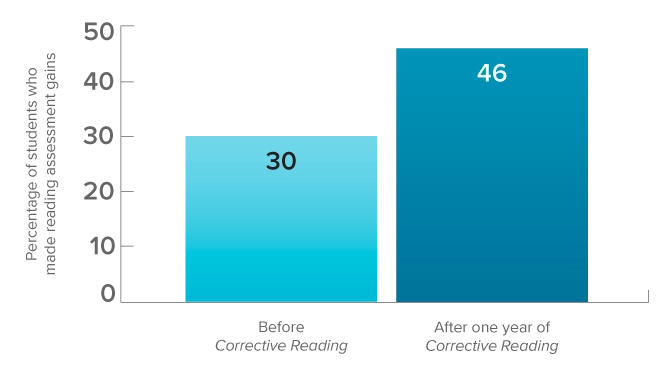
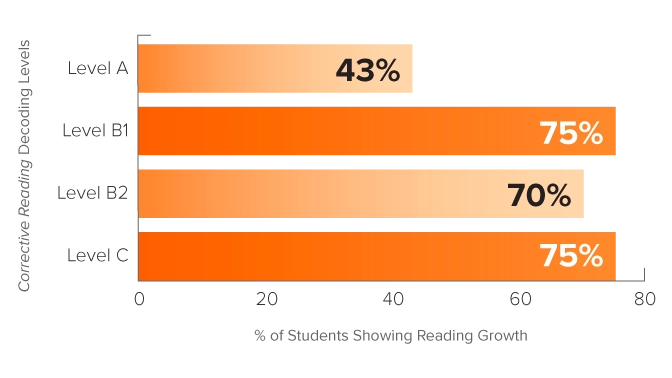
Corrective Reading Delivers Measurable Success

Within 15 weeks, several Grade 9 students who had never been exposed to Corrective Reading before, made three- and four-year gains.

Frequently Asked Questions

Corrective Reading is a structured literacy intervention program designed to support students in Grades 3–12 who need additional help developing decoding and comprehension skills. Grounded in the Science of Reading and backed by over 50 years of proven results, the program provides explicit, systematic instruction through carefully prescribed lessons that help students build foundational reading skills, accelerate progress, and close achievement gaps. Corrective Reading supports a wide range of learners, including students reading below grade level, multilingual learners, striving readers, and students who need targeted intervention in word recognition, fluency, vocabulary, comprehension, and critical thinking skills. Schools and districts also use Corrective Reading to support intervention efforts in MTSS, Title I, special education, and general education settings. Through structured lessons, guided practice, immediate feedback, and progress monitoring, Corrective Reading helps students develop the skills and confidence needed to become successful, independent readers. Educators searching for programs for struggling readers or students with reading difficulties often choose Corrective Reading because of its long-standing research base and measurable results.

Corrective Reading includes two instructional strands, Decoding and Comprehension, designed to provide targeted reading intervention for students in Grades 3–12.

Key program components include:

  • Teacher Presentation Books with step-by-step instructional guidance
  • Student Books and workbook exercises for guided practice and application
  • Placement assessments to determine appropriate instructional levels
  • Built-in progress monitoring and fluency checks to track student growth

Corrective Reading Decoding ©2027 also includes print and digital components to support flexible implementation. Teacher resources include digital access to Teacher Presentation Books, Teacher Guides, content connections, data and progress monitoring tools, and online professional learning. Student resources include print and digital Student Books, workbook activities, and interactive practice activities.

Corrective Reading placement tests are designed to help educators place students at the appropriate instructional level within the program, rather than assign a specific reading level. The assessments evaluate students’ current reading skills and performance to identify the program strand and lesson level that best match their instructional needs. Placement assessments may include group-administered and individually administered tasks that measure skills related to decoding, fluency, comprehension, reasoning, vocabulary, and oral language performance. Educators use the placement results and placement guidelines to ensure students receive targeted, appropriately leveled instruction designed to support reading growth and success.

Corrective Reading Decoding and Corrective Reading Comprehension are two instructional strands within the Corrective Reading intervention program that target different reading skill needs. Corrective Reading Decoding focuses on foundational reading skills such as phonics, word attack strategies, word recognition, accuracy, and fluency. The lessons use explicit, systematic instruction to help students read words accurately and automatically. Corrective Reading Comprehension focuses on reading for meaning. Lessons develop vocabulary, reasoning, reading strategies, and critical thinking skills to help students understand, analyze, and respond to text with deeper understanding. Because students may need support in different areas of reading development, the Decoding and Comprehension strands can be used independently or together to provide targeted intervention based on student needs.

Corrective Reading helps students who need additional reading support by providing explicit, systematic instruction designed to address gaps in foundational reading skills. The program uses carefully prescribed lessons to help students build decoding accuracy, fluency, and automatic word recognition through structured practice and immediate feedback. Corrective Reading Decoding focuses on essential reading skills such as phonics, word attack strategies, and fluent reading, helping students develop the skills needed to read words more accurately and confidently. Lessons are designed to provide cumulative review and guided practice so students can build mastery over time. Through targeted intervention, progress monitoring, and consistent instructional routines, Corrective Reading helps students strengthen reading skills, build confidence, and make measurable reading progress.

Decoding is the process of translating printed words into spoken language by applying knowledge of letter-sound relationships, phonics patterns, syllable structures, and morphology. It enables readers to accurately recognize and pronounce words while reading connected text. As students develop decoding skills, they learn to identify sounds, blend phonemes, recognize spelling patterns, and read words with increasing accuracy, automaticity, and fluency. Strong decoding skills reduce the cognitive effort required for word reading, allowing students to focus more fully on vocabulary, comprehension, and meaning-making. Decoding is a foundational component of skilled reading and is strongly supported by the Science of Reading. Effective decoding instruction is explicit and systematic, providing students with direct teaching, structured practice, cumulative review, and opportunities to apply skills in connected text.

Students are placed into Corrective Reading levels using placement assessments designed to identify the Corrective Reading instructional level that best matches their current reading skills and instructional needs. Rather than assigning a grade-level reading score or exact instructional reading level, the placement process helps educators determine the appropriate Corrective Reading Decoding or Comprehension level for targeted intervention instruction. Placement assessments evaluate skills related to decoding, fluency, comprehension, reasoning, vocabulary, and oral language performance through a combination of group-administered and individually administered tasks. Educators use placement results and placement guidelines to ensure students receive explicit, systematic instruction aligned to their current skill development and learning needs.

Ready to accelerate literacy in your classroom?


Discover how Corrective Reading can help you close achievement gaps with powerful, proven-to-work reading intervention.

Top