
Carl’s Jr. Switches to Make-to-Order Burgers
Carl's Jr. replaced batch-cooked frozen patties with fresh, make-to-order burgers to improve product quality and customer experience.
- Operations Management by Cachon & Terwiesch
- Global Sourcing & Procurement
- Operations and Supply Chain Management by Jacobs & Chase
- Operations and Supply Chain Management The Core by Jacobs & Chase
- Manufacturing and Svc Process Structures
- Process Analysis
- Process Design and Analysis
- Process Selection and Facility Layout
- Operations Management in the Supply Chain by Schroeder & Goldstein
- Service Process Design
- Service Processes
- Sourcing and Supply Management
- Operations Mangement by Stevenson
- Supply Chain Management
- Managing Operations Across the Supply Chain by Swink, Melnyk, Hartley & Cooper
- Blog
- Article
- OM in the News
- Higher Education


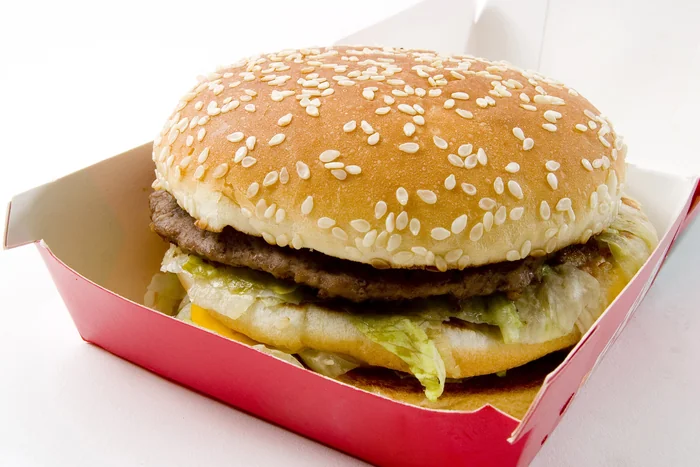
Carl’s Jr. is a fast-food restaurant known for its charbroiled burgers.
It has over 1,000 restaurants, primarily in the Western and Southwestern United States. Recently, it switched to a make-to-order process that cooks fresh hamburger meat once the order is placed.
This departs from their batch process, which used frozen hamburger patties. Their batch process cooked several hamburgers at once through a conveyor broiler. They then held the cooked hamburger patties in a warmer until the sandwich was assembled to order.
Video Spotlight:
- Carl's Jr. Cooked to Order Burgers, Freshly Cut Produce (Sep 3, 2026, Carl's Jr.)
This post is based on the NRN article, Carl’s Jr. Starts Making Its Burgers to Order, by Jonathan Maze, September 1, 2026; the USDA Food Safety and Inspection article, Ground Beef and Food Safety, by the United States Department of Agriculture, February 6, 2025; and the YouTube video in the Spotlight. Image source: Ingram Publishing/SuperStock
Discussion Questions:
1. What is the benefit of a make-to-order system for Carl’s Jr.?
Guidance: The advantages are hotter, fresher burgers. This has resulted in higher customer-service scores for the company.
Additionally, waste is decreased because batch processed patties that spent too much time in the warmer were discarded. The change should make Carl’s Jr. more competitive.
2. What were the benefits of the prior batch system for Carl's Jr.?
Guidance: The batch system let them fill orders quickly and made ordering patties easier, since they could order for a longer time frame. They could make patties in anticipation of high-demand periods. The batch system also allows for more efficient use of equipment.
3. How does the switch from frozen hamburger patties to fresh impact operations?
Guidance: Frozen hamburger patties have an almost indefinite shelf life. However, for optimal flavor and texture, they recommend using them within 4 months. Fresh hamburgers, on the other hand, have a shelf life of 1-2 days.
One of the biggest impacts is inventory management. Frozen patties could be ordered once a month or even once every other month. Fresh hamburger patties would probably need to be ordered daily.
This makes day-to-day sales variation harder to manage with fresh hamburger patties. Frozen patties, with their longer time between orders, allow the day-to-day variation in sales to be averaged out over the reorder period.
As a result, daily forecast accuracy becomes more important to ensure the correct number of fresh hamburger patties are ordered. It is less important for frozen patties.
The location of hamburger patty waste also changes. With fresh patties, waste occurs before cooking. With frozen patties, waste occurs from patties not used in the warmers.
Equipment might also need to be replaced or capacity adjusted. The switch would use less freezer space but more refrigerator space. Hamburger patty warmers could be eliminated.
The grill and kitchen area may also need to be changed. Frozen patties are cooked in batches, which would dictate grill size. However, fresh patties are cooked to order, so grill size would be based on how many need to be cooked during peak demand.
The service time would change as well. Assembling to order doesn’t add cooking time. Fresh patties would require additional cooking time. Batch production also lets the restaurant build inventory in the warmers in anticipation of increased demand. This is not as easy for a make-to-order process.
Adjustments to the hamburger-cooking process will also require retraining workers, as frozen and fresh use different methods. Fresh patties also present a greater safety risk if not cooked correctly.