
Hershey Shifting Chocolate Production Back to Original Recipe
Falling cocoa prices are allowing Hershey to restore original recipes, use more cocoa, and potentially lower prices for consumers.
- Operations Management by Cachon & Terwiesch
- Competitiveness Strategy Productivity
- Global Sourcing & Procurement
- Operations and Supply Chain Management by Jacobs & Chase
- Operations and Supply Chain Management The Core by Jacobs & Chase
- New Product Development
- OPS and Supply Chain Strategy
- Product and Svc Design
- Operations Management in the Supply Chain by Schroeder & Goldstein
- Sourcing
- Sourcing and Supply Management
- Operations Mangement by Stevenson
- Strategy
- Strategy and Sustainability
- Supply Chain Management
- Managing Operations Across the Supply Chain by Swink, Melnyk, Hartley & Cooper
- Blog
- Article
- OM in the News
- Higher Education


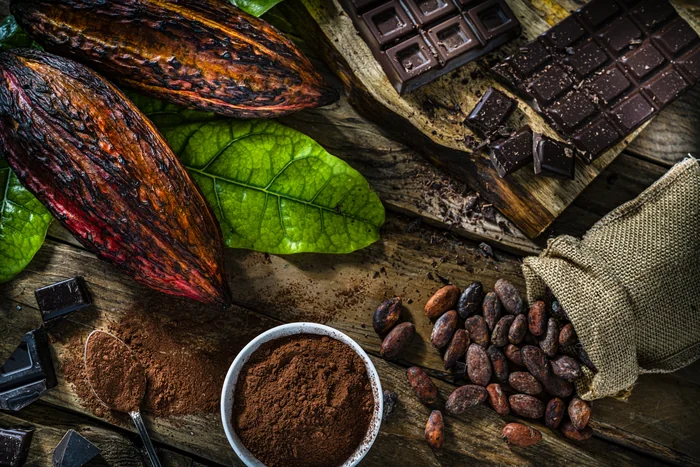
Hershey’s recently announced a shift back to its original chocolate recipes.
Years of escalating cocoa prices and other input costs led to smaller bars, extra wafers and cocoa alternatives. Now, a slump in cocoa bean prices has driven down the cost of chocolate production, and Hershey’s is bringing back the cocoa.
With cocoa futures down nearly 70% since late 2024, the shift is expected to lead to lower shelf prices for consumers, a demand recovery for cocoa farmers, and a partial reversal away from chocolate alternatives made with too little cocoa to technically qualify as chocolate.
Many chocolate companies beyond Hershey’s are expected to follow suit.
After cocoa prices nearly tripled in 2024 due to adverse weather and disease, chocolate makers began modifying snack configuration—shrinking bar sizes, adding more wafers, fruit and nuts and introducing chocolate alternatives. One such example is ChoViva, a cocoa-free chocolate alternative made from sunflower seeds and oats.
Shifting back to more traditional chocolate would be good news for the nearly two million poverty-stricken cocoa farmers located in the top growing regions of Ivory Coast and Ghana.
Video Spotlight:
- Hershey to bring back real chocolate as cocoa prices slump (May 21, 2026, Reuters)
This post is based on the Reuters article, As cocoa prices melt down, real chocolate is making a comeback, by May Angel, Alexander Marrow and Marcelo Teixeira, May 20, 2026; the Climate.Gov article, Climate & Chocolate, by Michon Scott, February 10, 2016; the World Cocoa Foundation article, Rise of the Cacaobots: How AI is Transforming Cocoa Farming, by Anthony Myers, August 26, 2025; and the YouTube video in the Spotlight. Image source: fcafotodigital/E+/Getty Images
Discussion Questions:
1. Pick two to three of the unique characteristics of cocoa farming and harvesting from the "starter list" below, and conduct basic research to expand your knowledge.
Guidance: Here are a list of six unique characteristics to explore.
Strict Geographic & Climate Needs: Cacao beans only grows in hot, humid rainforest environments with heavy rainfall.
Smallholder Dominance: Over ninety percent (90%) of the world's cocoa is grown on small family farms that typically average just five to ten acres.
Cauliflory (Trunk Growth): Unlike most fruit trees, cocoa pods grow directly from the trunk and thickest branches of the Theobroma cacao tree, which makes them easier to harvest with specialized long-handled knives.
Shade-Grown Agroforestry: Cacao trees require heavy shade, particularly in their early years, and are frequently grown alongside taller crops like banana, plantain, or rubber trees.
Continuous, Manual Harvesting: Pods do not all ripen at the same time. Farmers must periodically harvest throughout the year, plucking ripe pods by hand to avoid damaging the tree bark.
Critical Post-Harvest Processing: The specific chocolate flavor develops after harvest. Farmers must scoop the beans out of the pods and ferment them in heaps or boxes for five to seven days, followed by sun-drying for up to fifteen days.
2. How can AI improve cocoa production and harvesting?
Guidance: AI can be implemented in a variety of areas.
In the area of disease and pest management, AI-driven computer vision can serve as an early warning system. Farmers can take smartphone photos of cocoa leaves or pods to instantly diagnose diseases and receive tailored treatment recommendations. Unmanned Aerial Systems (UAVs) equipped with multispectral sensors and AI can map out crop stress across entire farms, identifying disease hotspots before outbreaks spread.
Another area is yield optimization and climate resilience. One technique is pod monitoring, where predictive models analyze thousands of images to accurately predict cocoa pod survival rates and count fruits. Another is precision agriculture, where AI models synthesize environmental and geospatial data to recommend optimal watering and nutrient adjustments to counteract climate-related stressors.
A third area is supply chain traceability, by enabling ethical sourcing. Blockchain-integrated AI helps track cacao beans from the farm to the factory, allowing companies to verify ethical sourcing, combat deforestation, and ensure fair pay for farmers.
A fourth area is market impact and alternatives. With global cocoa markets experiencing severe volatility and poor harvests in West Africa, AI algorithms are being used to create innovative, cocoa-free chocolate alternatives (using upcycled ingredients) to relieve pressure on the supply chain.