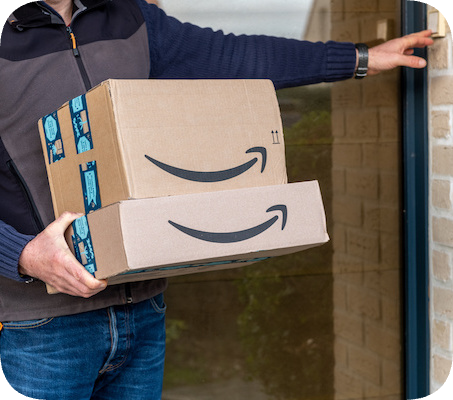
Mega sale event breaks records as shoppers chase discounts.
Tags
Retail, Marketing and Advertising
Inflation
Pricing
Supply & Demand
Chapter 1 Taking Risks & Making Profits
Chapter 2 Economics
Chapter 13 Marketing
Chapter 14 Product & Price
Chapter 15 Distribution
Chapter 16 Place & Promotion
Bonus Chapter B
Blog
Article
Understanding Business
Higher Education
Article Type: Blog
Share:
Retailers once considered July to be a slow month as regular customers spent their money on travel and other activities rather than shopping at local stores. Then Amazon created Prime Day, a 48-hour sales event that turned the middle of July into a bonanza of consumer cash for the e-commerce giant. This past Prime Day was Amazon’s biggest yet, with the company racking up $14.2 billion in sales over the course of two days last week, an 11 percent increase from last year.
According to the data firm Adobe Analytics, Prime Day has grown every year since the promotion started in 2015. And as inflation starts to ease in some areas of the economy, Amazon was able to earn more as consumer demand rose. “Sometimes [Prime Day] hasn’t grown at the pace we’d like to have it grow, sometimes the growth has been more moderate, especially when we’ve been seeing an inflation crunch,” said analyst Vivek Pandya. “Now, we’ve seen inflation ease quite a bit.” In fact, Adobe found that e-commerce prices are down by 4 percent since 2023 and have steadily declined for most of the last two years.
Even though inflation is starting to cool, consumers are still on the lookout for deals to match their stretched budgets. Rather than “impulse-buying” like in the past, today’s shoppers often wait for promotions like Prime Day or similar July sales events held by Target and Walmart. “People are really focused on their budgets,” said analyst Neil Saunders. “Every retailer has to work that little bit harder to get the consumer to part with the cash. That’s not unique to Amazon, but I feel Amazon has learned the lesson really well.”
Questions:
Why did Amazon create Prime Day as a sales event in July?
Why do consumers often wait for sales events like Prime Day to do their shopping?
highered Amazon Earns $14.2 Billion in Sales on Prime Day Mega sale event breaks records as shoppers chase discounts. Amazon Earns $14.2 Billion in Sales on Prime Day Mega sale event breaks records as shoppers chase discounts. Tags Retail, Marketing and Advertising Inflation Pricing Supply & Demand Chapter 1 Taking Risks & Making Profits Chapter 2 Economics Chapter 13 Marketing Chapter 14 Product & Price Chapter 15 Distribution Chapter 16 Place & Promotion Bonus Chapter B Blog Article Understanding Business Higher Education More Article Type: Blog July 26, 2024 Share: Retailers once considered July to be a slow month as regular customers spent their money on travel and other activities rather than shopping at local stores. Then Amazon created Prime Day, a 48-hour sales event that turned the middle of July into a bonanza of consumer cash for the e-commerce giant. This past Prime Day was Amazon’s biggest yet, with the company racking up $14.2 billion in sales over the course of two days last week, an 11 percent increase from last year. According to the data firm Adobe Analytics, Prime Day has grown every year since the promotion started in 2015. And as inflation starts to ease in some areas of the economy, Amazon was able to earn more as consumer demand rose. “Sometimes [Prime Day] hasn’t grown at the pace we’d like to have it grow, sometimes the growth has been more moderate, especially when we’ve been seeing an inflation crunch,” said analyst Vivek Pandya. “Now, we’ve seen inflation ease quite a bit.” In fact, Adobe found that e-commerce prices are down by 4 percent since 2023 and have steadily declined for most of the last two years. Even though inflation is starting to cool, consumers are still on the lookout for deals to match their stretched budgets. Rather than “impulse-buying” like in the past, today’s shoppers often wait for promotions like Prime Day or similar July sales events held by Target and Walmart. “People are really focused on their budgets,” said analyst Neil Saunders. “Every retailer has to work that little bit harder to get the consumer to part with the cash. That’s not unique to Amazon, but I feel Amazon has learned the lesson really well.” Questions: Why did Amazon create Prime Day as a sales event in July? Why do consumers often wait for sales events like Prime Day to do their shopping? Source: Lauren Rosenblatt, “Amazon’s Prime Day Brings Record Sales Again as Shoppers Hunt for Deals,” The Seattle Times, July 18, 2024. About the Author NickelsMcHughMcHugh
Mega sale event breaks records as shoppers chase discounts.