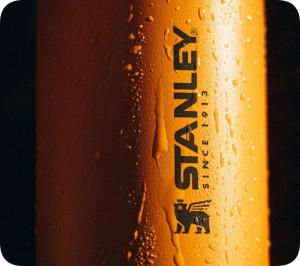
Century-Old Stanley Becomes a Social Media Sensation
Viral tumblers turn heritage brand into Gen Z must-have.
Tags
Entrepreneurship
Ethics
Food & Drink
Manufacturing & Packaging
Retail, Marketing and Advertising
Product Development
Product Distribution
Chapter 1 Taking Risks & Making Profits
Chapter 4 Ethics & Social Responsibility
Chapter 6 Entrepreneurship
Chapter 9 Production & Operations Management
Chapter 13 Marketing
Chapter 14 Product & Price
Chapter 15 Distribution
Chapter 16 Place & Promotion
Bonus Chapter B
Blog
Article
Understanding Business
Higher Education
Article Type: Blog
Share:
Founded in 1913, the Stanley company has sold steel-insulated mugs for more than a century, operating for much of that time as a niche brand with a small but loyal customer base. Over the last few years, however, Stanley tumblers have become ubiquitous products thanks to the company’s canny use of social media. Their brightest moment in the spotlight happened last November when a TikTok user posted a video showing how her Stanley mug survived a car fire with the ice intact. The video has 95 million views and counting, a gigantic viewership that Stanley was quick to capitalize on: not only did the company send the TikTok user more mugs, they also replaced her car.
Stanley has also established partnerships with entertainers and influencers for limited-run items, such as a pink and green tumbler with country musician Lainey Wilson that sold out in 11 minutes. The company has plans to become one of the country’s biggest lifestyle brands by continuing to expand its online presence among potential consumers. Experts say that Stanley’s rapid growth demonstrates the benefits of introducing established products to new audiences through social media marketing. In the 2010s, for instance, lifestyle brands like Casper and Parachute used the Internet to make everyday home items like mattresses seem hip and cool, but they frequently ran into problems with quality. Stanley, on the other hand, has a time-tested product line that has gained a new mystique thanks largely to TikTok.
Of course, fans on social media can be fickle folks, and there is no guarantee that Stanley will remain TikTok’s favorite product in the long term. Along with facing increasing competition from brands like Owala, Stanley has also encountered some Internet backlash from the same audience that first championed it. In recent weeks, discussions on platforms like Reddit, Instagram, and even TikTok have centered on the lead content in Stanley’s tumblers, which the company uses for vacuum insulation. Although consumers are almost certainly in no danger of lead poisoning from the mugs, experts and fans alike are upset that the company would use toxic materials in the first place. “I’m really disheartened and sort of angry that a company like this uses a known toxic ingredient that is banned in many applications for a cup,” said Dr. Jack Caravanos, a professor of public health at New York University. “I mean, surely there could have been an alternative.”
Questions:
How did Stanley use social media to introduce its tumblers to a new audience?
Do you think Stanley will continue to be successful in the long term? Why or why not?
Education Topics/Courses/Understanding Business/Chapter/Chapter 4 Ethics & Social Responsibility
Education Topics/Courses/Understanding Business/Topics/Product Development
highered
2025-08-08T10:52:28.797-04:00
highered Century-Old Stanley Becomes a Social Media Sensation Viral tumblers turn heritage brand into Gen Z must-have. Century-Old Stanley Becomes a Social Media Sensation Viral tumblers turn heritage brand into Gen Z must-have. Tags Entrepreneurship Ethics Food & Drink Manufacturing & Packaging Retail, Marketing and Advertising Product Development Product Distribution Chapter 1 Taking Risks & Making Profits Chapter 4 Ethics & Social Responsibility Chapter 6 Entrepreneurship Chapter 9 Production & Operations Management Chapter 13 Marketing Chapter 14 Product & Price Chapter 15 Distribution Chapter 16 Place & Promotion Bonus Chapter B Blog Article Understanding Business Higher Education More Article Type: Blog January 31, 2024 Share: Founded in 1913, the Stanley company has sold steel-insulated mugs for more than a century, operating for much of that time as a niche brand with a small but loyal customer base. Over the last few years, however, Stanley tumblers have become ubiquitous products thanks to the company’s canny use of social media. Their brightest moment in the spotlight happened last November when a TikTok user posted a video showing how her Stanley mug survived a car fire with the ice intact. The video has 95 million views and counting, a gigantic viewership that Stanley was quick to capitalize on: not only did the company send the TikTok user more mugs, they also replaced her car. Stanley has also established partnerships with entertainers and influencers for limited-run items, such as a pink and green tumbler with country musician Lainey Wilson that sold out in 11 minutes. The company has plans to become one of the country’s biggest lifestyle brands by continuing to expand its online presence among potential consumers. Experts say that Stanley’s rapid growth demonstrates the benefits of introducing established products to new audiences through social media marketing. In the 2010s, for instance, lifestyle brands like Casper and Parachute used the Internet to make everyday home items like mattresses seem hip and cool, but they frequently ran into problems with quality. Stanley, on the other hand, has a time-tested product line that has gained a new mystique thanks largely to TikTok. Of course, fans on social media can be fickle folks, and there is no guarantee that Stanley will remain TikTok’s favorite product in the long term. Along with facing increasing competition from brands like Owala, Stanley has also encountered some Internet backlash from the same audience that first championed it. In recent weeks, discussions on platforms like Reddit, Instagram, and even TikTok have centered on the lead content in Stanley’s tumblers, which the company uses for vacuum insulation. Although consumers are almost certainly in no danger of lead poisoning from the mugs, experts and fans alike are upset that the company would use toxic materials in the first place. “I’m really disheartened and sort of angry that a company like this uses a known toxic ingredient that is banned in many applications for a cup,” said Dr. Jack Caravanos, a professor of public health at New York University. “I mean, surely there could have been an alternative.” Questions: How did Stanley use social media to introduce its tumblers to a new audience? Do you think Stanley will continue to be successful in the long term? Why or why not? Sources: Kyle Chayka, “How the Stanley Cup Went Viral,” The New Yorker, January 30, 2024; Sopan Deb, “A Lead Scare Strikes Stanley Tumblers, but You Don’t Need to Worry,” The New York Times, January 30, 2024. About the Author NickelsMcHughMcHugh
Viral tumblers turn heritage brand into Gen Z must-have.