Pathfinder Perspectives: AI’s Impact on Classrooms and the Future of Education

Educator insights on artificial intelligence, critical thinking, and the future of learning.


Tags: Global Insights Report, Blog, Article, Pathfinder Perspectives, Corporate

Artificial intelligence is rapidly reshaping education, sparking new conversations about how students learn, how educators teach, and what skills will matter most in the future. But as AI adoption accelerates, educators are increasingly focused on a bigger question: How can we harness the power of AI while ensuring that student creativity, critical thinking, and meaningful, human relationships remain at the center of learning?

That question sits at the heart of McGraw Hill's 2026 Global Education Insights Report, where nearly nine in 10 educators expect AI use in education to increase over the next decade, yet 72% do not expect in-person instruction to decline.

To better understand what these trends look like inside real classrooms, we spoke with recipients and honorees of the McGraw Hill Pathfinder Award, a program established in 2022 to recognize educators who bring innovation, creativity, and inventiveness to teaching and learning. Their perspectives offer a valuable glimpse into how educators are navigating the opportunities and challenges AI presents today – and what they’re learning along the way.

Educators Are Optimistic About AI, With Caveats

Across K-12 and higher education, Pathfinder educators described AI as a transformative tool with significant potential to support teaching and learning when implemented thoughtfully and responsibly.

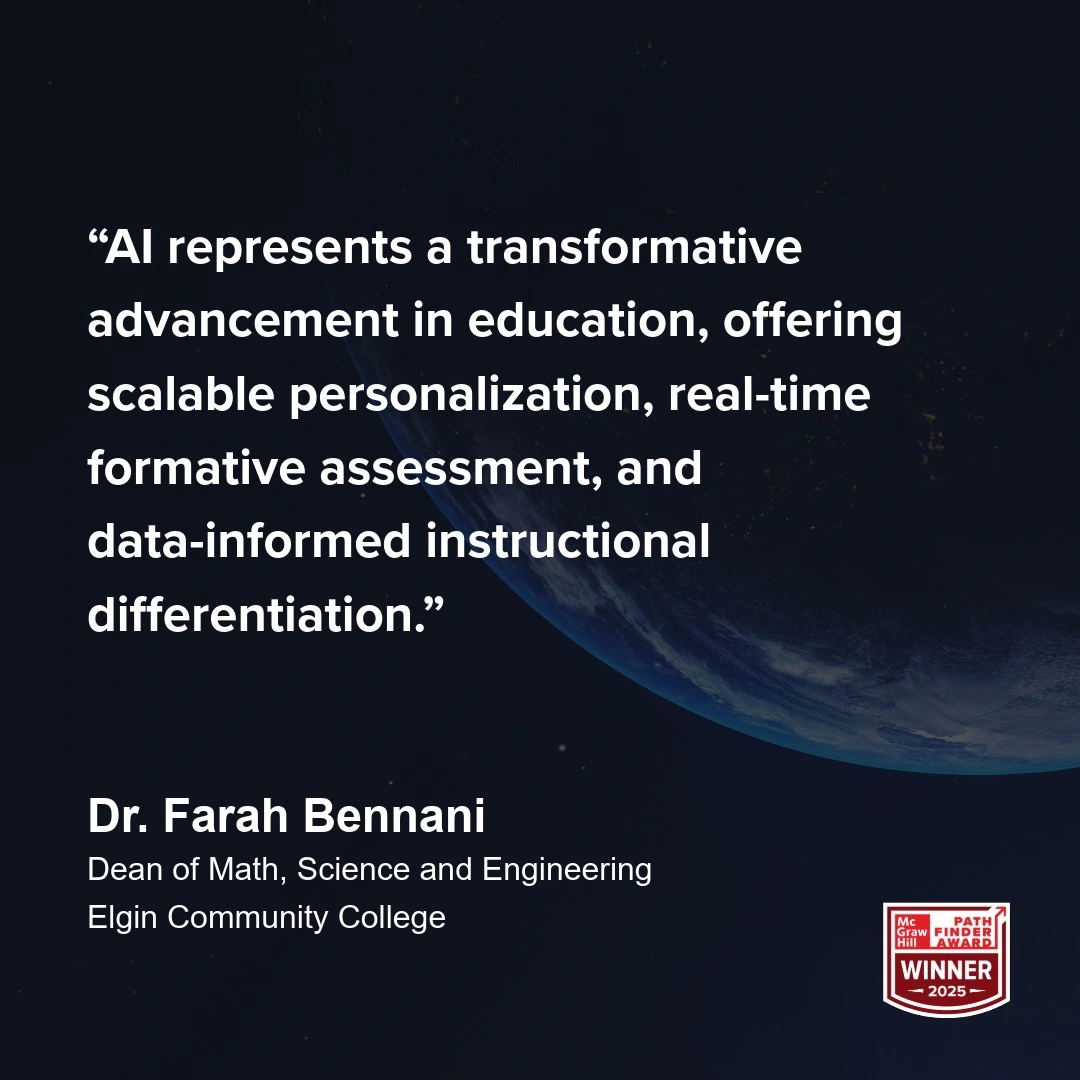
Dr. Farah Bennani of Elgin Community College sees AI as a powerful opportunity to deliver more personalized learning experiences.

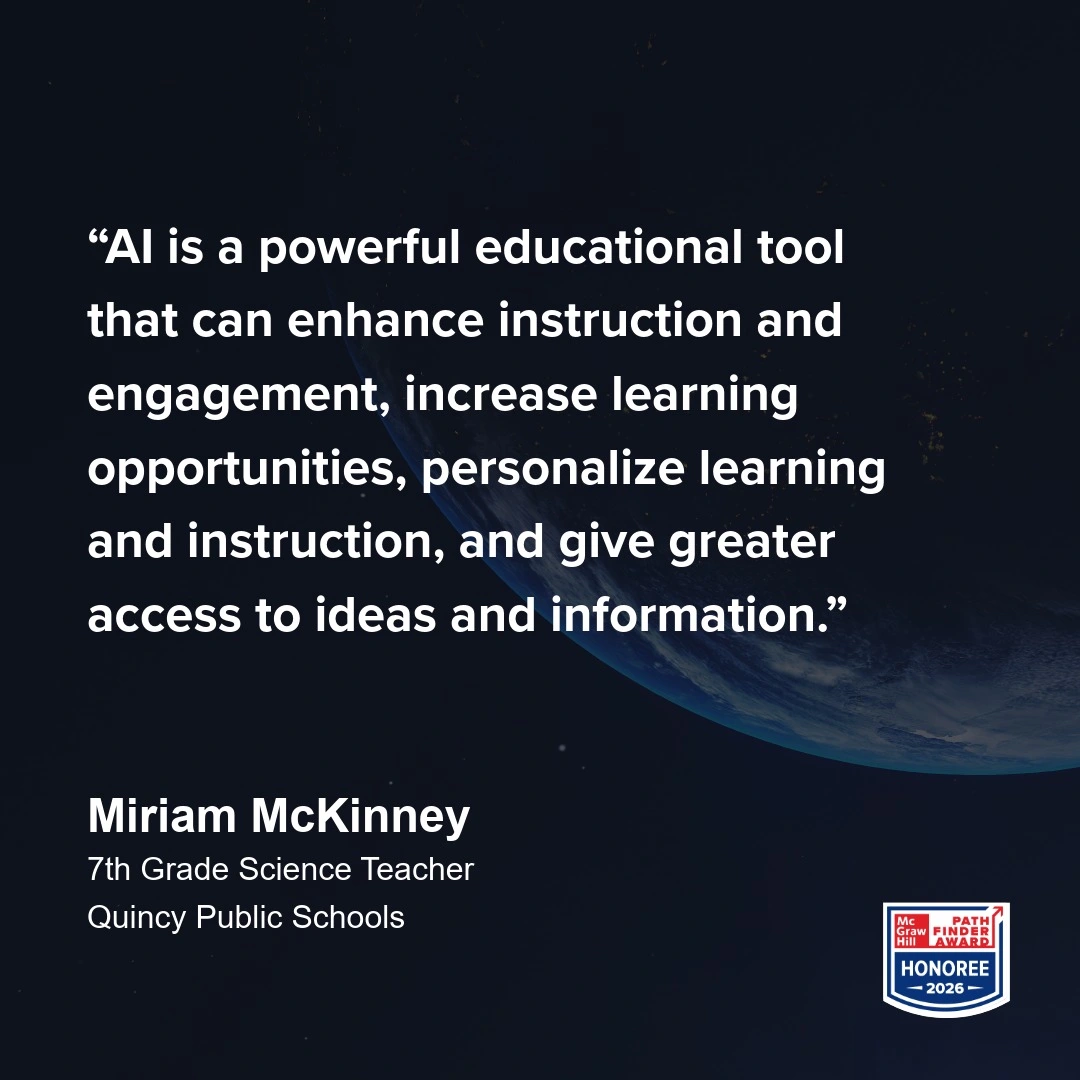
Similarly, Miriam McKinney of Quincy Public Schools believes AI can help educators expand access to learning while supporting student engagement.

Yet educators' optimism comes with an important caveat: trust. The 2026 Global Education Insights Report found that educators are 81% more likely to completely trust AI when it is embedded within educational platforms and curriculum than when students rely on general-purpose AI chatbots. As AI adoption continues to grow, educators are looking for tools that are purpose-built for learning and designed to support, rather than replace, sound instructional practice.

AI’s Ability to Improve Student Success

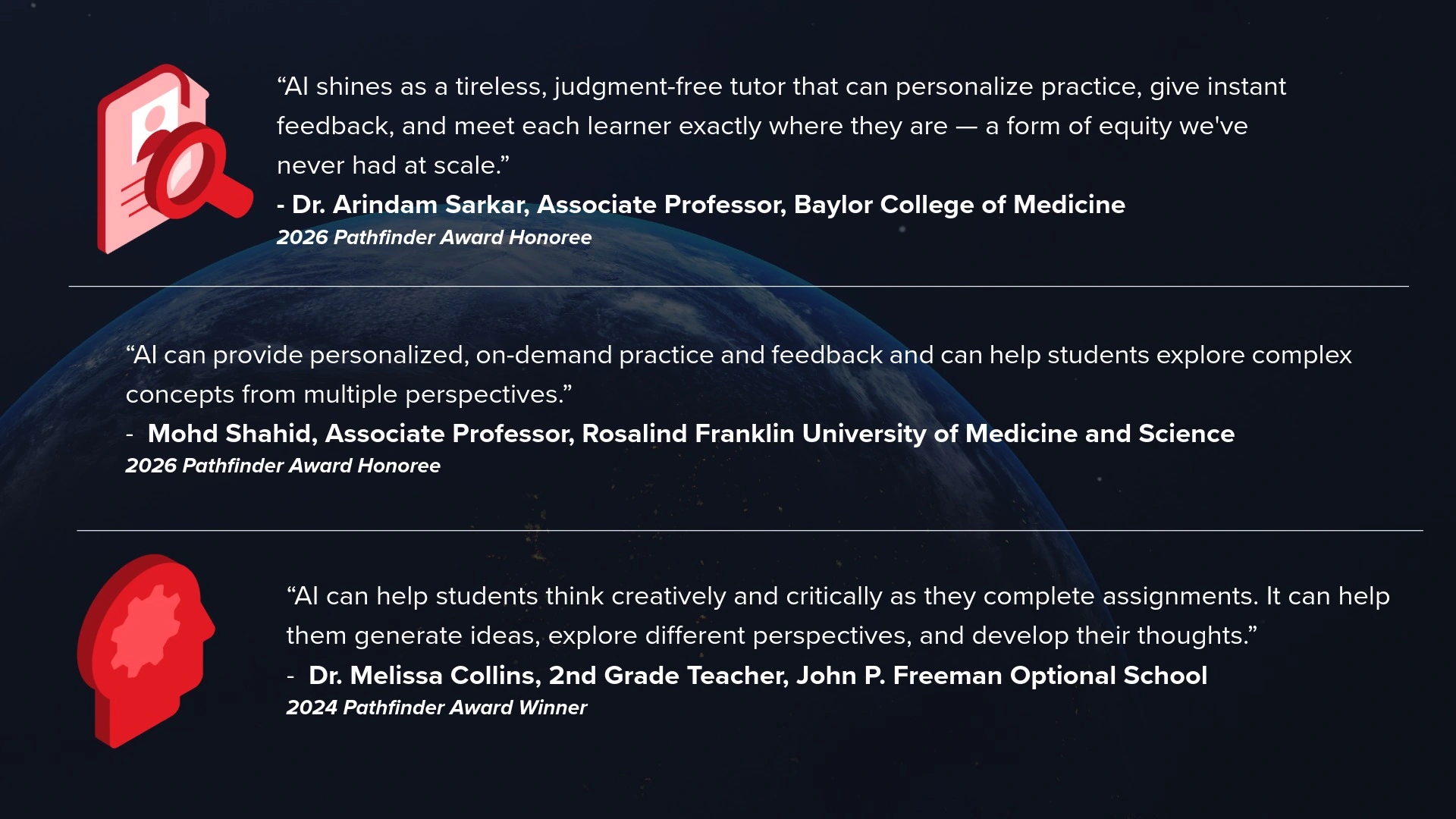
For many educators, AI's greatest promise lies in its ability to provide timely, personalized support that helps students learn more effectively.

Together, these perspectives reinforce a key theme from this year's Global Education Insights Report: educators are not looking to use AI to replace learning. They are looking to use it to enhance learning, helping students overcome obstacles, deepen understanding, and access support when and where they need it most.

Supporting Thinking Rather than Replacing It

At the same time, Pathfinder educators consistently raised an important concern: overreliance.

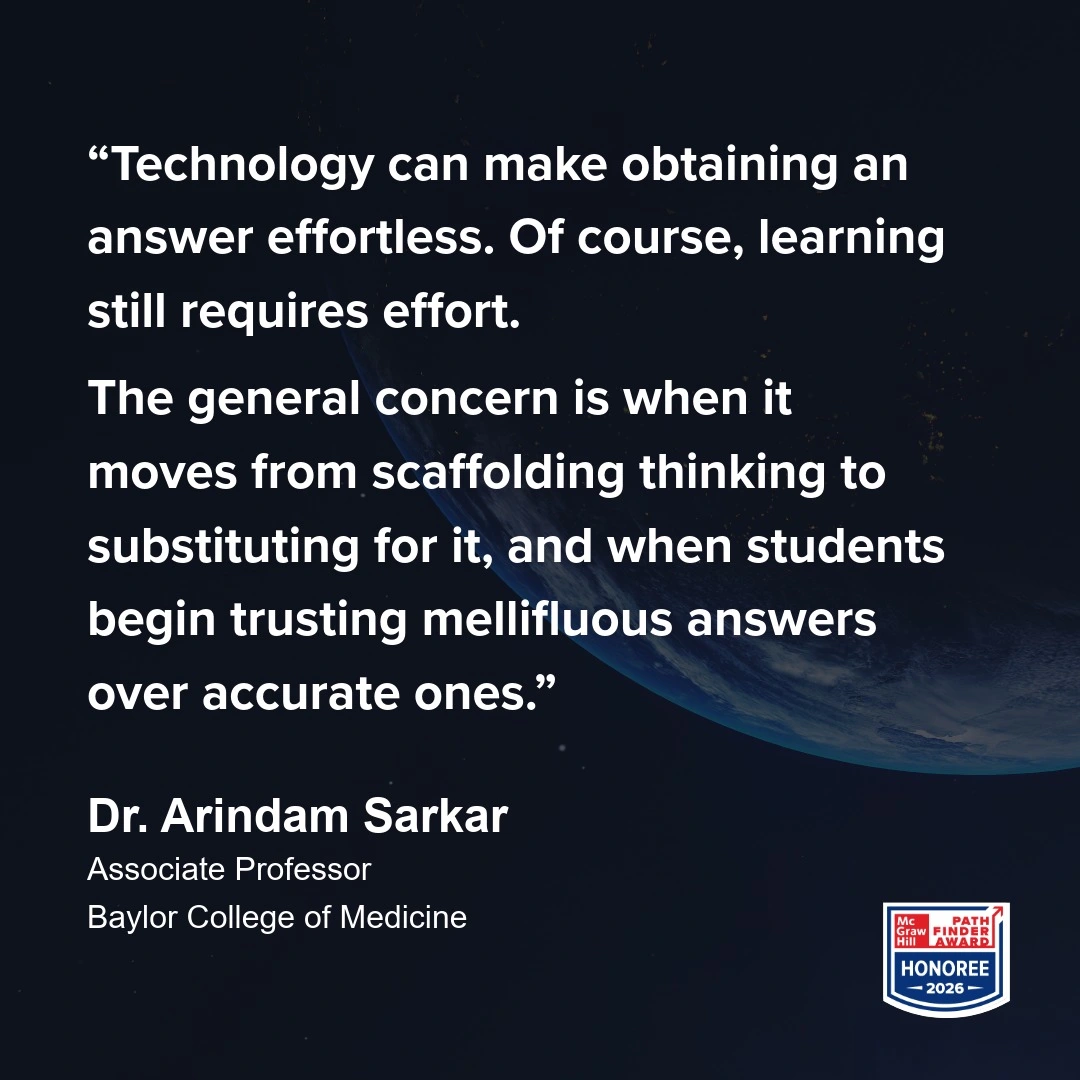
While AI can accelerate access to information, educators emphasized that meaningful learning still requires students to wrestle with ideas, make mistakes, and build understanding through effort. Preserving this "productive struggle" remains essential to developing critical thinking, problem-solving skills, and long-term confidence.

As Dr. Arindam Sarkar of Baylor College of Medicine explained:

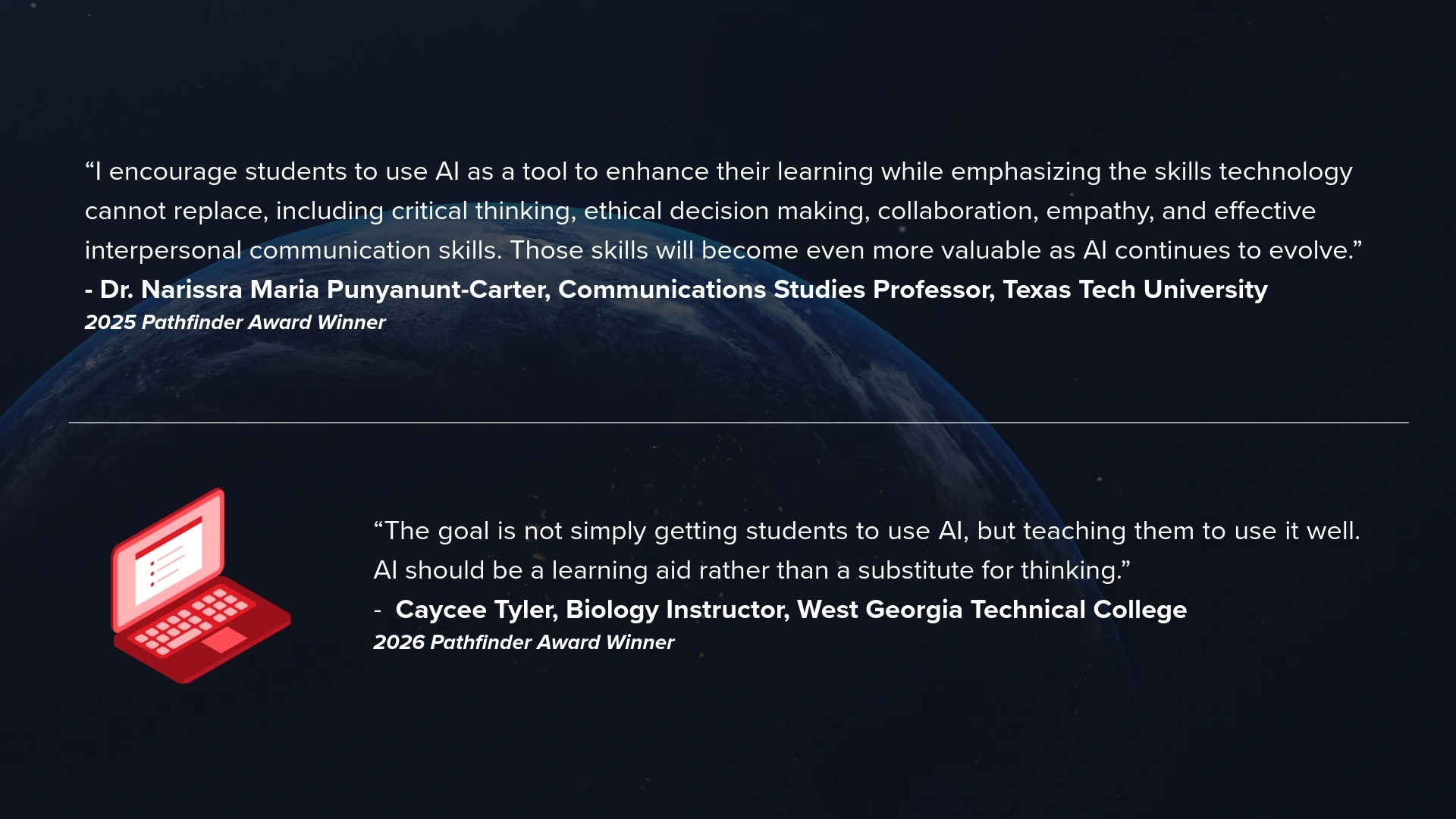
For many educators, the success of integrating AI into their classrooms lies within the intent: 

The Future of Education Remains Human

Perhaps the strongest theme to emerge from the conversation was that the future of education remains fundamentally human.

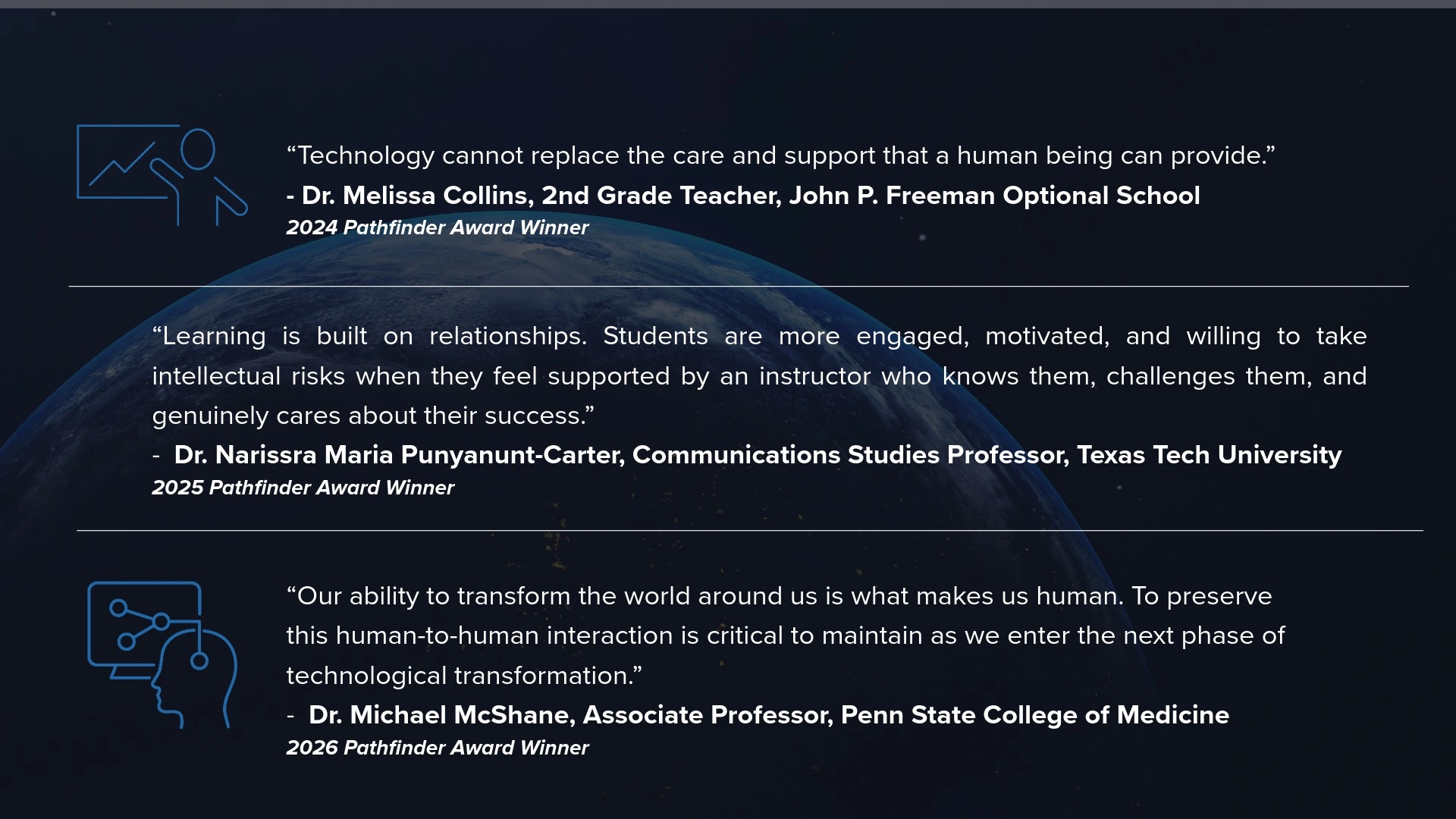
The 2026 Global Education Insights Report found that nearly three-quarters of educators believe social-emotional support and teacher-student relationships cannot be replaced by AI. That sentiment was echoed repeatedly: 

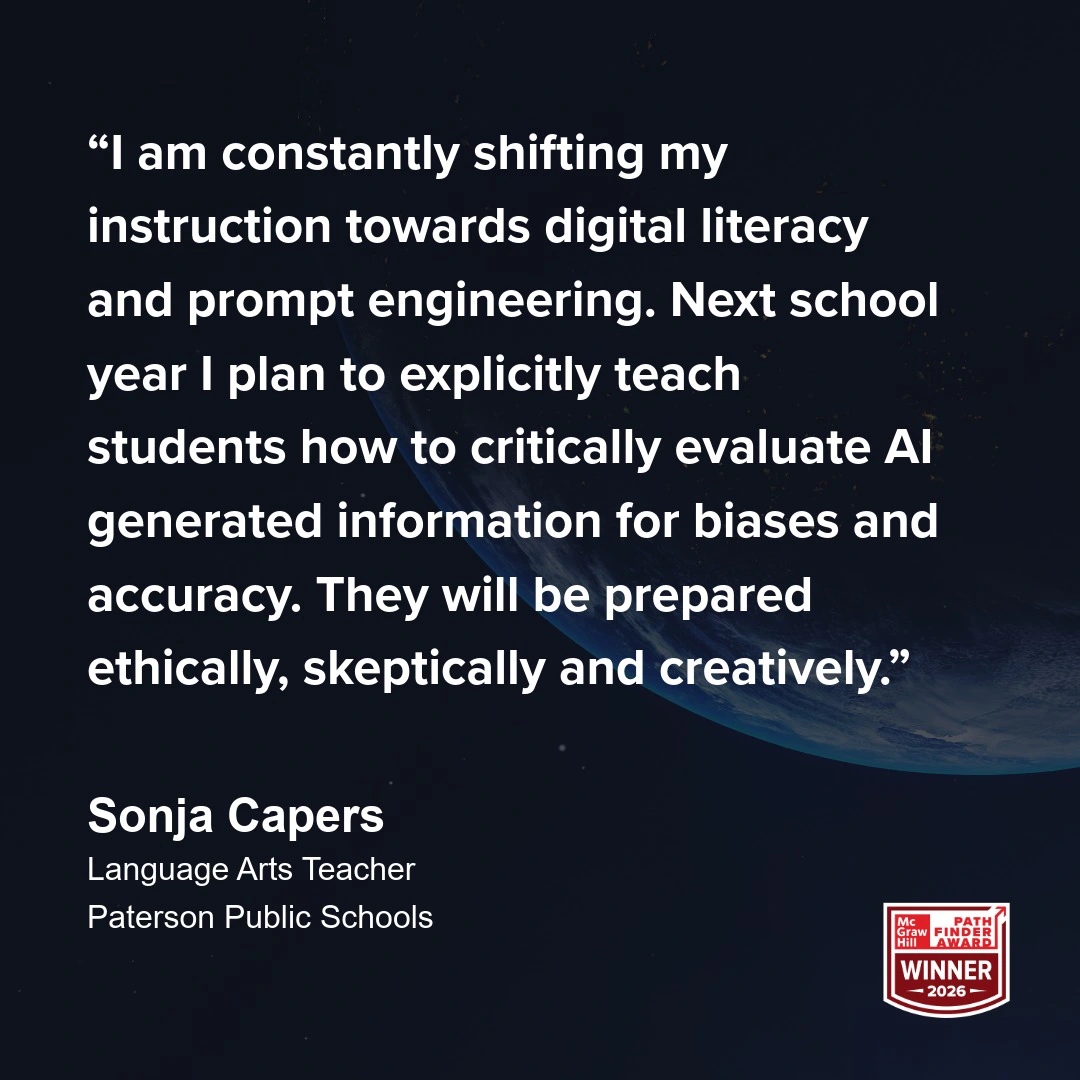
Preparing Students for an AI-Powered Future

The perspectives shared by our Pathfinder Award winners and honorees remind us that the future of education is not about choosing between human intelligence and artificial intelligence. It is about understanding how each can contribute where it matters most. Across classrooms and learning environments, educators described AI as a powerful tool for personalizing learning, expanding access, providing timely support, and helping students engage more deeply with content.

Pathfinder educators also offer a consistent message: AI is best used with intention. While AI can provide answers, it is educators who provide mentorship, context, encouragement, and human connection that transform information into understanding. By harnessing the strengths of both, schools can help students build not only AI literacy, but also the curiosity, resilience, and critical thinking skills they'll need to thrive in an increasingly AI-powered world. 

Learn More