Building Human Intelligence in the Age of AI: The Lesson of the Last Mile

New McGraw Hill CEO shares a vision for AI’s role in education in the future


By: Philip Moyer, President and CEO of McGraw Hill, Inc.
Tags: Artificial Intelligence (AI), Article, Blog, Corporate

The complexity of developing human intelligence exponentially dwarfs any AI model ever invented – which makes the work we do to unlock the potential of each learner the most essential last mile of all.

When I stepped into my role as President and CEO of McGraw Hill in February, it was not the first time I'd been asked if I was worried about the impact of AI on learning.

As AI adoption accelerates across industries, conversation has shifted from curiosity to concern. People in every profession are asking what AI will mean for their future.

But I’m not concerned about AI’s impact on education. I’m excited. While technology and AI can assist us in powerful ways, the challenge of the “last mile” in education will always require humans at the center.

To begin, learning is vastly more complicated than parking a child in front of a computer with an algorithm. It is physical, social and emotional—and specific to age, culture and even time of day. The complexity of the human mind therefore seeks its equal to be educated: a teacher.

Lessons of the Last Mile Brain

Some context: Harvard and Google researchers mapped 1 cubic millimeter of a human brain. It consisted of 57,000 cells with 150 million synapses, with an ability to store 705 million bits of information—all in a space smaller than a grain of rice.

Our brains change every second of the day. As we absorb knowledge, synapses take form, coil, expand, connect and rearrange. Each student therefore arrives in the classroom with a different physical representation of their knowledge. To teach a subject like Algebra 2 successfully, an educator must navigate trillions of distinct learning pathways to build comprehension with a constantly changing brain physiology. The math is staggering. It’s why they feel goosebumps when a student smiles and says, “I get it.”

Lessons of the Last Mile aleks learning path

Which is why human connection matters, and why the role of the teacher becomes even more important in an AI-powered world. The best teachers understand their students, their strengths and the state they arrived in. They know when they need to get their students talking, and when they need silence. They know the right modalities to use at the right time.

Now multiply that by the unique requirements of every student, and every educator, in every school, in every state, in every country in the world. Pedagogy and learning differs by zip code and by instructor.  So we need a new generation of teacher-centric tools that pinpoint and customize learning to escape the boundaries of one-size-fits-all education.

All of this brings me back to the excitement of the current moment in education and what’s ahead.

In the next 50 years, there are countless new trillion-dollar industries that will require new skills, human-based decision making and integration into our cultures: quantum computing, nano particle manufacturing, synthetic biology and so many more.

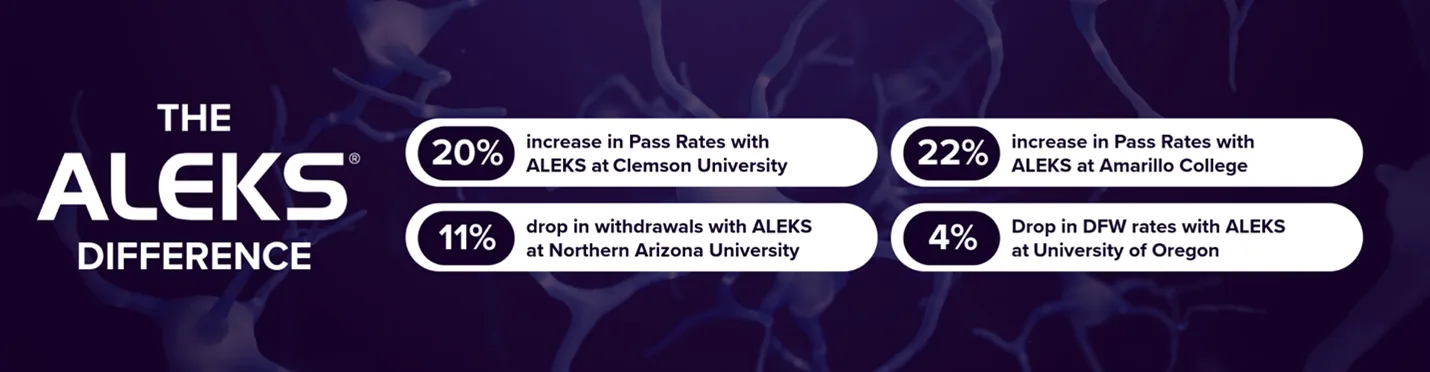
Advancing human intelligence is the key, and it is clear that we can’t expect algorithms and apps to do this for us. In fact, at some learning moments, technology isn’t the best approach. But teacher-centric AI is helping us make real breakthroughs. At McGraw Hill, we have used AI and machine learning for more than two decades in our ALEKS learning solution to help teachers pinpoint the precise level of comprehension for every student in a classroom.

The Aleks Difference

This is not just improving engagement or making learning fun; it is leading to measurable increases in student outcomes. LLMs and GPTs are helping us integrate our vast library of content with data from billions of student interactions to create more personalized lessons, labs and games—not to replace teachers but to extend their reach and effectiveness in the classroom.

AI is expanding what’s possible in education, and the demand for high-quality content, trusted data and new learning opportunities is continuing to grow.

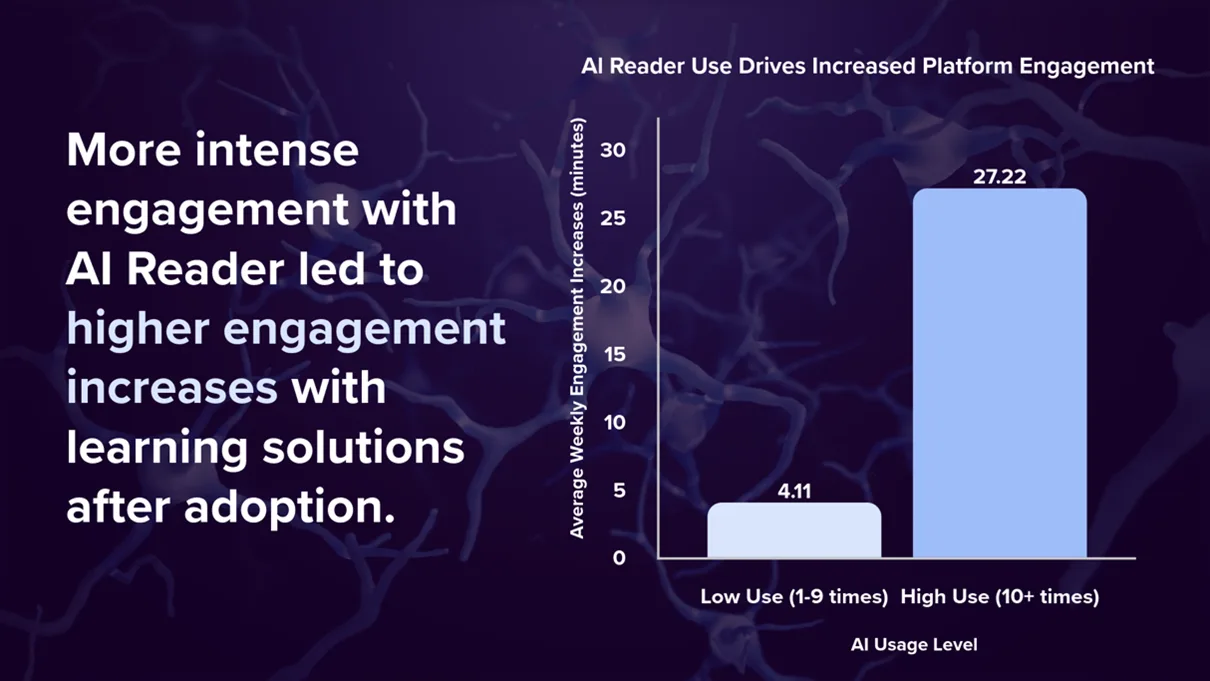
And we’re just getting started. The AI-powered interactive patient simulations in our Clinical Reasoning tool are helping medical students build confidence and think like clinicians before they start seeing patients. We’ve built AI that shapes instructors’ curriculum into podcasts, flashcards and pop quizzes in our popular Sharpen mobile study app. New tools for K-12 educators like Teacher Assistant are helping educators make lesson planning and personalized instruction easier, simpler and faster. And AI Reader, which has been used over 50 million times since being released last year, allows students to engage with reading assignments at a deeper level, and to translate content into 38 languages. According to a recent research study, AI Reader significantly increases students’ engagement in course content. 

More intense engagement with AI Reader led to higher engagement increases with learning solutions after adoption

While technology is critical to driving meaningful learning gains, it’s the human impact that matters most. I was struck by an email I received from a student at Eastern Florida State College last month, where she shared her struggles returning to school after 20 years away from education. She said she was terrified of math—and scored just 8% on her first assessment. But ALEKS helped her quickly find a path toward confidence and success. In her words, it was a “miracle worker.”

From my perspective, the future of education will not be defined by humans or AI alone, but by how effectively the two work together—and how well we close the loop between how students are using tools and the insights we can give back to teachers. Technology can identify patterns, personalize pathways and reduce administrative burden. Teachers provide the context, judgment and empathy that turn information into understanding. It’s up to us to harness the power of both to shape the future and help build the next 100 years of human intelligence. 

So no, I don’t believe that we need to fear the impact of AI on education. The complexity of developing human intelligence exponentially dwarfs any AI model ever invented—which makes the work we do to unlock the potential of each learner the most essential last mile of all.