Reading Mastery Transformations
The Science of Reading is comprised of more than 40 years of research pinpointing the pillars of any effective literacy program: Phonemic Awareness, Phonics and Word Recognition, Fluency and Vocabulary, and Comprehension.

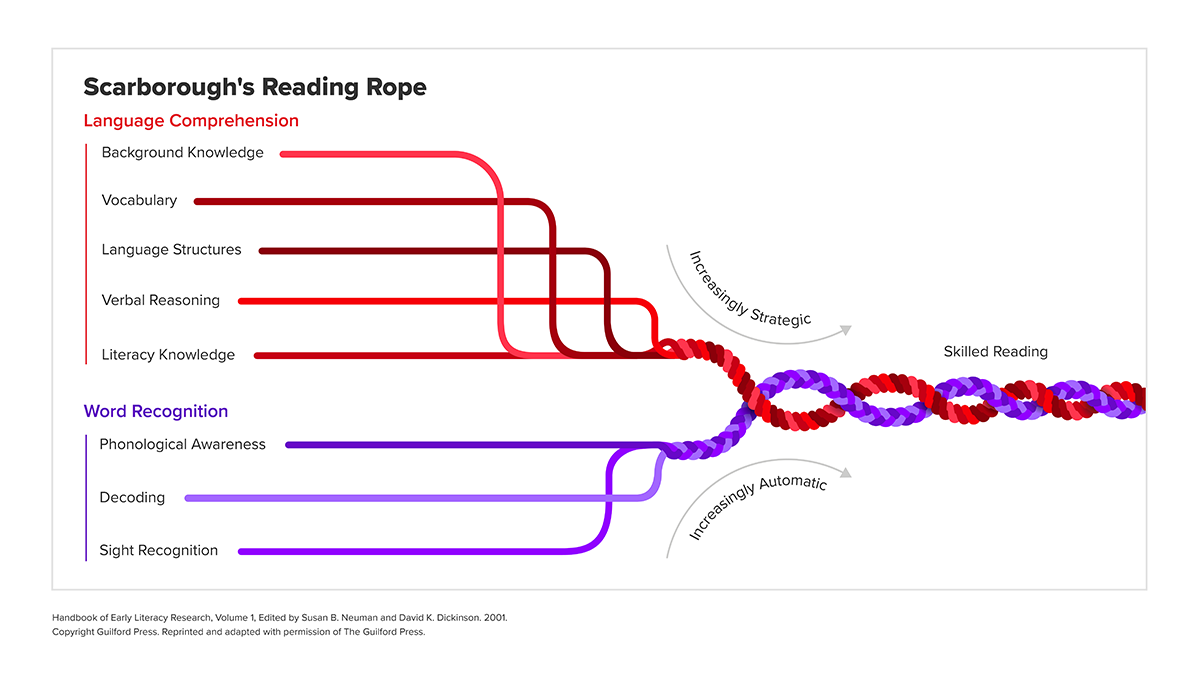
Curriculum designed to reflect what decades of reading research make clear: students need strong instruction in both Language Comprehension and Word Recognition.
By addressing every thread of Scarborough's Reading Rope, the program helps students build the skills they need for fluent, confident reading-grounded in what works.
Phonemic awareness, a subset of phonological awareness, refers to the understanding that there are individual sounds, or phonemes, in words. For example, the spoken word "sit" has three distinct phonemes, /s/ /i/ /t/. Phonemic awareness additionally includes the ability to isolate, identify, categorize, blend, segment, add, delete, substitute, and reverse individual phonemes.

Phonics refers to the relationship between sounds (phonemes) and spellings (graphemes). Phonics instruction helps beginning readers understand the relationship between letters and sounds to recognize and decode words.

Fluency refers to the ability to read accurately, at an appropriate pace, and with suitable expression. Fluency allows the reader to focus less on decoding, contributing to accurate, deep comprehension and greater motivation to read.

Vocabulary comprises knowledge of words and their meanings. Vocabulary development goes beyond basic sight words and involves words that are rich in meaning, including conversational, general academic, and domain-specific words. Students build oral vocabulary through listening, which in turn helps them better comprehend text read aloud to them. Oral vocabulary also helps readers recognize and make sense of words they see in print.

Comprehension refers to the ability to understand what you are reading. This involves making connections to what you’ve read and what you already know and drawing conclusions about the text.
Learn more about the research and literacy frameworks behind the Science of Reading:
The Science of Reading is often most closely associated with foundational skills and phonics, but it is just as applicable and critical for students in grades 6–12. For secondary learners, rather than focusing on phonics, the Science of Reading focuses on building academic language, comprehension, digital literacy, writing, and a host of other important skills students need to be successful “comprehenders.”
Watch a short snippet of our discussion with Dr. Tim Shanahan and Dr. Amanda Goodwin on how the Science of Reading applies in the secondary classroom. Click "Watch the full session" below to see the entire discussion.
At the end of the day, I don’t think we’re done until every student is successful, so let’s use the Science of Reading to empower our teachers and our students to be successful.
Find out which research-based K-5 literacy program fits your needs
Deliver impactful instruction with solutions grounded in the Science of Reading. Whether you prefer a structured or flexible curriculum, need a solution that brings students back up to grade-level, or want to accelerate literacy growth, we have something for diverse learners in every classroom.

We've drawn upon decades of literacy research as well as our collaborative work with preeminent reading researchers and experts to inform the design, development, and ongoing efficacy testing of our literacy solutions.
Our research-proven best practices help students grow as readers, writers, communicators, and life-ready learners.
Fuel Your Knowledge
Take your Science of Reading knowledge to the next level with insights from our experts.
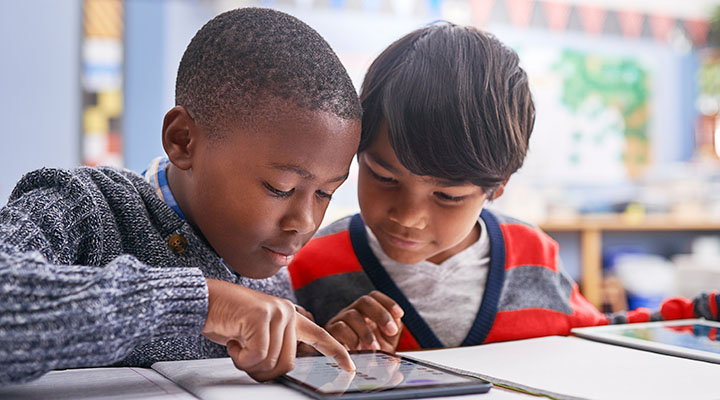
Learn more about the Science of Reading in these articles from Literacy Experts.
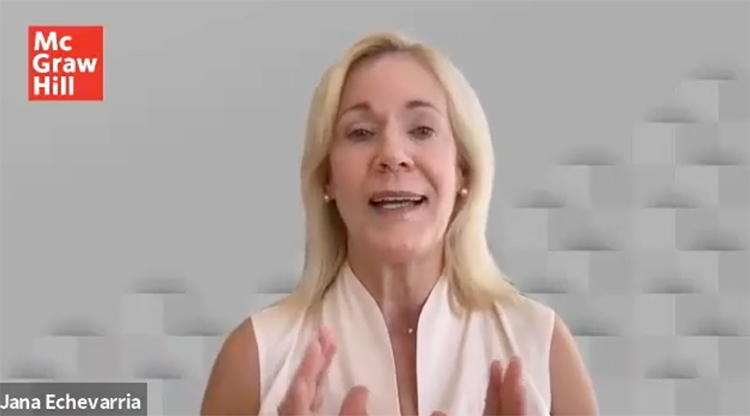
Listen to conversations with Dr. Tim Shanahan, Dr. Jan Hasbrouck, and Dr. Jana Echevarria.
Get straight talk on the Science of Reading from Dr. Timothy Shanahan.
The science of reading is an instructional approach grounded in decades of research from neuroscience, linguistics, and psychology, explaining how people learn to read. It emphasizes evidence-based methods that support skills such as decoding, language comprehension, and fluency.
The Science of Reading covers many areas of literacy. However, the National Reading Panel report (2000), which is a key resource underpinning the Science of Reading, identified five essential components of reading instruction: phonemic awareness, phonics, fluency, vocabulary, and comprehension. These elements work together to build proficient reading skills.
In classrooms, the science of reading informs how reading curricula are developed, and also impact district curriculum choices and teaching strategies, ensuring reading instruction is research-based and effective. The science of reading also impacts professional learning for teachers, how routines and research are put into practice in classrooms, and how students are supported.
Literacy programs such as Wonders, Emerge, Reading Mastery and Open Court Reading are grounded in and aligned with the science of reading principles. Many of these programs also include evidence-based approaches to writing and building comprehension.
The importance of the science of reading lies in its proven ability to improve literacy outcomes. By using approaches supported by scientific evidence, educators can better support all learners, including those with dyslexia or reading challenges, fostering stronger reading proficiency and lifelong learning.