* The estimated amount of time this product will be on the market is based on a number of factors, including faculty input to instructional design and the prior revision cycle and updates to academic research-which typically results in a revision cycle ranging from every two to four years for this product. Pricing subject to change at any time.

Instructor Quick Actions

Get eBook Access Get access as soon as you validate!
Contact a Rep Find a local rep best suited for you.
Find Rep

Product Information

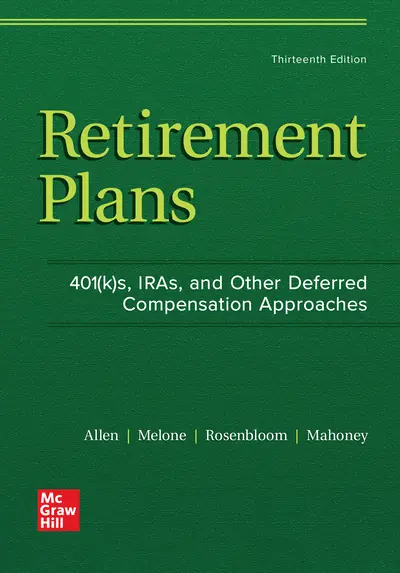
Retirement planning is a critical concern for individuals across all stages of their careers, from recent graduates entering the workforce to midcareer professionals and those nearing retirement. The shift in the U.S. private retirement system from defined benefit (DB) plans to defined contribution (DC) plans has placed greater responsibility on individuals to manage their retirement assets amidst volatile capital markets. This transition has introduced challenges, particularly for nonprofessional investors, who must navigate complex financial decisions to secure their futures. The evolving retirement landscape raises pressing questions about the adequacy of DC plans, the risks of premature asset withdrawals, and the ability of workers to save and invest effectively over their lifetimes.


To address these challenges, retirement planning has embraced behavioral finance principles, recognizing that individuals often rely on heuristics and may struggle with rational decision-making. Modern retirement plans are designed to account for these tendencies, incorporating features like default investment options to improve long-term outcomes. Efforts to enhance financial literacy and provide investment education are also gaining traction, empowering participants to make informed decisions during both the accumulation and payout phases of their retirement journey. Additionally, governmental policies and regulations, such as ERISA and the SECURE Acts, continue to shape the retirement planning framework, offering protections and fostering adaptability in response to economic uncertainties.


This edition of Retirement Plans expands on previous editions by emphasizing the shared responsibilities between plan sponsors and participants in managing retirement wealth. It provides a comprehensive overview of various retirement savings structures, including 401(k) plans, IRAs, and hybrid plans, while integrating updated legislative and regulatory developments. The text also explores topics like fiduciary oversight, cybersecurity, and wealth management strategies, offering a holistic approach to retirement planning. By advancing knowledge and best practices, the book aims to empower individuals and professionals alike to navigate the complexities of retirement planning and achieve financial security.

PART ONE: ENVIRONMENTAL INFLUENCES ON PRIVATE RETIREMENT PLANS Chapter 1: The Dynamic, Ongoing Evolution of Private Retirement Plans
Chapter 2: Strategic Plan Design 
Chapter 3: Defined Contribution versus Defined Benefit Plans
Chapter 4: Risk Management through Retirement Planning
PART TWO: DEFINED CONTRIBUTION PLAN TYPES 
Chapter 5: Overview of Defined Contribution Plan Types and Their Use in Retirement Plan Design 
Chapter 6: Profit Sharing Plans and Money Purchase Pension Plans
Chapter 7: Employee Stock Ownership Plans (ESOPs) 
Chapter 8: Cash or Deferred Arrangements (CODAs) under Section 401(k) 
Chapter 9: Section 403(b) Plans 
Chapter 10: Section 457 Deferred Compensation Plans 
Chapter 11: Behavioral Finance Impacts on Defined Contribution Plan Designs 
PART THREE: SPECIAL PURPOSE RETIREMENT PLANNING STRUCTURES 
Chapter 12: Individual Retirement Arrangements 
Chapter 13: Keogh Plans, SEPs, SIMPLE Plans, and Solo 401(k) Plans 
Chapter 14: Executive Retirement Arrangements 
Chapter 15: Employee Stock Compensation Plans 
Chapter 16: Managing Retirement Assets in Multiple Plan Structures
PART FOUR: DEFINED BENEFIT PLANS AND HYBRID RETIREMENT PLANS 
Chapter 17: Defined Benefit Plan Features
Chapter 18: Cost and Funding Considerations
Chapter 19: Budgeting Pension Costs 
Chapter 20: Insured Funding Instruments and Trust Fund Plans
Chapter 21: Cash Balance and Other Hybrid Retirement Plans
Chapter 22: Plan Termination Insurance for Single-Employer Pension Plans 
Chapter 23 Employers’ Accounting for Pensions
Appendix 23.1 Transition from Financial Accounting Standards (FAS) to Accounting Standards Codification (ASC) 
Chapter 24 Defined Benefit Plan Investment Management 
PART FIVE: TAX AND LEGAL REQUIREMENTS
Chapter 25: Tax Qualification Requirements: Part 1
Chapter 26: Tax Qualification Requirements: Part 2
Chapter 27: Other Legal Requirements 
Chapter 28: Fiduciary Oversight and Plan Governance 
PART SIX: WEALTH MANAGEMENT AND DISTRIBUTION PLANNING 
Chapter 29: Facilitating Investment of Defined Contribution Plan Assets
Chapter 30: Retirement Asset Wealth Management 
 Chapter 31: Retirement Asset Distribution PlanningAppendix 1: Social Security and MedicareAppendix 1A: Detailed Descriptions of Several Social Security Benefit ElementsAppendix 1B: Changes in Social Security Program Made by Amendments in 1981 and 1983

About the Author

Everett T. Allen

Joseph J. Melone

Jerry S. Rosenbloom

Jerry S. Rosenbloom (Philadelphia, PA) is a professor and department chairman at the Wharton School of the University of Pennsylvania.

Dennis F. Mahoney

Accessibility

Creating accessible products is a priority for McGraw Hill. We make accessibility and adhering to WCAG AA guidelines a part of our day-to-day development efforts and product roadmaps.

For more information, visit our accessibility page, or contact us at accessibility@mheducation.com

Need support?   We're here to help - Get real-world support and resources every step of the way.

Top