
Rethinking Student Success in the Age of AI
Artificial intelligence is now a routine part of student life, with 90% using generative AI—driving colleges to adopt it to improve engagement and reduce DFW rates.
- Higher Education
- Blog
- Article
- Sharpen
- Artificial Intelligence (AI)
The Reality on Campus Today
As higher education grapples with the realities of AI, it has already become embedded in the daily habits of students, inside and outside of the classroom. Recent data shows that 90 percent of students are now using generative AI tools in some capacity, with one in three paying for AI-powered services to support their coursework ¹. Colleges and universities are increasingly exploring AI tools for student retention, early alert systems, and predictive analytics to improve engagement and grades, and reduce DFW rates.
Even as AI use surges, students continue to prioritize human connection in their academic journey. Recent studies have shown that 84 percent of students go to instructors or peers when they are struggling, reinforcing a critical truth: technology may shape how students study, but trust shapes how they succeed¹.
This reality defines the current moment. Although students are integrating AI into their learning habits, often without institutional visibility, faculty and student retention and success teams remain the core of how and why students succeed. The opportunity for higher education is not to resist this shift, but to guide it, ensuring that AI strengthens academic integrity, reinforces human-centered support, and aligns with institutional mission.
When Students Turn for Human Support
Students overwhelmingly seek human connection when they need help. Faculty, student success centers, tutoring programs, and academic advising offices are the frontline support services across campus.
Demand for personalized, human-centered support continues to grow, yet many student success teams are being asked to do more with fewer resources; navigating increasing caseloads, limited staff capacity, and reactive data signals that arrive after a problem has already surfaced ³.
Thankfully, the infrastructure for an improved and streamlined support system already exists: trusted faculty and staff who are deeply committed to student outcomes. In order to meet the needs of students in the era of AI, institutions must ensure that faculty and student success centers are supported and equipped with timely insight and tools that allow them to intervene earlier, more strategically, and at scale.
The question then becomes how they can effectively support faculty in maintaining strong relationships with students and relieve the burden of repetitive, time consuming tasks that often detract from student-centered work.
Where Students Are Feeling the Pressure
Alongside the issues facing the faculty side of student success, today’s students are navigating increasing pressures that extend beyond course content:
- Nearly one-third of first-year students cite lack of motivation as a primary academic challenge, often before grades reflect any visible decline.
- Instructors report ineffective study skills (70 percent) and anxiety (48 percent) as persistent barriers to success, especially in high-enrollment gateway courses where early missteps can have lasting consequences¹.
Outside the classroom, mental health and financial stress remain among the most significant obstacles to student success. These pressures compound academic challenges, particularly for students balancing work, caregiving, or other responsibilities alongside their studies.
This reveals one critical takeaway: the earliest signs of struggle are not always academic. Yet most structures are designed to respond only after performance declines.
Why Traditional Signals Arrive Too Late
Institutional support systems are built around performance metrics, exam scores, assignment submissions, and midterm grades. But by the time those indicators shift, students may have already begun to disengage from the classroom.
Despite the need for early detection and personal support services, faculty consistently report limited access to real-time insights into study patterns, time on task, or early signs of frustration. Both student success teams and faculty are expected to intervene earlier and more personally, yet they lack the in-the-moment data needed to know if the support and instruction they provide is working before an assignment or exam reveals it.
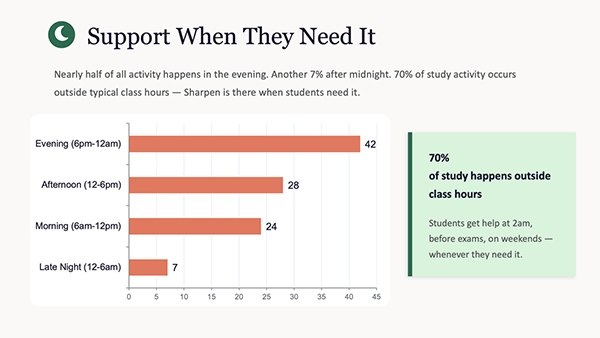
With limited staff and growing caseloads, outreach becomes reactive rather than proactive. Interventions are triggered by visible decline instead of subtle behavioral changes. Adding to the reactive nature of data faculty has access to, over 70% of study occurs outside normal working hours, meaning tutoring centers and instructors must adapt with tools that align with when students are actually studying ⁴.
If student success is the goal of ensuring a strong ROI on their academic journey, waiting for performance to drop is no longer a sufficient strategy. A tool is needed that solves for the currently reactive, slow data and gives faculty the freedom to support students where it matters most.
Integrating AI into the Student Success Workflow
As institutions rethink how to close the visibility gap, AI presents an opportunity, but only when thoughtfully embedded within existing support structures. Institutions do not need tools that operate outside approved learning environments or undermine academic integrity. They need AI that reinforces study habits, surfaces risk earlier, and is built on vetted academic content from trusted higher education partners.
McGraw Hill’s Sharpen Advantage was designed specifically for this moment: an enterprise-level AI solution for student retention and academic success built on trusted, vetted content and responsible AI governance and guardrails for higher education institutions. Rather than functioning as a standalone chatbot, Sharpen Advantage integrates directly into the student retention and early alert workflow, connecting students, faculty, advisors, and administrators through shared visibility and actionable insight.
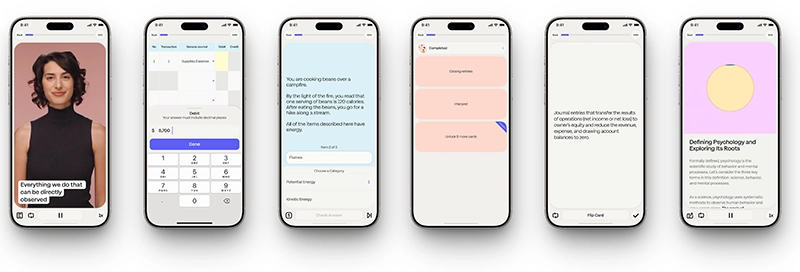
Solutions like McGraw Hill’s Sharpen Advantage are designed specifically for higher education, combining personalized student support with institutional oversight and real-time analytics. Built on trusted McGraw Hill content and content from the institution, reinforced by responsible AI guardrails, Sharpen Advantage operates within the academic ecosystem rather than outside of it, ensuring that AI enhances trust instead of bypassing it.
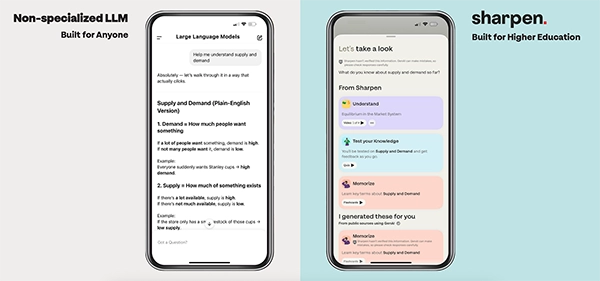
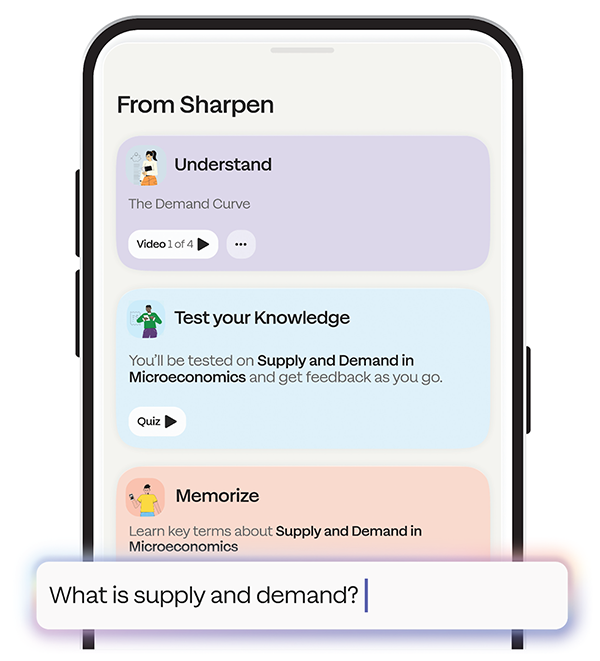
Ask Sharpen functions as a course-aligned AI study partner built on vetted academic content.
For faculty, administrator, and student success teams.
- Radar delivers real-time student engagement and performance insights and predictive analytics into retention risk, surfacing early indicators such as drops in study activity, content retention, or participation before those challenges appear in exam scores.
- Creator allows users to share course- and institution-specific resources.
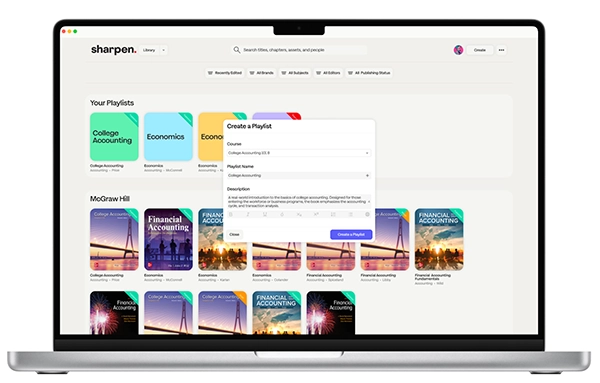
- Playlist allows for curated, personalized study content to send directly to students’ phones, bridging classroom instruction with independent learning.
When integrated responsibly, AI can help connect early signs of struggle with human intervention faster than traditional systems allow.
AI that detects patterns such as drops in motivation, content retention, or disengagement can equip faculty and student success teams with timely insight, enabling more personal outreach at scale.
The goal is not AI for its own sake. It is amplification, using it to make human support more proactive, more informed, and more effective.
Building the Infrastructure for What Comes Next
As institutions move toward more permissive AI policies, nearly half expect to adopt institution-level AI solutions within the next five years ¹. That shift creates urgency, not simply to implement AI, but to choose solutions intentionally and responsibly that align with all levels of higher education.
Faculty and student success leaders recognize both the opportunity and the risk. 64 percent believe missteps in AI communication or implementation could negatively impact students. At the same time, 69 percent report already using AI in their own work over the past year, signaling that adoption is underway whether institutions formalize it or not ³.
Importantly, higher ed should see AI as a capacity-builder, not simply just a tool for automation. Some key insights from an EAB survey find that:
- 73 percent of student success faculty believe AI can help manage repetitive, high-volume questions.
- 67 percent believe it can identify students in need of support earlier than traditional systems allow ³.
McGraw Hill’s approach to responsible AI is built on decades of evidence-based digital learning innovation, from adaptive platforms like ALEKS to newer tools such as Sharpen Advantage . Through frameworks like AI Nutrition Facts , transparent guardrails, and enterprise-level analytics, Sharpen Advantage provides institutions and faculty functionality, visibility, and control.
When implemented thoughtfully, AI becomes part of shared student retention and engagement infrastructure, reinforcing human connection while expanding institutional capacity.
Interested in learning more about McGraw Hill's responsible AI study and academic success app? Visit our Sharpen Advantage webpage today.
¹Tyton Partners Time for Class 2025, Longitudinal Market Insights
²Knack , Removing Barriers, Elevating Quality: Why Free Peer Tutor Training Matters MoreThan Ever
³EAB , Student success teams are already using AI on a daily basis. Here’s what institutionsneed to know
⁴Spring 2026 Sharpen Advantage pilot school