Day-one access. Lower costs. Better outcomes.

Affordable Access programs help institutions ensure students have the course materials they need from day one while supporting affordability, retention, and course completion goals.

36%

Average Student Savings 
Students participating in Affordable Access programs saved an average of 36% per course.

14%

Higher Graduation Rates
Graduation rates increased by 14 percentage points, from 36% to 50%, over ten years following implementation.

60%

Less Likely to Withdraw 
Students with day-one access to course materials are 27% more likely to earn a passing grade and 60% less likely to withdraw from a course.

85%

Improved Student Readiness 
85% of faculty reported improved student readiness after implementing Affordable Access.

What Affordable Access Makes Possible

An intentional approach to course material access can lower costs, ensure all students have required materials from day one, and support course completion.

Students Start Ready to Learn

Day-one access removes barriers to participation.
When students are still searching for, purchasing, or waiting on course materials after classes begin, they lose valuable time. First-day access removes these early barriers, helping students engage from the start and stay on track.

Students Start Ready to Learn

Day-one access removes barriers to participation.
When students are still searching for, purchasing, or waiting on course materials after classes begin, they lose valuable time. First-day access removes these early barriers, helping students engage from the start and stay on track.

Access is Part of the Learning Experience

Bring course materials into the academic experience, without limiting faculty choice.
Course materials are essential to participation and completion. Affordable Access makes access part of the academic experience, helping students start with the materials they need while preserving faculty choice—including publisher content, OER, or a combination of resources.

Affordable Access Models Support Institutional Goals

Make course material access part of a broader student success strategy.
Affordable Access connects course material strategy to broader institutional priorities, including student success, affordability, and accessibility.

Ready to explore what an Affordable Access model could look like at your institution? 

Affordable Access in Action

Explore the Impact of Affordable Access Programs in Your State

Hover over a state on this map to view the number of institutions using inclusive access programs and the annual savings.

(4/1/2024 - 3/31/2025)

Choose the Model That Fits Your Institution

Affordable Access programs can be implemented in different ways depending on your institution's priorities, bookstore model, and student population. Explore the options below to see which approach best aligns with your goals.

Sometimes referred to as “First Day,” “Follett Access,” or “Immediate Access.”

  • Faculty decide whether their course/section participates. If they do, students access digital course materials via the institution’s Learning Management System (LMS) on or before the first day of class.
  • Students pay a discounted rate for the materials on their student account alongside tuition and fees, making them eligible to be covered by financial aid.
  • Students are provided a process to “opt out” for each participating course if they wish to purchase independently.

Sometimes referred to as “Equitable Access,” “First Day Complete,” “All-In Access,” or “Access Complete.”

  • All courses in a particular academic program, college, or institution participate.
  • Students access digital course materials for the term through the institution’s Learning Management Systems (LMS) on or before the first day of class.
  • A discounted flat fee per credit hour or term is added to a student’s account alongside tuition and fees, making it eligible for financial aid. This fee covers materials for all courses taken during the term.
  • Students can choose to “opt out”; however, by doing so, they agree to obtain all their course materials independently that term.

A combination of Complete and Inclusive Access programs. The difference is how the student elects to participate.

  • Cascading Access is initially delivered in the same way as a Complete Access program, where students are provided access to all their required materials for the term, on or before the first day of class, and charged a discounted flat fee per credit hour or term.
  • If a student opts out of the program, they can still purchase their materials by course individually at a discounted rate through the institution or bookstore–like an Inclusive Access model.

Impact Across Campus

Read how students, faculty, and campus leaders are experiencing the impact of Affordable Access.

Tools for Building Your Affordable Access Strategy

  • Affordable Access Launch Guide

    
Insights, steps, and lessons learned from successful higher education affordability implementations.Find answers to your questions about Affordable Access programs.

  • Frequently Asked Questions

    Get answers to the questions institutions ask most about Affordable Access, from affordability to regulations, faculty choice, and financial aid.

  • Affordable Access Myths vs. Reality


    Many of the assumptions that shaped Affordable Access programs no longer reflect today's research, technology, or institutional goals. Explore five common myths and the evidence behind them.

Do you have questions?

Send your questions about Affordable Access programs our way. We’ll be in touch.

McGraw Hill Affordable Access Programs

Reduce cost, improve access, propel student success.

Education for All

Give your students affordable access to high-quality course materials and market-leading digital platforms, while empowering faculty to select the right solutions for their courses. Affordable Access programs ensure students have the resources they need to be successful starting on day one and deliver trusted content that aligns with the latest accessibility guidelines.

Since 2018, Affordable Access programs have saved students over $800 million, while helping to improve retention and graduation rates.

Available Affordable Access Programs


Affordable Access programs are course material distribution models designed by institutions and their bookstores.

These programs provide students with essential learning resources at significantly reduced costs before or on the first day of class.

Sometimes referred to as “First Day,” “Follett Access,” or “Immediate Access.”

  • Faculty decide whether their course/section participates. If they do, students access digital course materials via the institution’s Learning Management System (LMS) on or before the first day of class.
  • Students pay a discounted rate for the materials on their student account alongside tuition and fees, making them eligible to be covered by financial aid.
  • Students are provided a process to “opt out” for each participating course if they wish to purchase independently.

Sometimes referred to as “Equitable Access,” “First Day Complete,” “All-In Access,” or “Access Complete.”

  • All courses in a particular academic program, college, or institution participate.
  • Students access digital course materials for the term through the institution’s Learning Management Systems (LMS) on or before the first day of class.
  • A discounted flat fee per credit hour or term is added to a student’s account alongside tuition and fees, making it eligible for financial aid. This fee covers materials for all courses taken during the term.
  • Students can choose to “opt out”; however, by doing so, they agree to obtain all their course materials independently that term.

A combination of Complete and Inclusive Access programs. The difference is how the student elects to participate.

  • Cascading Access is initially delivered in the same way as a Complete Access program, where students are provided access to all their required materials for the term, on or before the first day of class, and charged a discounted flat fee per credit hour or term.
  • If a student opts out of the program, they can still purchase their materials by course individually at a discounted rate through the institution or bookstore–like an Inclusive Access model.

Explore the Impact of Affordable Access Programs in Your State

Hover over a state on this map to view the number of institutions using Inclusive Access and the annual savings.
(4/1/2024 - 3/31/2025)

Discover How Affordable Access Programs Drive Student Success

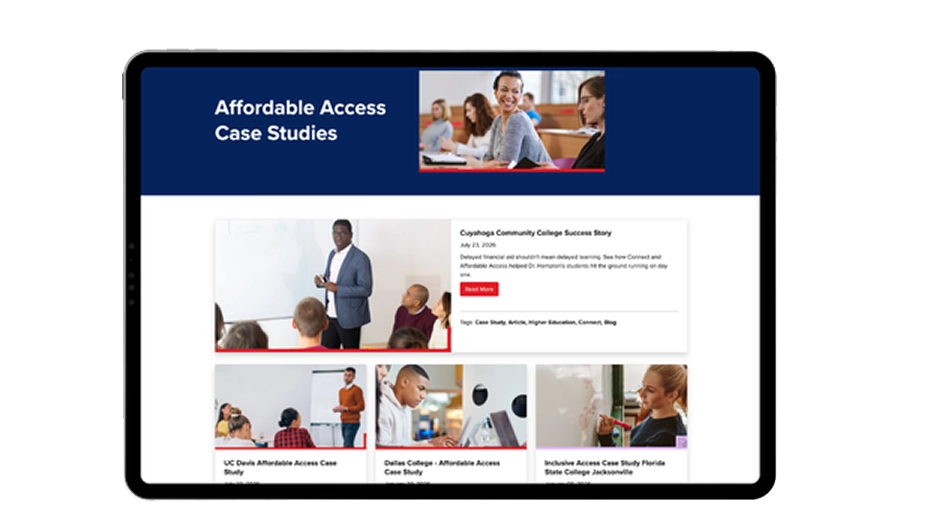
Click on the case studies below to learn more about how an Affordable Access program is working at three higher education institutions.

Waubonsee Community College

  • Saved students nearly $1.8 million on course materials
  • Ensured 99% of students started class with the correct course materials

Copiah-Lincoln Community College

  • Achieved a 21-percentage-point improvement in retention rates
  • Saved students $4 million annually
  • Increased graduation rates by 14 percentage points

Florida State College - Jacksonville

  • Saved students more than $350,000 in year one
  • Reduced course material prices to an average of $18.89 per credit hour
  • 97% of students would take another FSCJ ACCESS class

Understanding Affordable Access: Key Information

  • Frequently Asked Questions (FAQs)

    Find answers to your questions about Affordable Access programs.

  • Myth vs. Fact

    Separate fact from fiction about Affordable Access programs.

  • Buyer’s Guide: OER vs. McGraw Hill Affordable Access Programs


    Compare OER against McGraw Hill's Affordable Access models and discover key tradeoffs.

Interested in discussing Affordable Access or other Affordability Options for your Institution?