* The estimated amount of time this product will be on the market is based on a number of factors, including faculty input to instructional design and the prior revision cycle and updates to academic research-which typically results in a revision cycle ranging from every two to four years for this product. Pricing subject to change at any time.

Instructor Quick Actions

Get eBook Access Get access as soon as you validate!
Request a Print Sample Get a copy as soon as validated.
Contact a Rep Find a local rep best suited for you.
Find Rep

Product Information

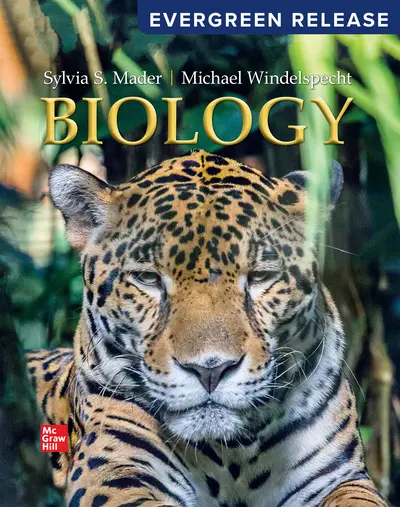
Biology is a traditional, comprehensive introductory biology textbook with coverage from cell structure and function to the conservation of biodiversity and is appropriate for a one- or two-semester biology course. Biology focuses on three themes: systems, evolution, and the nature of science. These themes are integrated into all aspects of the textbook, from the unit learning outcomes to the theme-based feature readings in the text. Recognizing that instructors are increasingly being asked to engage their students while still providing them with a firm foundation in core biological principles, the authors of Biology integrated relevant content throughout the text to better allow students to make connections and think more scientifically.

McGraw Hill eBooks and digital platforms use an Evergreen delivery model with a release-centered process that makes it easy to keep courses fresh, engaging, and relevant.

Release Notes provide detailed information about new and updated content delivered with each release.

Your account requires validation. Please contact your sales representative.

  • 1. Biology: The Study of Life
  • Unit 1 The Cell
  • 2. Basic Chemistry
  • 3. The Chemistry of Organic Molecules
  • 4. Cell Structure and Function
  • 5. Membrane Structure and Function
  • 6. Metabolism: Energy and Enzymes
  • 7. Photosynthesis
  • 8. Cellular Respiration
  • Unit 2 Genetic Basis of Life
  • 9. The Cell Cycle and Cellular Reproduction
  • 10. Meiosis and Sexual Reproduction
  • 11. Mendelian Patterns of Inheritance
  • 12. Molecular Biology of the Gene
  • 13. Regulation of Gene Expression
  • 14. Biotechnology and Genomics
  • Unit 3 Evolution
  • 15. Darwin and Evolution
  • 16. How Populations Evolve
  • 17. Speciation and Macroevolution
  • 18. The Origin and History of Life
  • 19. Taxonomy, Systematics, and Phylogeny
  • Unit 4 Microbial Evolution
  • 20. Viruses, Bacteria, and Archaea
  • 21. Protist Evolution and Diversity
  • 22. Fungi Evolution and Diversity
  • Unit 5 Plant Evolution and Biology
  • 23. Plant Evolution and Diversity
  • 24. Flowering Plants: Structure and Organization
  • 25. Flowering Plants: Nutrition and Transport
  • 26. Flowering Plants: Control of Growth Responses
  • 27. Flowering Plants: Reproduction
  • Unit 6 Animal Evolution and Diversity
  • 28. Invertebrate Evolution
  • 29. Vertebrate Evolution
  • 30. Human Evolution
  • Unit 7 Comparative Animal Biology
  • 31. Animal Organization and Homeostasis
  • 32. Circulation and Cardiovascular Systems
  • 33. The Lymphatic and Immune Systems
  • 34. Digestive Systems and Nutrition
  • 35. Respiratory Systems
  • 36. Body Fluid Regulation and Excretory Systems
  • 37. Neurons and Nervous Systems
  • 38. Sense Organs
  • 39. Locomotion and Support Systems
  • 40. Hormones and Endocrine Systems
  • 41. Reproductive Systems
  • 42. Animal Development and aging
  • 43. Animal Behavior
  • Unit 8 Ecology
  • 44. Population Ecology
  • 45. Community and Ecosystem Ecology
  • 46. Major Ecosystems of the Biosphere
  • 47. Conservation of Biodiversity

About the Author

Sylvia S. Mader

Sylvia S. Mader has authored several nationally recognized biology texts published by McGraw-Hill. Educated at Bryn Mawr College, Harvard University, Tufts University, and Nova Southeastern University, she holds degrees in both Biology and Education. Over the years she has taught at University of Massachusetts, Lowell; Massachusetts Bay Community College; Suffolk University; and Nathan Mayhew Seminars. Her ability to reach out to science-shy students led to the writing of her first text, Inquiry into Life, which is now in its fifteenth edition. Highly acclaimed for her crisp and entertaining writing style, her books have become models for others who write in the field of biology.

Michael Windelspecht

Michael Windelspecht has taught introductory biology, genetics, and human genetics in the online, traditional, and hybrid formats at community colleges, universities, and military institutions. Educated at Michigan State University and the University of South Florida, he is currently an adjunct professor of biology at Appalachian State University. He served for over a decade as the Introductory Biology Coordinator at Appalachian State University, a program that enrolled over 4,500 students annually. As an author and editor, Dr. Windelspecht has published over 20 reference textbooks and multiple print and online lab manuals and has founded several science communication companies, including Ricochet Creative Productions, which develops and assesses new technologies for the science classroom. Learn more about Dr. Windelspecht at www.michaelwindelspecht.com.

Accessibility

Creating accessible products is a priority for McGraw Hill. We make accessibility and adhering to WCAG AA guidelines a part of our day-to-day development efforts and product roadmaps.

For more information, visit our accessibility page, or contact us at accessibility@mheducation.com

Need support?   We're here to help - Get real-world support and resources every step of the way.

Top