A Conversation with Nobel Prize Winner, Dr. Ben Bernanke

Ben Bernanke shares his groundbreaking research and professional journey that led to his 2022 Nobel Peace Prize in Economics.

  • Higher Education
  • Event
  • On-demand
  • Economics
  • Principles of Economics
  • Principles of Microeconomics
  • Principles of Macroeconomics
  • Survey of Economics
  • Intermediate Macroeconomics
  • 65 Minutes
  • On-Demand Video

Description

Nobel Prize–winning economist Dr. Ben Bernanke shares his professional journey and reflections in a candid “fireside chat,” including the work that led to his 2022 Nobel Prize in Economics.

  • Groundbreaking work and research on the Great Depression
  • Leadership during the financial crisis
  • Contributions to the new Monetary Policy tools

The conversation includes insights from Cornell University Professor Ori Heffetz and commentary from University of California–San Diego Professor Kate Antonovics, both members of the author team behind widely used McGraw Hill Principles-level economics textbooks authored alongside Robert Frank and Ben Bernanke. 

Learn more about the titles available from the featured author team here:

Principles of Economics
Principles of Microeconomics
Principles of Macroeconomics

About Your Speaker

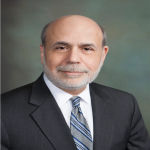
  • Dr. Ben S. Bernanke -

    Dr. Ben S. Bernanke

    Distinguished Fellow - The Brookings Institution, Economic Studies, The Hutchins Center on Fiscal and Monetary Policy

    Dr. Ben S. Bernanke is a distinguished fellow with the Economic Studies program at the Brookings Institution. From February 2006 through January 2014, he was chairman of the Board of Governors of the Federal Reserve System, having been appointed to that position by both Presidents Bush and Obama. In 2022, Dr. Bernanke was awarded the Sveriges Riksbank Prize in Economic Sciences in Memory of Alfred Nobel for his research on banks and financial crises.

    Before his appointment as chairman, Dr. Bernanke was chairman of the President’s Council of Economic Advisers. He was a member of the Board of Governors of the Federal Reserve System from 2002 to 2005.

    From 1994 to 1996, Dr. Bernanke was the Class of 1926 Professor of Economics and Public Affairs at Princeton University. He was the Howard Harrison and Gabrielle Snyder Beck Professor of Economics and Public Affairs and chair of the Economics Department at the university from 1996 to 2002. Dr. Bernanke had been a professor of economics and public affairs at Princeton since 1985.

    Before arriving at Princeton, Dr. Bernanke was an associate professor of economics and an assistant professor of economics at the Graduate School of Business at Stanford University. His teaching career also included serving as a visiting professor of economics at New York University and at the Massachusetts Institute of Technology.

    Dr. Bernanke has published many articles on a wide variety of economic issues, including monetary policy, macroeconomics, and economic history, and he is the author of several scholarly books and two textbooks. He has held a Guggenheim Fellowship and a Sloan Fellowship, and he is a fellow of the Econometric Society and of the American Academy of Arts and Sciences. Dr. Bernanke served as the director of the Monetary Economics Program of the National Bureau of Economic Research (NBER) and as a member of the NBER’s Business Cycle Dating Committee. He was appointed editor of the American Economic Review, the profession’s leading research journal. Dr. Bernanke’s work with civic and professional groups includes having served two terms as a member of the Montgomery Township (N.J.) Board of Education. He is currently serving as a member of the New Jersey Governor’s commission on the re-opening of that state.

    Since leaving the Federal Reserve, Dr. Bernanke has continued to author articles and books, including his New York Times best-selling book, “The Courage to Act: A Memoir of a Crisis and its Aftermath.” He served as president of the American Economic Association.

    Dr. Bernanke was born in December 1953 in Augusta, Georgia, and grew up in Dillon, South Carolina. He received a Bachelor of Arts degree in economics from Harvard University (summa cum laude) and a Doctor of Philosophy degree in economics from the Massachusetts Institute of Technology.
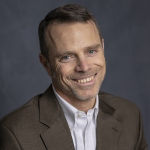
  • Ori Heffetz -

    Ori Heffetz

    Professor Ori Heffetz is a data-driven economist specializing in the psychological, social, and cultural aspects of economic behavior, well-being, and policy. His research explores the interpretation of economic and well-being indicators, such as household expenditures and self-reported happiness, to guide effective government policies. He investigates how people perceive and respond to survey questions, economic perceptions, and beliefs, offering insights for policymakers to design better strategies. He holds a BA in physics and philosophy from Tel Aviv University and a PhD in economics from Princeton University. In addition to his academic achievements, Heffetz advises governmental and non-governmental institutions and is a coauthor of a widely used Principles of Economics textbook series.

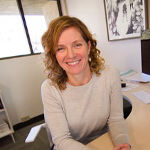
  • Kate Antonovics -

    Kate Antonovics

    Professor Kate Antonovics, a Teaching Professor at UC San Diego and the current Provost of Seventh College, is a renowned figure in Labor Economics. Holding a BA from Brown University and a PhD from the University of Wisconsin, her research spans topics such as racial and gender discrimination, affirmative action, and wage dynamics. She has published in leading journals, including The American Economic Review and The Journal of Labor Economics. Professor Antonovics, a co-author of introductory-level economics textbooks, is recognized for her teaching excellence, with popular courses and numerous awards, including the UC San Diego Academic Senate Distinguished Teaching Award.

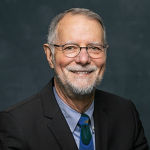
  • Robert H. Frank -

    Robert H. Frank

    Robert H. Frank is the Henrietta Johnson Louis Professor emeritus of Management and professor emeritus of economics at the Samuel Curtis Johnson Graduate School of Management and a distinguished senior fellow at Demos. For more than a decade, his "Economic View" column appeared monthly in The New York Times. He received his BS in mathematics from Georgia Tech, and then taught math and science for two years as a Peace Corps Volunteer in rural Nepal. He holds an MA in statistics and a PhD in economics, both from the University of California at Berkeley. His papers have appeared in the American Economic Review, Econometrica, Journal of Political Economy, and other leading professional journals.

    Frank's books have been translated into 23 languages, including Choosing the Right Pond, Passions Within Reason, Microeconomics and Behavior, Principles of Economics (with Ben Bernanke), Luxury Fever, What Price the Moral High Ground?, Falling Behind, The Economic Naturalist, The Darwin Economy, and Success and Luck. The Winner-Take-All Society, co-authored with Philip Cook, received a Critic's Choice Award, was named a Notable Book of the Year by The New York Times, and was included in Business Week's list of the 10 best books of 1995.

    Frank is a co-recipient of the 2004 Leontief Prize for Advancing the Frontiers of Economic Thought. He was awarded the Johnson School's Stephen Russell Distinguished Teaching Award in 2004, 2010, and 2012, and its Apple Distinguished Teaching Award in 2005.