Why Pepsi Is Losing Ground in the Soft Drink Market
The cola wars just got real. KFC's historic switch from Pepsi to Coca-Cola reveals a brand fighting to stay relevant in modern America.
- Higher Education
- Article
- Blog
- Ferrell Business in the News
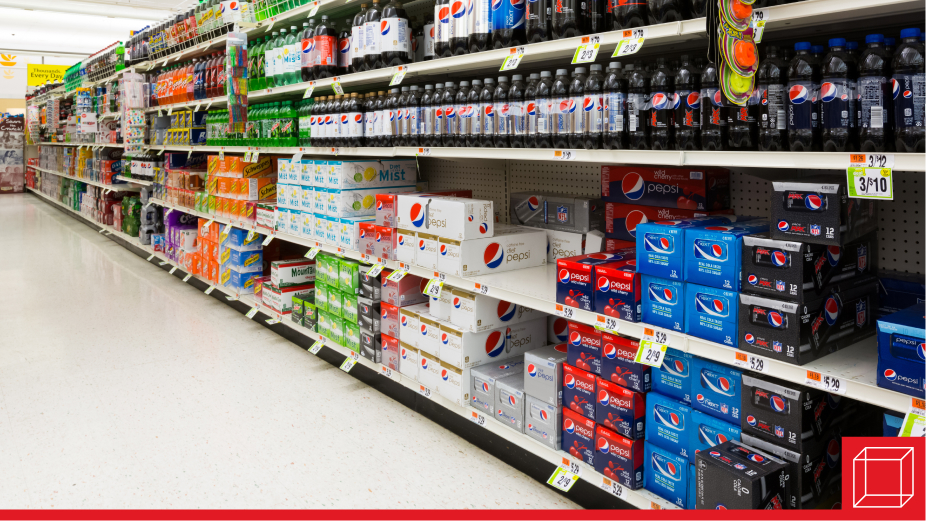
For decades, Coca-Cola and Pepsi’s rivalry has been part of American popular culture. Today, the companies still compete for customers, shelf space, and restaurant contracts, but their namesake brands are no longer as closely matched as they once were.
Pepsi-Cola accounts for 8.1 percent of U.S. carbonated soft drink volume, compared with Coca-Cola’s 18.5 percent, based on 2025 data. Pepsi had already fallen behind Dr Pepper in 2024, placing third in a category once defined by two leading brands.
Pepsi’s challenges extend beyond its competition with Coca-Cola. Changing preferences, pressure on consumer budgets, and questions about PepsiCo’s investment priorities are reshaping the company’s beverage business. KFC’s decision to replace Pepsi products with Coca-Cola products at its U.S. restaurants illustrates how those challenges can affect an established business relationship.
Losing a Longtime Customer
KFC’s relationship with Pepsi stretches back to when PepsiCo owned the restaurant chain. Although PepsiCo spun off KFC in 1997, the companies maintained their beverage partnership for decades.
When KFC’s latest contract approached its expiration, the chain invited proposals from both PepsiCo and Coca-Cola. According to The Wall Street Journal, both proposals were financially attractive, but Coca-Cola stood out for its plans to support future sales growth. The switch also comes as KFC works to revitalize its U.S. business. One restaurant analyst suggested that Coca-Cola likely offered franchisees discounts and incentives, although the terms of the agreement were not disclosed.
KFC plans to begin replacing Pepsi equipment with Coca-Cola equipment in January 2027. The change involves more than switching logos on menu boards. Beverage fountains and service lines must also be replaced or modified. The switch also affects consumers. Customers who prefer Pepsi products may visit KFC less frequently. Coca-Cola products, however, could appeal to other customers.
Different Priorities at PepsiCo and Coca-Cola
Pepsi the brand is only one part of PepsiCo. The parent company also sells beverages such as Gatorade and Mountain Dew, along with snacks and foods under brands including Doritos, Cheetos, and Quaker. That diversification provides several sources of revenue, but it also creates competition for investment within the company. Analysts say PepsiCo prioritized investment in its more profitable North American snack business over its domestic soft drink business.
Coca-Cola has followed a different approach. Its beverage-focused business relies heavily on independent bottling partners. Those partners handle much of the manufacturing and distribution, allowing Coca-Cola to concentrate more of its resources on brands, marketing, and product development. On the flip side, PepsiCo retains substantial company-owned bottling operations. Owning these activities gives the company control, but it also requires investment in facilities, equipment, and operations.
A Changing Soda Market
Pepsi’s difficulties do not mean consumers have stopped buying soda. Instead, the market is becoming more varied, with companies competing over ingredients, sugar content, flavors, and perceived benefits as well as taste.
Prebiotic sodas such as Poppi and Olipop illustrate the shift. These products are marketed around ingredients intended to support digestive health, often combined with familiar soda flavors and lower sugar content than traditional soft drinks. Their positioning appeals to customers who want an enjoyable treat that fits their wellness preferences. Combined U.S. retail sales of Poppi and Olipop exceeded $815 million from January 2024 to January 2025. PepsiCo acquired Poppi in 2025, while Coca-Cola introduced Simply Pop through its Simply brand.
Rebuilding the Beverage Business
Some investors have urged PepsiCo to consider structural changes, including separating parts of the company or transferring more bottling operations to independent partners. CEO Ramon Laguarta said the company was open to reviewing options, although he clarified in an October 2026 interview that splitting the business was not under consideration.
Selling its bottling operations to independent partners could reduce capital requirements and allow greater focus on marketing. It would also involve a complicated transition, and it would not automatically strengthen consumer demand for Pepsi.
Losing KFC is a setback rather than the end of its food-service business. PepsiCo still has important restaurant relationships. For example, Taco Bell extended its Pepsi agreement, and PepsiCo has secured business with other chains, including Subway and Dunkin’.
PepsiCo’s challenge is to strengthen its established brands while responding to changing consumer preferences. The company’s experience shows that even dominant brands must keep adapting to remain competitive.
In the Classroom
This article can be used to discuss branding, product development, pricing, and distribution decisions (Chapter 12: Dimensions of Marketing Strategy).
Discussion Questions
- Why did KFC’s beverage supplier decision involve more than choosing between the taste of Pepsi and Coca-Cola?
- How could PepsiCo’s snack business and company-owned bottling operations influence the resources available for its beverage brands?
- How are changing consumer preferences creating both challenges and opportunities for PepsiCo and Coca-Cola?
This article was developed with the support of Kelsey Reddick for and under the direction of O.C. Ferrell, Linda Ferrell, and Geoff Hirt.
Phil Wahba, “How Pepsi Fell Behind in the Cola Wars—and Then Lost KFC,” Fortune, October 25, 2026
Heather Haddon and Laura Cooper, “How Coke Loosened Pepsi’s Grip on KFC’s Soda Fountains,” The Wall Street Journal, October 18, 2026
Julie Creswell, “Shifting Eating Habits Have PepsiCo Investors Seeking Operational Changes,” The New York Times, October 8, 2026

Linda Ferrell is the Roth Family Professor of Marketing and Business Ethics in the Raymond J. Harbert College of Business, Auburn University. She was formerly Distinguished Professor of Leadership and Business Ethics at Belmont University. She completed her Ph.D. in business administration, with a concentration in management, at the University of Memphis. She has taught at the University of Tampa, Colorado State University, University of Northern Colorado, University of Memphis, University of Wyoming, and the University of New Mexico. She has also team-taught classes at Thammasat University in Bangkok, Thailand.