Kimberly-Clark Pursues Sustainable Wood Fiber Alternative
Kimberly-Clark is investing $100 million in an Arizona plant to scale hesperaloe as a sustainable alternative to wood pulp.
Tags
Operations Management by Cachon & Terwiesch
Operations and Supply Chain Management by Jacobs & Chase
Operations and Supply Chain Management The Core by Jacobs & Chase
Location Logistics and Distribution
Logistics Mgmt
Logistics Distribution Transportation
Management of Quality
Managing Quality
OPS and Supply Chain Management
Quality and SPC
Quality Mgmt and 6S
Operations Management in the Supply Chain by Schroeder & Goldstein
Six Sigma Quality
Sourcing and Supply Management
Operations Mangement by Stevenson
Supply Chain Management
Managing Operations Across the Supply Chain by Swink, Melnyk, Hartley & Cooper
Blog
Article
OM in the News
Higher Education
Article Type: Blog
Share:
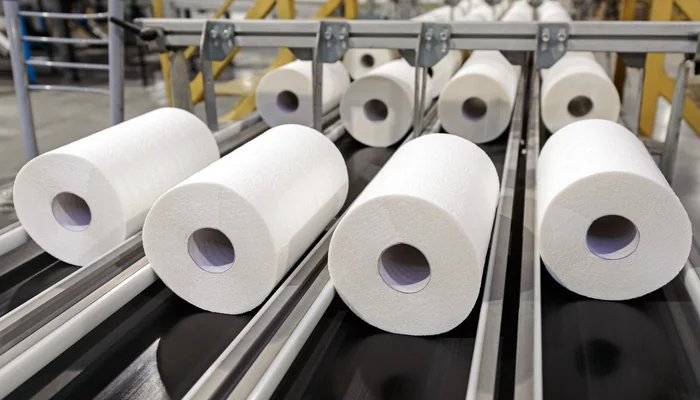
Kimberly-Clark, maker of well-known brands like Kleenex, Scott, and Huggies, has committed $100 million to build a plant in Yuma, Arizona to scale up production and testing of hesperaloe as an alternative fiber for wood pulp in its hygiene products.
This plant is part of a groundbreaking, long-term sustainability effort for its products such as toilet paper and paper towels.
1. What is hesperaloe, and why has Kimberly-Clark prioritized this fiber as a new alternative for its massive product redesign efforts? How does its strategy play a role in its choice?
Guidance: Kimberly-Clark’s strategy focuses on making high quality, performance-oriented products. Any new fibers have to live up to these expectations or customers may be lost.
To make high-premium soft and strong paper products like toilet tissue and facial tissues, the company has traditionally relied on Northern softwood pulps, which are among the best for these dimensions of quality. However, the company has spent about $250 million in the last ten years investigating 70 alternative fibers.
Hesperaloe emerged as one of the most promising candidates. It has long, thin fibers, which are needed for strength and low fiber coarseness to keep products soft. In fact, it could potentially result in products whose quality on these parameters exceeds what can be done with the traditional Northern softwood pulp.
2. How can hesperaloe help Kimberly-Clark achieve goals such as minimizing supply chain risk and improving sustainability?
Guidance: Many issues need to be addressed in terms of sourcing hesperaloe as a raw material. “Red yucca,” as it is also known, grows in desert-like climates in some Southwestern states and Mexico, and as such requires little water. Thus, the plant is being built in Arizona to be close to the initial source of supply.
Sourcing materials primarily in the U.S. would reduce supply chain risk. Currently, most softwood pulp comes from Canadian old-growth forests. Post-Covid and in the current fluctuating tariff environment, many American businesses are looking at reshoring. Also known as onshoring, this means bringing suppliers or manufacturing facilities back to the United States and closer to American consumers. While this could reduce supply chain risk, developing an effective supply chain for the hesperaloe and ways to process it at scale are still huge hurdles to overcome.
3. What are Kimberly-Clark’s sustainability goals related to these efforts?
Guidance: The company has made a “natural forest-free” pledge to be met sometime after 2030. Meanwhile, it already slashed the use of fiber sourced from natural forests by half between 2011 and 2025. In addition, three-quarters of its wood pulp now comes from sources that meet special guidelines for forest certification.
About the Author
Lisa M. Spencer
California State University, Fresno
Craig School of Business
Lecturer
Regional Page Available
It looks like you're outside the United States. Do you want to see your regional version of this page?
Education Topics
Education Topics/Courses
Education Topics/Courses/OM in the News
Education Topics/Courses/OM in the News/Title
Education Topics/Courses/OM in the News/Title/Operations and Supply Chain Management by Jacobs & Chase
Education Topics/Courses/OM in the News/Title/Operations and Supply Chain Management The Core by Jacobs & Chase
Education Topics/Courses/OM in the News/Title/Operations Mangement by Stevenson
Education Topics/Courses/OM in the News/Topic
Education Topics/Courses/OM in the News/Topic/Managing Quality
Business Unit
Business Unit/Higher Education
Education Topics/Courses/OM in the News/Topic/Quality and SPC
Asset Format Type
Asset Format Type/Blog
Education Topics/Courses/OM in the News/Topic/OPS and Supply Chain Management
Education Topics/Courses/OM in the News/Topic/Logistics Mgmt
Education Topics/Courses/OM in the News/Topic/Six Sigma Quality
Education Topics/Courses/OM in the News/Topic/Management of Quality
Education Topics/Courses/OM in the News/Topic/Logistics Distribution Transportation
Education Topics/Courses/OM in the News/Topic/Sourcing and Supply Management
Education Topics/Courses/OM in the News/Title/Operations Management by Cachon & Terwiesch
Education Topics/Courses/OM in the News/Topic/Location Logistics and Distribution
Asset Format Type/Blog/Article
Education Topics/Courses/OM in the News/Topic/Quality Mgmt and 6S
Education Topics/Courses/OM in the News/Title/Managing Operations Across the Supply Chain by Swink, Melnyk, Hartley & Cooper
Education Topics/Courses/OM in the News/Title/Operations Management in the Supply Chain by Schroeder & Goldstein
Education Topics/Courses/OM in the News/Topic/Supply Chain Management
highered
2026-11-19T16:24:37.528Z
highered Kimberly-Clark Pursues Sustainable Wood Fiber Alternative Kimberly-Clark is investing $100 million in an Arizona plant to scale hesperaloe as a sustainable alternative to wood pulp. Kimberly-Clark Pursues Sustainable Wood Fiber Alternative Kimberly-Clark is investing $100 million in an Arizona plant to scale hesperaloe as a sustainable alternative to wood pulp. Tags Operations Management by Cachon & Terwiesch Operations and Supply Chain Management by Jacobs & Chase Operations and Supply Chain Management The Core by Jacobs & Chase Location Logistics and Distribution Logistics Mgmt Logistics Distribution Transportation Management of Quality Managing Quality OPS and Supply Chain Management Quality and SPC Quality Mgmt and 6S Operations Management in the Supply Chain by Schroeder & Goldstein Six Sigma Quality Sourcing and Supply Management Operations Mangement by Stevenson Supply Chain Management Managing Operations Across the Supply Chain by Swink, Melnyk, Hartley & Cooper Blog Article OM in the News Higher Education More Article Type: Blog September 30, 2026 Share: Kimberly-Clark, maker of well-known brands like Kleenex, Scott, and Huggies, has committed $100 million to build a plant in Yuma, Arizona to scale up production and testing of hesperaloe as an alternative fiber for wood pulp in its hygiene products. This plant is part of a groundbreaking, long-term sustainability effort for its products such as toilet paper and paper towels. Video Spotlight: Kimberly-Clark to build new U.S. facility in Yuma (Aug 24, 2026, News 11 Yuma) This post is based on the Resource Wise article, What is Hesperaloe Fiber and Why is Kimberly-Clark Investing In It?, by Bruce Janda, September 3, 2026; the Trellis article, Kimberly-Clark turns away from ‘natural’ trees to make toilet paper, by Heather Clancy, August 18, 2026; and the YouTube video in the Spotlight. Image source: Bukhanovskyy/Shutterstock Discussion Questions: 1. What is hesperaloe, and why has Kimberly-Clark prioritized this fiber as a new alternative for its massive product redesign efforts? How does its strategy play a role in its choice? Guidance: Kimberly-Clark’s strategy focuses on making high quality, performance-oriented products. Any new fibers have to live up to these expectations or customers may be lost. To make high-premium soft and strong paper products like toilet tissue and facial tissues, the company has traditionally relied on Northern softwood pulps, which are among the best for these dimensions of quality. However, the company has spent about $250 million in the last ten years investigating 70 alternative fibers. Hesperaloe emerged as one of the most promising candidates. It has long, thin fibers, which are needed for strength and low fiber coarseness to keep products soft. In fact, it could potentially result in products whose quality on these parameters exceeds what can be done with the traditional Northern softwood pulp. 2. How can hesperaloe help Kimberly-Clark achieve goals such as minimizing supply chain risk and improving sustainability? Guidance: Many issues need to be addressed in terms of sourcing hesperaloe as a raw material. “Red yucca,” as it is also known, grows in desert-like climates in some Southwestern states and Mexico, and as such requires little water. Thus, the plant is being built in Arizona to be close to the initial source of supply. Sourcing materials primarily in the U.S. would reduce supply chain risk. Currently, most softwood pulp comes from Canadian old-growth forests. Post-Covid and in the current fluctuating tariff environment, many American businesses are looking at reshoring. Also known as onshoring, this means bringing suppliers or manufacturing facilities back to the United States and closer to American consumers. While this could reduce supply chain risk, developing an effective supply chain for the hesperaloe and ways to process it at scale are still huge hurdles to overcome. 3. What are Kimberly-Clark’s sustainability goals related to these efforts? Guidance: The company has made a “natural forest-free” pledge to be met sometime after 2030. Meanwhile, it already slashed the use of fiber sourced from natural forests by half between 2011 and 2025. In addition, three-quarters of its wood pulp now comes from sources that meet special guidelines for forest certification. About the Author Lisa M. Spencer California State University, Fresno Craig School of Business Lecturer
Kimberly-Clark is investing $100 million in an Arizona plant to scale hesperaloe as a sustainable alternative to wood pulp.
Operations and Supply Chain Management by Jacobs & Chase, Operations and Supply Chain Management The Core by Jacobs & Chase, Operations Mangement by Stevenson, Managing Quality, Higher Education, Quality and SPC, Blog, OPS and Supply Chain Management, Logistics Mgmt, Six Sigma Quality, OM in the News, Management of Quality, Logistics Distribution Transportation, Sourcing and Supply Management, Operations Management by Cachon & Terwiesch, Location Logistics and Distribution, Article, Quality Mgmt and 6S, Managing Operations Across the Supply Chain by Swink, Melnyk, Hartley & Cooper, Operations Management in the Supply Chain by Schroeder & Goldstein, Supply Chain Management
Operations and Supply Chain Management by Jacobs & Chase
Operations and Supply Chain Management The Core by Jacobs & Chase
Operations Mangement by Stevenson
Managing Quality
Higher Education
Quality and SPC
Blog
OPS and Supply Chain Management
Logistics Mgmt
Six Sigma Quality
OM in the News
Management of Quality
Logistics Distribution Transportation
Sourcing and Supply Management
Operations Management by Cachon & Terwiesch
Location Logistics and Distribution
Article
Quality Mgmt and 6S
Managing Operations Across the Supply Chain by Swink, Melnyk, Hartley & Cooper
Operations Management in the Supply Chain by Schroeder & Goldstein