Spending Rises even as Consumer Sentiment Plummets
Target and Starbucks report strong sales despite record levels of economic pessimism.
- Higher Education
- Blog
- Article
- Understanding Business
- Chapter 1 Taking Risks & Making Profits
- Chapter 2 Economics
- Chapter 4 Ethics & Social Responsibility
- Chapter 13 Marketing
- Chapter 14 Product & Price
- Inflation
- Pricing
- Product Distribution
- Retail, Marketing and Advertising
- Supply Chains
- Supply & Demand
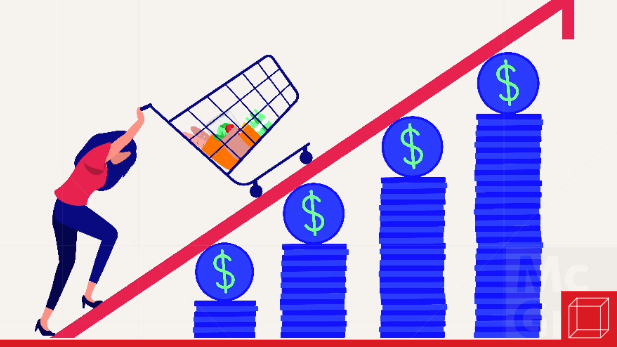
Americans are in a terrible mood about the economy, but they keep spending money anyway. A survey from the University of Michigan gave current consumer sentiment a score of 44.2 out of 100, the lowest score ever recorded in a survey that dates back to 1952. That means Americans currently feel worse about the economy than they did during the 1970s oil crisis, the Great Recession of 2008, and the COVID-19 pandemic. The culprits are familiar, with war in the Middle East driving up gas prices while years of inflation have quietly eroded what people can afford. More than half of consumers who responded to the survey said high prices were actively hurting their finances.
But none of that has stopped Americans from shopping as major retailers recently reported surprisingly strong sales. Target posted its best comparable sales growth in four years, up 5.6 percent. Starbucks, which previously lost customers due to reportedly high prices, reported a 7 percent increase in U.S. same-store sales. "Consumers are spending at a pace that just seems to defy gravity. The irony is they feel horribly about it," said one senior portfolio manager. This contradiction — people feeling pessimistic while continuing to spend — has become one of the defining economic puzzles of the post-pandemic era.
One of the central explanations for this phenomenon is that Americans are not all experiencing the same economy. High earners saw wages grow 6 percent over the past year, comfortably ahead of the 3.8 percent inflation rate. They are also more likely to benefit from the stock market, which is at record highs. On the other hand, lower- and middle-income households are experiencing something very different. Inflation has cancelled out most of their raises, and many are dipping into savings or borrowing to keep up. Economists call this a K-shaped economy: one where different income groups are moving in very different directions at the same time.
Questions:
Why do you think American consumers are continuing to shop even as prices remain high?
What sort of essential products are consumers likely to purchase every week despite rising prices? How do you think this affects their spending in other areas?

