
AI Expansion Creates Computer Hardware Shortage
Memory is getting hard to obtain both for tech firms and consumers.
- Higher Education
- Blog
- Article
- Understanding Business
- Chapter 1 Taking Risks & Making Profits
- Chapter 2 Economics
- Chapter 3 Globalization
- Chapter 4 Ethics & Social Responsibility
- Chapter 6 Entrepreneurship
- Chapter 9 Production & Operations Management
- Chapter 14 Product & Price
- Chapter 15 Distribution
- Bonus Chapter B
- Ethics
- Manufacturing & Packaging
- Operations Management
- Pricing
- Product Development
- Product Distribution
- Supply Chains
- Supply & Demand
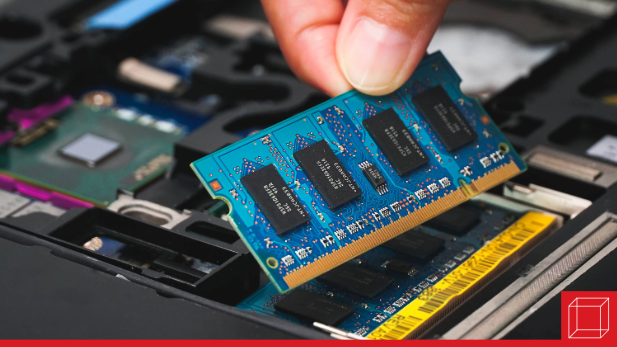
As computers and smartphones grow more powerful, they require stronger hardware systems to ensure they operate properly. Memory, for example, provides storage for all sorts of data that devices need in order to run, and today’s gadgets have a lot of functions that require a lot of memory. But due to the rise of artificial intelligence, demand for memory is growing at a much faster rate than suppliers can handle. Modern AI systems need tons of memory to process and store countless datasets in enormous data centers, a huge scale that existing supply chains were never designed to support. As a result, memory is becoming more expensive and harder to secure both for tech firms and regular consumers.
Despite this soaring demand, though, memory manufacturers are deliberately slow to expand production. The industry has a long history of sharp booms followed by painful crashes when excess supply drives prices down. That experience has made producers cautious about investing in new fabrication plants, which take years to build and cost billions of dollars. At the same time, AI customers are willing to pay significantly higher prices than traditional personal computer (PC) and smartphone makers, particularly for specialized memory used in advanced systems. Rather than make more memory, manufacturers are keeping supply tight and prioritizing sales to their most profitable buyers.
The consequences of this strategy are rippling throughout the rest of the market. As more memory is diverted toward AI infrastructure, less is available for consumer electronics and personal computers. DRAM prices have risen sharply, pushing hardware makers to raise prices, reduce memory configurations, or permanently lock components in place. Building or upgrading a PC has become more expensive even as software demands continue to increase. What’s more, limited access to local hardware reinforces reliance on cloud-based computing, where AI workloads are rented rather than owned. What looks like a technical shortage is also an economic shift in who can afford direct access to computing power.
Questions:
Why has demand for computer memory skyrocketed recently?
Why are memory manufacturers reluctant to produce more supply to meet increasing demand?

