The End of the U.S. Penny and What It Means for You
Discover why the U.S. ended penny production in 2025, saving millions annually. A fascinating look at currency evolution and the future of physical money!
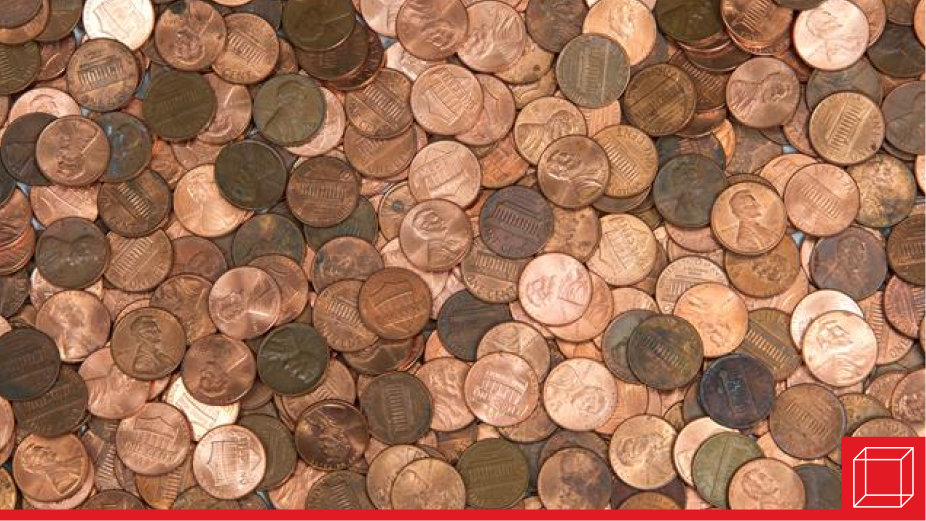
In November 2025, the United States officially ended the production of the penny after more than 230 years of circulation. The decision reflects the evolving role of physical currency in a modern economy, marking a significant shift in U.S. monetary policy.
History of the Penny
The U.S. penny was first introduced in 1793 following the passage of the Coinage Act, one of the earliest financial laws of the new nation. The penny was intended to provide a small denomination coin that reflected the purchasing power of the time. In its early years, a single penny could buy basic goods such as a biscuit, a candle, or a piece of candy.
Over time, the design of the penny changed to reflect cultural and political priorities. The first penny featured Lady Liberty, while Abraham Lincoln became the permanent figure on the front of the coin in 1909. The flip side changed multiple times, displaying chains, wheat stalks, the Lincoln Memorial, and more recently a Union shield.
Although often associated with copper, the penny’s composition shifted over the years. Since 1982, it has been made primarily of zinc with a thin copper coating.
In recent years, U.S. pennies have stirred up debate due to the cost of producing them.
The Decline of the Penny
The primary reason for ending penny production was economic inefficiency. By 2025, the cost to manufacture a single penny had risen to nearly four cents. This meant the federal government was losing money on every coin it produced. The rising production cost is largely due to increases in metal prices and manufacturing expenses.
While inflation has reduced the purchasing power of the penny, production costs have moved in the opposite direction. As a result, the penny no longer functioned as an effective medium of exchange, yet it continued to require significant public funding. Government officials estimated that eliminating the penny would save taxpayers tens of millions of dollars annually.
Beyond production costs, the penny had become increasingly irrelevant in daily commerce. Most consumers no longer actively use pennies when making purchases. Instead, they are often stored in jars, drawers, or discarded. Cash transactions have also declined overall as consumers increasingly rely on credit cards, debit cards, and mobile payment systems.
Implications of Ending Penny Production
One of the major implications of ending penny production is the need to round cash transactions to the nearest nickel. Electronic payments are unaffected since prices can still be calculated to the cent digitally. For cash purchases, businesses must adjust totals up or down based on standard rounding rules. Rounding is expected to become standard practice, similar to what has already occurred in other countries such as Canada.
Although production has stopped, existing pennies remain legal tender. Estimates suggest that hundreds of billions of pennies are still in circulation, meaning the coin will not vanish from the U.S. economy overnight. The coin will fade out naturally over time, reducing disruption while still addressing long term inefficiencies.
The end of penny production increased interest among coin collectors. Special sets of the final pennies minted in 2025 sold for millions of dollars at auction.
The end of the penny has prompted renewed discussion about the nickel. Like the penny, the nickel costs more to produce than its face value and has limited purchasing power. Only time will tell if the nickel will follow in the footsteps of the penny.
In the Classroom
This article can be used to discuss money in the financial system (Chapter 15: Money and the Financial System).
Discussion Questions
- Discuss how the cost of producing the penny became a major factor in the decision to end its production.
- What operational challenges do retailers face when a coin is phased out?
- How does the large number of pennies still in circulation affect the timeline for fully phasing the coin out of everyday use?
This article was developed with the support of Kelsey Reddick for and under the direction of O.C. Ferrell, Linda Ferrell, and Geoff Hirt.
Maryclaire Dale, "US Mint Presses Final Pennies as Production Ends After More Than 230 Years," AP News, November 18, 2025, https://apnews.com/article/us-mint-treasury-department-penny-end-production-86139df5644ef0885a9baf98e9677380
Olivia Diaz, "Last US Cents Sold at Auction for $16.76 Million Were Worth a Pretty Penny," AP News, December 16, 2025, https://apnews.com/article/auction-last-american-pennies-sold-millions-95dab2436556b90cea861730c6004194
Richard Rubin, "It’s the End of the Line for the U.S. Penny," The Wall Street Journal, November 12, 2025, https://www.wsj.com/livecoverage/stock-market-today-dow-sp-500-nasdaq-11-12-2025/card/it-s-the-end-of-the-line-for-the-u-s-penny-bW6Zz1yiBob9DASVF0YP
Victor Mather, "The Penny Dies at 232," The New York Times, November 12, 2025, https://www.nytimes.com/2025/11/12/business/penny-coin-legacy.html

Geoffrey A. Hirt of DePaul University previously taught at Texas Christian University and Illinois State University, where he was chairman of the Department of Finance and Law. At DePaul, he was chairman of the Finance Department from 1987 to 1997 and held the title of Mesirow Financial Fellow. He developed the MBA program in Hong Kong and served as director of international initiatives for the College of Business, supervising overseas programs in Hong Kong, Prague, and Bahrain, and was awarded the Spirit of St. Vincent DePaul award for his contributions to the university. Dr. Hirt directed the Chartered Financial Analysts (CFA) study program for the Investment Analysts Society of Chicago from 1987 to 2003. He has been a visiting professor at the University of Urbino in Italy, where he still maintains a relationship with the economics department. He received his Ph.D. in finance from the University of Illinois at Champaign-Urbana, his MBA at Miami University of Ohio, and his BA from Ohio Wesleyan University.