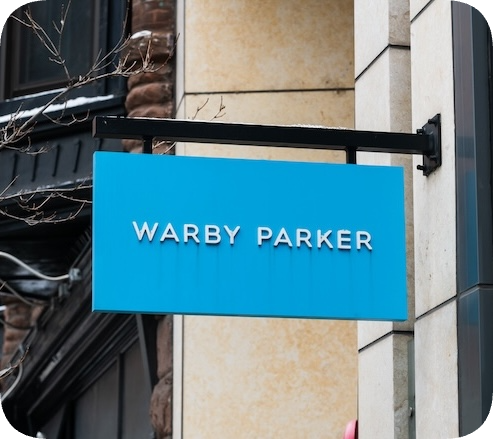
By taking control of everything from manufacturing to marketing, Warby Parker competes with the giants of the eyewear industry.
Tags
Higher Education
Article
Understanding Business
Chapter 1 Taking Risks & Making Profits
Chapter 2 Economics
Chapter 5 Forms of Business Ownership
Chapter 6 Entrepreneurship
Chapter 9 Production & Operations Management
Chapter 13 Marketing
Chapter 14 Product & Price
Chapter 15 Distribution
Chapter 16 Place & Promotion
Bonus Chapter B
Branding
Entrepreneurship
Manufacturing & Packaging
Product Development
Product Distribution
Retail, Marketing and Advertising
While competitors raise prices, Warby Parker has kept its basic glasses at $95 for 15 years, a feat that seems impossible in today's inflationary world. The secret is ownership. Unlike traditional eyewear companies that rely on outside manufacturers, retailers, and distributors, Warby Parker controls nearly every step of its business. The company owns two optical labs in the U.S., operates its own physical stores, and handles online distribution directly. When tariffs hit imported goods or labor costs spike, Warby can absorb or redirect those pressures instead of simply passing them on to customers.
This supply chain control becomes especially valuable during economic disruptions. When recent U.S. trade policies threatened to increase costs, Warby quickly shifted production away from China, reducing its Chinese sourcing from 20% to under 15% in just one year. Traditional eyewear brands are locked into relationships with outside suppliers, so they can't pivot as fast. Meanwhile, competitors like National Vision had to raise their flagship product prices twice — to $89.95 from $69.95 — because they lack the infrastructure to absorb cost increases. Warby's vertical integration acts like a shock absorber, letting the company maintain its anchor price while competitors struggle with external pressures they can't control.
The strategy shows how owning your distribution can transform pricing power. Warby Parker's average revenue per customer has grown every year since going public, even as 60% of its glasses stay at $95. The company can offer budget options to attract customers, then upsell higher-margin progressive lenses, add-ons, and premium frames through its own stores and website. Traditional retailers split these profits with middlemen, but Warby keeps everything. Co-CEO Neil Blumenthal admits the $95 price may eventually have to rise, but for now, owning the entire process gives Warby options that other companies simply don't have.
Questions:
Why is Warby Parker able to deal with volatile market conditions without raising prices?
Do you think Warby Parker will continue to be successful if it eventually has to raise prices? Why or why not?
References:
Haley Zimmerman, “How Warby Parker Has Kept the Price of Glasses at $95 for 15 Years,” The Wall Street Journal, Aug. 10, 2025.
Share:
Regional Page Available
It looks like you're outside the United States. Do you want to see your regional version of this page?
highered Warby Parker's Secret Weapon: Owning Everything By taking control of everything from manufacturing to marketing, Warby Parker competes with the giants of the eyewear industry. Warby Parker's Secret Weapon: Owning Everything By taking control of everything from manufacturing to marketing, Warby Parker competes with the giants of the eyewear industry. August 14, 2025 While competitors raise prices, Warby Parker has kept its basic glasses at $95 for 15 years, a feat that seems impossible in today's inflationary world. The secret is ownership. Unlike traditional eyewear companies that rely on outside manufacturers, retailers, and distributors, Warby Parker controls nearly every step of its business. The company owns two optical labs in the U.S., operates its own physical stores, and handles online distribution directly. When tariffs hit imported goods or labor costs spike, Warby can absorb or redirect those pressures instead of simply passing them on to customers. This supply chain control becomes especially valuable during economic disruptions. When recent U.S. trade policies threatened to increase costs, Warby quickly shifted production away from China, reducing its Chinese sourcing from 20% to under 15% in just one year. Traditional eyewear brands are locked into relationships with outside suppliers, so they can't pivot as fast. Meanwhile, competitors like National Vision had to raise their flagship product prices twice — to $89.95 from $69.95 — because they lack the infrastructure to absorb cost increases. Warby's vertical integration acts like a shock absorber, letting the company maintain its anchor price while competitors struggle with external pressures they can't control. The strategy shows how owning your distribution can transform pricing power. Warby Parker's average revenue per customer has grown every year since going public, even as 60% of its glasses stay at $95. The company can offer budget options to attract customers, then upsell higher-margin progressive lenses, add-ons, and premium frames through its own stores and website. Traditional retailers split these profits with middlemen, but Warby keeps everything. Co-CEO Neil Blumenthal admits the $95 price may eventually have to rise, but for now, owning the entire process gives Warby options that other companies simply don't have. Questions: Why is Warby Parker able to deal with volatile market conditions without raising prices? Do you think Warby Parker will continue to be successful if it eventually has to raise prices? Why or why not? References: Haley Zimmerman, “How Warby Parker Has Kept the Price of Glasses at $95 for 15 Years,” The Wall Street Journal, Aug. 10, 2025.
By taking control of everything from manufacturing to marketing, Warby Parker competes with the giants of the eyewear industry.
Branding, Higher Education, Entrepreneurship, Understanding Business, Bonus Chapter B, Product Distribution, Chapter 1 Taking Risks & Making Profits, Chapter 16 Place & Promotion, Chapter 15 Distribution, Chapter 14 Product & Price, Chapter 13 Marketing, Chapter 9 Production & Operations Management, Article, Chapter 6 Entrepreneurship, Chapter 5 Forms of Business Ownership, Retail, Marketing and Advertising, Manufacturing & Packaging, Product Development, Chapter 2 Economics