The Return of a Cult Favorite: McDonald’s Snack Wrap Is Back
Back by popular demand, McDonald’s Snack Wrap revival offers key lessons in marketing strategy, consumer behavior, and competitive response.
- Higher Education
- Article
- Ferrell Business in the News
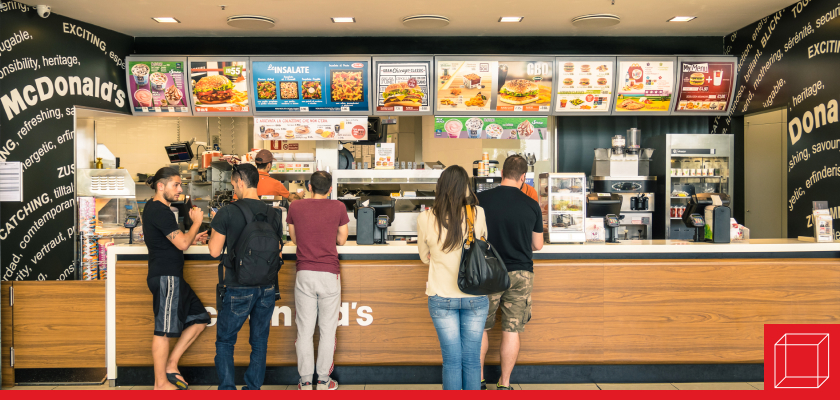
The McDonald’s Snack Wrap has made its long-awaited return, and it’s causing a stir. This bite-sized menu item, once discontinued in 2016, is back on menus nationwide. The Snack Wrap is more than just a nostalgic snack. It’s a case study in brand loyalty, consumer demand, and competitive strategy in the quick service restaurant industry.
What Is the Snack Wrap?
Originally launched in the early 2000s, the McDonald’s Snack Wrap featured a flour tortilla wrapped around a crispy chicken strip, shredded lettuce, shredded cheese, and ranch dressing. Designed to be a quick, portable meal option, it was especially popular with customers looking for something lighter or easier to eat on the go. The product was gradually removed from menus beginning in 2016. McDonald’s cited operational complexity and a need to simplify the menu as primary reasons for its removal.
Why The Snack Wrap Came Back
Fans never gave up. Over the years, customers consistently lobbied for the Snack Wrap’s return, flooding social media with requests and even launching online petitions. McDonald’s finally confirmed the comeback in early 2025, calling it “the most anticipated menu item of the decade.” The new version comes in two flavors: Spicy (with a habanero kick) and Ranch (with garlic and onion notes). Each is priced at $2.99 and available in-store, through drive-thru, and on the McDonald’s app.
The successful return of the Snack Wrap highlights the marketing power of nostalgia. McDonald’s saw a 22.3% jump in foot traffic the day after launch, according to Placer.ai. For a company that reported a 3.6% decline in U.S. same-store sales earlier this year, this spike is significant. Tapping into positive memories and emotional connections is a proven way to drive consumer interest, especially among consumers who seek experiences that remind them of simpler or happier times.
Another sign of the Snack Wrap’s popularity: ingredient shortages. In the week after launch, some McDonald’s locations ran low on shredded lettuce. Operators were instructed to remove lettuce from other items like the McChicken to keep up with demand. This hiccup reveals the operational complexities behind limited-time offers and high-demand product launches. While the company reports that the shortages were short-lived, the moment highlights how customer enthusiasm can sometimes outpace supply chain projections.
Mixed Reviews
While the product launch has largely been a win, the Snack Wrap 2.0 has received mixed reactions. Some longtime fans loved the new version and say they will order it again, while others were disappointed to discover that McDonald’s raised the price from the original and now uses its new McCrispy Strips rather than the original chicken tenders. Some customers took to Reddit and TikTok to complain that the chicken was rubbery, lacking crunch, and didn’t live up to the original. This pushback demonstrates an important lesson for marketers: delivering on expectations is just as important as creating demand.
At the same time, new customers who are trying the Snack Wrap for the first time may not notice the changes that longtime fans are pointing out. For them, the product is fresh and unfamiliar, which could help expand the audience beyond those driven by nostalgia. The jury is still out on whether the Snack Wrap will remain a long-term success or if initial enthusiasm will fade once the novelty wears off.
McDonald’s didn’t reenter the wrap game without competition. In recent years, chains like Popeyes, Sonic, Taco Bell, and Burger King have all released their own versions of chicken wraps, some priced lower than McDonald’s. The McDonald’s Snack Wrap is entering a market with more choices than ever.
Takeaways
The return of the Snack Wrap provides a real-world example of how consumer behavior, brand loyalty, and operational strategy intersect. One of the biggest takeaways is the influence of consumer advocacy. McDonald’s brought the Snack Wrap back in direct response to years of customer requests, proving that persistent demand can shape corporate decisions.
However, the launch also highlights the importance of product consistency. While the buzz around the return was strong, not all customers were satisfied with the updated version. This demonstrates that attracting attention through marketing is only one piece of the puzzle; delivering on expectations is what sustains long-term loyalty.
The competitive landscape adds another layer of complexity. McDonald’s wasn’t just reviving a classic, they were reentering a market now crowded with chicken wraps from other major brands, each competing for consumer dollars.
Finally, the temporary lettuce shortages at some locations serve as a reminder that even the best promotions can falter if operations aren’t aligned. Behind the scenes, strong forecasting, supply chain coordination, and restaurant-level execution are critical to supporting a successful product launch. Together, these factors make the Snack Wrap revival a useful case study for understanding modern marketing strategy in action.
In the Classroom
This article can be used to discuss supply and demand (Chapter 1: The Dynamics of Business and Economics) and customer-driven marketing Chapter 11 (Customer-Driven Marketing).
Discussion Questions
- What factors contributed to the decision to discontinue the original Snack Wrap? What factors contributing to bringing back the Snack Wrap?
- In your opinion, was the relaunch a success? Why or why not?
- In what ways have fast food competitors responded to the popularity of chicken wraps?
This article was developed with the support of Kelsey Reddick for and under the direction of O.C. Ferrell, Linda Ferrell, and Geoff Hirt.
Abigail Connolly, "McDonald's Customers Are Furious with the Return of he 'Snack Wrap' After They Used the New 'Horrible' McCrispy Strips and Raised the Price: 'Hard Pass'," Yahoo!, July 22, 2025, https://www.yahoo.com/lifestyle/articles/mcdonalds-customers-furious-return-snack-210018054.html
Heather Haddon, "McDonald’s Snack Wrap Rollout Leads to Lettuce Crunch," The Wall Street Journal, July 18, 2025, https://www.wsj.com/business/hospitality/mcdonalds-snack-wraps-lettuce-shortage-7067d573
Julie Littman, "McDonald’s Snack Wrap Launch Leads to Double-Digit Traffic Jump," Restaurant Dive, July 16, 2025, https://www.restaurantdive.com/news/mcdonalds-snack-wrap-double-digit-traffic-placer-ai-data/753107/
Kelly McCarthy, "Snack Wrap Returns to McDonald's: What to Know About the New Menu Item and Its Crispy Chicken Competitors," Good Morning America, July 10, 2025, https://www.goodmorningamerica.com/food/story/McDonalds-snack-wrap-returns-new-flavors-123583681

Linda Ferrell is the Roth Family Professor of Marketing and Business Ethics in the Raymond J. Harbert College of Business, Auburn University. She was formerly Distinguished Professor of Leadership and Business Ethics at Belmont University. She completed her Ph.D. in business administration, with a concentration in management, at the University of Memphis. She has taught at the University of Tampa, Colorado State University, University of Northern Colorado, University of Memphis, University of Wyoming, and the University of New Mexico. She has also team-taught classes at Thammasat University in Bangkok, Thailand.