The Business Lessons Behind Saks’ Collapse
In early 2026, Saks Global, the parent company of several well-known luxury department store brands, filed for Chapter 11 bankruptcy protection.
For decades, names like Saks Fifth Avenue, Neiman Marcus, and Bergdorf Goodman symbolized prestige, exclusivity, and luxury shopping experiences. The Chapter 11 filing surprised some observers because demand for luxury goods typically thrives even during economic downturns. The collapse of Saks Global highlights how financial decisions, market shifts, and marketing missteps can combine to undermine even prominent brands.
What Is Chapter 11 Bankruptcy?
Chapter 11 bankruptcy allows a company to continue operating under the supervision of a bankruptcy court while it restructures its debt, negotiates with creditors, and seeks new financing rather than immediately shutting down. Unlike Chapter 7 bankruptcy, which involves liquidating assets to pay off creditors, Chapter 11 focuses on reorganizing the business through a court-approved plan. Debt collection efforts and lawsuits are temporarily halted, giving the organization time to renegotiate contracts, sell off assets, and emerge as a more profitable company.
The Changing Luxury Retail Environment
Luxury retail experienced strong growth immediately after the COVID pandemic, as pent-up demand combined with excess savings. That environment changed quickly as inflation rose and interest rates increased. Higher borrowing costs made debt more expensive, while rising prices narrowed the group of consumers able to spend freely on luxury goods.
At the same time, luxury brands increasingly shifted toward direct-to-consumer distribution strategies, opening their own boutiques and expanding online sales. This reduced the importance of traditional department stores as intermediaries between brands and shoppers.
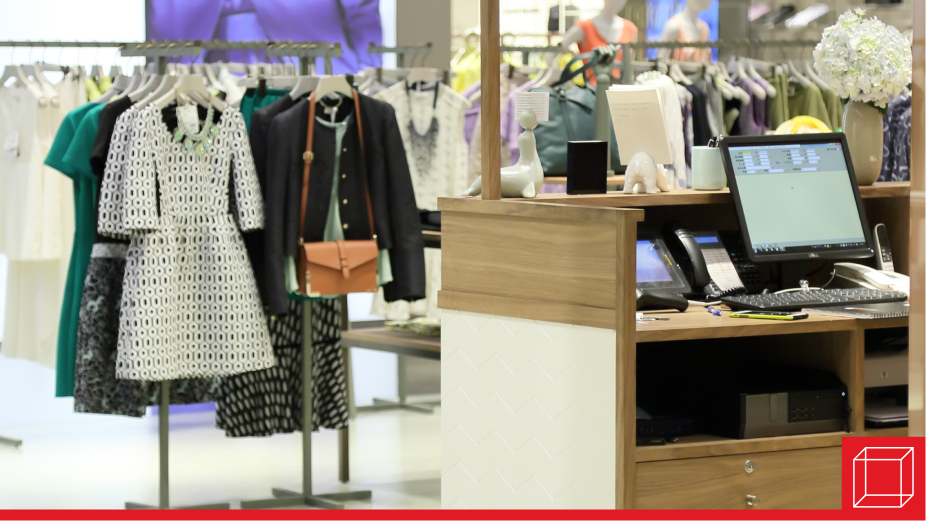
Physical department stores also faced high fixed costs. Large flagship locations require significant spending on rent, maintenance, staffing, and visual merchandising. As foot traffic declined and online shopping became more convenient, the economics of maintaining large luxury stores has become more difficult to justify.
Financial Risk
In 2024, Saks’ then-parent company made a major strategic bet. Hudson's Bay acquired Neiman Marcus in a $2.7 billion deal, combining the two rivals under the newly formed Saks Global. To finance the acquisition, Hudson’s Bay relied heavily on borrowed funds rather than internal cash, increasing the overall debt burden of the combined company at a time when interest rates were already rising. The goal was to create a luxury powerhouse that could consolidate operations, reduce costs, and strengthen negotiating power with suppliers. Instead, the merger added significant debt at a time when sales were slowing.
The financing structure of the merger also reflected a shift away from traditional bank lending. Amazon invested a minority stake in Saks Global as part of the transaction, a strategic move designed to strengthen its efforts to gain a foothold in the luxury fashion market. This arrangement illustrates how large corporations can act as investors when strategic interests align. As part of the deal, Saks launched a dedicated Amazon storefront, allowing the retailer to sell merchandise directly through Amazon’s online platform. Under the original agreement, Saks was expected to sell merchandise through Amazon and pay the e-commerce company at least $900 million over eight years. However, following the bankruptcy filing, Saks Global is reportedly preparing to wind down its Amazon storefront.
Because Saks and Neiman Marcus served similar customers and operated stores in many of the same locations, the deal offered limited opportunities for growth. Financing the acquisition became increasingly difficult as interest rates rose. When a major debt payment came due in late 2025, Saks Global did not have sufficient cash to meet its obligations, triggering the bankruptcy filing.
One of the clearest financial warning signs at Saks Global was deteriorating cash flow. The company struggled to pay suppliers on time and extended payment terms from 60 days to 90 days. In some cases, overdue payments were spread out over monthly installments rather than paid in full. This damaged trust with vendors. As confidence declined, many suppliers reduced shipments or stopped sending merchandise altogether. Limited inventory led to lower sales, which further weakened cash flow and made it even harder to pay suppliers. Bankruptcy court filings emphasized that demand for luxury goods remained strong, but without reliable inventory, Saks could not fully serve its customers.
Customer Experience
From a marketing perspective, empty shelves and canceled orders can be more damaging than declining sales alone. Luxury brands rely heavily on consistency, trust, and customer experience. When shoppers encounter out of stock items or receive cancellation emails after placing orders, the perceived value of the brand declines.
Customer frustration could be seen both online and in physical stores. Longtime shoppers reported being less likely to return after repeated inventory issues. In luxury retail, where customers have many alternatives, reliability is a key part of the brand promise. Once that trust is broken, customers may permanently shift their loyalty to competitors or to brand-owned boutiques.
Saks invested heavily in its Saks Fifth Avenue flagship, including a major renovation and high-profile holiday displays. These investments did not make up for the underlying financial problems. Additionally, there was a controversial decision to separate Saks’ e commerce business from its physical stores. Instead of providing flexibility, the split added complexity at a time when the company needed operational simplicity.
Learning from Competitors
The contrast with competitors helps illustrate what went wrong. Bloomingdale's pursued a more conservative strategy, maintaining a stronger balance sheet and experimenting with smaller, curated store formats. Nordstrom focused on maintaining supplier relationships and improving cash flow through its off-price division, Nordstrom Rack. Nordstrom also chose to go private, allowing management to focus on long term strategy without pressure from the public.
Saks Global’s bankruptcy demonstrates how closely financial health and marketing performance are linked. High debt levels limited flexibility, damaged supplier relationships, and led to inventory shortages that weakened the brand in the eyes of customers. Even iconic retailers are vulnerable when strategic bets fail to account for changing market conditions.
In the Classroom
This article can be used to discuss bankruptcy (Bonus Chapter A/Chapter 2 Appendix: The Legal and Regulatory Environment).
Discussion Questions
- How did rising interest rates and inflation contribute to Saks Global’s financial distress?
- Why did the merger between Saks and Neiman Marcus fail to deliver the expected benefits?
- What lessons can be learned from Saks’ competitors?
This article was developed with the support of Kelsey Reddick for and under the direction of O.C. Ferrell, Linda Ferrell, and Geoff Hirt.
Danielle Kaye, "Saks files for bankruptcy. What went wrong at the luxury retailer?" BBC, January 14, 2026
Dietrich Knauth and Chandni Shah, "Saks Global files for bankruptcy after Neiman Marcus takeover leads to financial collapse", Reuters, January 14, 2026
Nicholas P. Brown, "Exclusive: Saks ending e-commerce partnership with Amazon, source says", Reuters, January 30, 2026
Suzanne Kapner and Becky Yerak, "Saks Global Files for Bankruptcy, Undone by Debt and a Luxury Slump," The Wall Street Journal, January 14, 2026
The Canadian Press, "Hudson's Bay Company to buy luxury retailer Neiman Marcus in $2.65B US deal", CBC, July 4, 2024
Todd Bishop, "Amazon’s investment in Saks Fifth Avenue and Neiman Marcus is its latest foray into fashion", GeekWire, July 9, 2024
Yoel Minkoff, "What went wrong at Saks Global and what about the competition?" Seeking Alpha, January 15, 2026

Geoffrey A. Hirt of DePaul University previously taught at Texas Christian University and Illinois State University, where he was chairman of the Department of Finance and Law. At DePaul, he was chairman of the Finance Department from 1987 to 1997 and held the title of Mesirow Financial Fellow. He developed the MBA program in Hong Kong and served as director of international initiatives for the College of Business, supervising overseas programs in Hong Kong, Prague, and Bahrain, and was awarded the Spirit of St. Vincent DePaul award for his contributions to the university. Dr. Hirt directed the Chartered Financial Analysts (CFA) study program for the Investment Analysts Society of Chicago from 1987 to 2003. He has been a visiting professor at the University of Urbino in Italy, where he still maintains a relationship with the economics department. He received his Ph.D. in finance from the University of Illinois at Champaign-Urbana, his MBA at Miami University of Ohio, and his BA from Ohio Wesleyan University.