Simplified menus and fewer choices aim to boost profits.
Tags
Branding
Food & Drink
Retail, Marketing and Advertising
Operations Management
Manufacturing & Packaging
Product Development
Product Distribution
Supply & Demand
Supply Chains
Chapter 1 Taking Risks & Making Profits
Chapter 2 Economics
Chapter 9 Production & Operations Management
Chapter 13 Marketing
Chapter 14 Product & Price
Chapter 15 Distribution
Chapter 16 Place & Promotion
Blog
Article
Understanding Business
Higher Education
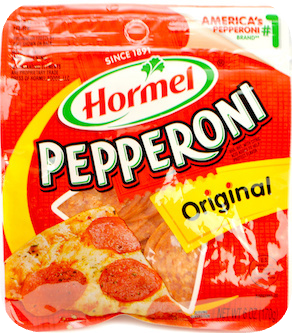
Hormel makes 71 different kinds of pepperoni. In addition to the widely popular original pepperoni slices, grocery shoppers can also choose diced, thick-sliced, mini-sliced, low-sodium, low-fat, turkey pepperoni, and more. The spin-offs may not sell as well as the original, but they do help to attract customer attention for the overall brand. More products mean more shelf space at stores, which gives customers more opportunities to find and buy Hormel products. The company also hoped this strategy would make shoppers feel like they have endless options so they would form a connection to their favorite and become return customers.
But the “endless options” strategy has a downside: it costs a lot of money to produce, transport, advertise, and store so much variety. After the COVID-19 pandemic, the supply chain became more unpredictable and expensive, driving up production and transport costs. As a result, food prices have risen more than 25 percent since 2020, causing customers to buy less. Plus, shoppers are trying to spend less time in stores, making them uninterested in cluttered aisles filled with redundant products. Faced with changing consumer behavior, an unpredictable supply chain, and rising prices, brands are cutting back on the number of products they produce.
Hormel, for instance, makes tens of thousands of products — including those 71 different kinds of pepperoni — but 80 percent of its profit comes from a small number of bestsellers. This year, Hormel announced it will remove or repackage 25 percent of its products as part of a company-wide strategy to cut unprofitable items. Food makers aren’t the only ones producing less variety. Toy maker Hasbro recently eliminated half of the products it offered, which only accounted for 2 percent of the company’s revenue. Levi’s cut 15 percent of its clothing options as it attempts to sell directly to customers through its own stores and websites. The overall result is fewer options for shoppers but more stability for companies.
Questions:
Why are companies like Hormel cutting back on the variety of products they offer to customers?
How do you think less variety will impact shoppers’ in-store experiences?
highered Companies Cut Back on “Endless Options” Strategy Simplified menus and fewer choices aim to boost profits. Hormel makes 71 different kinds of pepperoni. In addition to the widely popular original pepperoni slices, grocery shoppers can also choose diced, thick-sliced, mini-sliced, low-sodium, low-fat, turkey pepperoni, and more. The spin-offs may not sell as well as the original, but they do help to attract customer attention for the overall brand. More products mean more shelf space at stores, which gives customers more opportunities to find and buy Hormel products. The company also hoped this strategy would make shoppers feel like they have endless options so they would form a connection to their favorite and become return customers. But the “endless options” strategy has a downside: it costs a lot of money to produce, transport, advertise, and store so much variety. After the COVID-19 pandemic, the supply chain became more unpredictable and expensive, driving up production and transport costs. As a result, food prices have risen more than 25 percent since 2020, causing customers to buy less. Plus, shoppers are trying to spend less time in stores, making them uninterested in cluttered aisles filled with redundant products. Faced with changing consumer behavior, an unpredictable supply chain, and rising prices, brands are cutting back on the number of products they produce. Hormel, for instance, makes tens of thousands of products — including those 71 different kinds of pepperoni — but 80 percent of its profit comes from a small number of bestsellers. This year, Hormel announced it will remove or repackage 25 percent of its products as part of a company-wide strategy to cut unprofitable items. Food makers aren’t the only ones producing less variety. Toy maker Hasbro recently eliminated half of the products it offered, which only accounted for 2 percent of the company’s revenue. Levi’s cut 15 percent of its clothing options as it attempts to sell directly to customers through its own stores and websites. The overall result is fewer options for shoppers but more stability for companies. Questions: Why are companies like Hormel cutting back on the variety of products they offer to customers? How do you think less variety will impact shoppers’ in-store experiences? Source: Nathaniel Meyersohn, “Stores Don’t Sell Your Favorite Product Anymore. That’s On Purpose,” CNN, Nov. 8, 2024. Author: NickelsMcHughMcHugh
Simplified menus and fewer choices aim to boost profits.