Building a K-12 Literacy Curriculum for a New Era

How McGraw Hill’s K-12 literacy franchise was built to connect with what the latest research tells us about students learning to read, write, and build knowledge.


Tags: Science of Literacy, McGraw Hill Literacy Emerge!, Corporate, McGraw Hill Literacy Summit!, McGraw Hill Literacy Soar!, Blog, Article, McGraw Hill Literacy, PreK-12

Reading instruction is undergoing one of the most significant shifts in decades. The science of how students learn to read is well established, and schools across the country are facing both an urgent challenge and a defining opportunity: adopt materials grounded in research, designed for real classrooms, and capable of following students across every stage of their K-12 journey.  

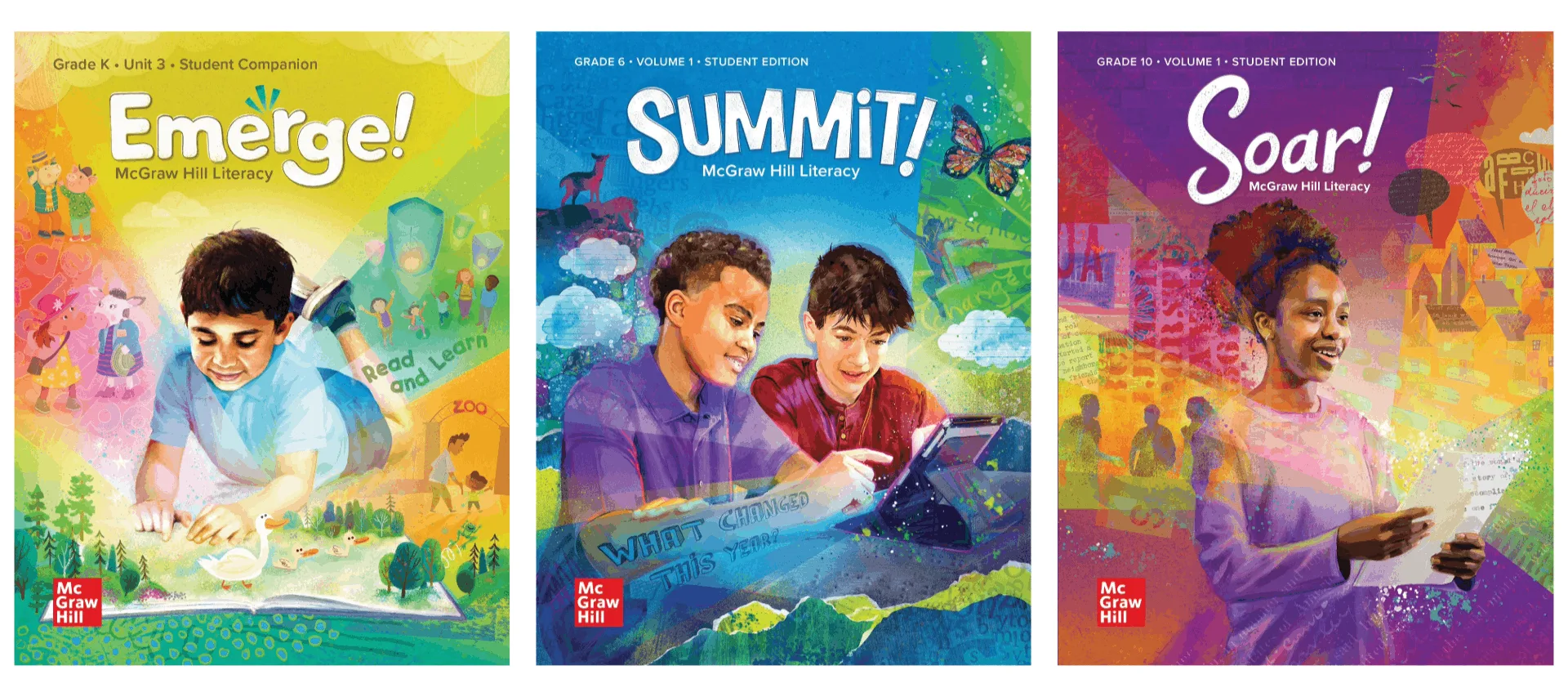
McGraw Hill Literacy was built for this moment. Bringing together Emerge! for grades K–5, ¡Emerger juntos! for dual-language classrooms, Summit! for grades 6–8, and Soar! for grades 9–12, it is the first K-12 literacy franchise McGraw Hill has published in one continuous, intentionally designed program. Grounded in the Science of Literacy, it connects reading, writing comprehension, and knowledge building from kindergarten through high school.  

In this profile, Nicole Franks, Vice President of Product Management, and Daniela Perelli Balk, Vice President of Academic Design for McGraw Hill School, discuss what it took to build this connected experience, how educator feedback shaped its design, and why continuity across grade levels matters for students, teachers, and districts. 

Emerge!, Summit!, and Soar! together make up McGraw Hill Literacy, a curriculum built as one continuous K–12 journey. What makes that end-to-end design different from how literacy curricula are typically developed, and what are you hearing from the teachers using it in their classrooms?

Nicole: McGraw Hill Literacy is the first single-branded K–12 literacy franchise McGraw Hill has published as one continuous, intentionally designed program. At each stage of planning, we monitored the progression from primary grades through upper elementary, middle school, and high school to make sure skills and concepts are built on one another in a clear and visible sequence. Educators and learners were integral to this process, providing insights through more than 40 design sprints over three years.  

Teachers have told us they appreciate the cohesive progression of writing instruction, particularly how students build confidence as they move from sentences to paragraphs and extended writing. They also value the familiar, intuitive digital experience and the flexibility of printable resources, with many sharing that Emerge! feels easier to navigate than their previous program. That feedback validates our focus on developing a connected experience that is both research-based and aligned with the realities of classroom instruction.  

McGraw Hill Literacy brings together Emerge! (K–5), Summit! (6–8), and Soar! (9–12) as one connected K–12 literacy progression.

Can you take us behind the scenes of what it took to bring McGraw Hill Literacy to life, from the range of experts and authors involved to the coordination across grade bands?

Nicole: Developing McGraw Hill Literacy required careful planning, followed by an equally strategic build process with collaboration across teams at every stage. Early research began in fall 2020, with our product team focused on both market and academic research. We examined the evolution of reading instruction and engaged thousands of educators through surveys, interviews, and teacher advisory boards. Teacher, administrator, and student personas were also developed, so the entire product team would have a shared understanding of who would use the curriculum and what was most important to each of their experiences.

Daniela: In addition to the input from educators, sixteen renowned literacy experts contributed their specialized knowledge to shape Emerge!, Summit!, and Soar! and helped validate the materials. With guidance from program authors, consultants, and other thought leaders, we created a program vision for each grade band and an intentional scope and sequence to align learning targets, instruction, and assessment based on a comprehensive academic research review. We are also proud that McGraw Hill Literacy is one of the few K-12 literacy programs in the country built to serve both English and Spanish learners, with a dual-language design woven through the franchise – ¡Emerger juntos!.  

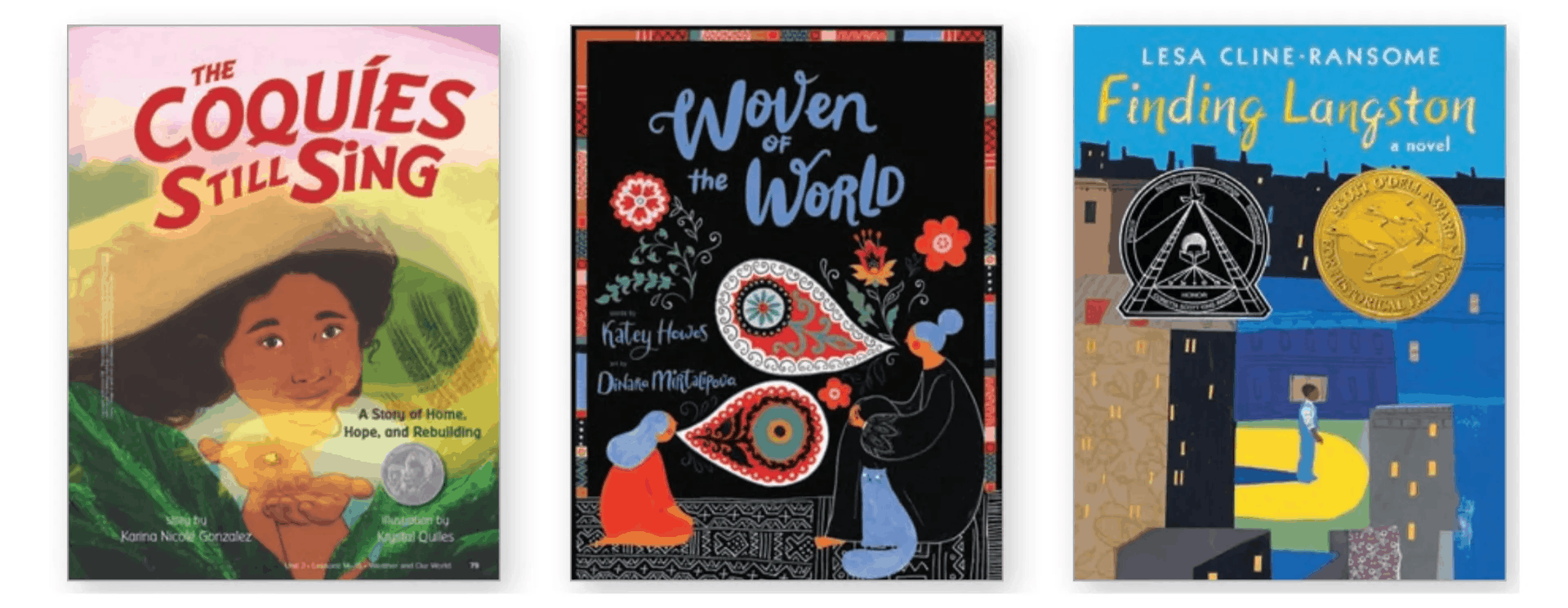
McGraw Hill Literacy uses rich, conceptually connected texts to support reading, writing, comprehension, and knowledge building across grade levels.

Nicole: Hundreds of McGraw Hill team members ultimately contributed to creating cohesive, developmentally appropriate experiences within each program, and that work continues today as we refine and expand the franchise based on what we’re learning from classrooms.  

McGraw Hill describes its approach as the Science of Literacy, which brings together reading, writing, and knowledge building. How does your team define that, and how does it show up in what teachers actually see and use in the classroom?

Daniela: As the way reading is taught in classrooms across the country continues to evolve, McGraw Hill’s approach to the Science of Literacy calls for instruction that prioritizes coherence, depth, and connection across content areas, and empowers students to think critically and engage deeply with the world around them.  

At its core, the Science of Literacy integrates three interconnected domains:

  1. Science of Reading: addresses the key pillars of reading, which include phonemic awareness, phonics, fluency, vocabulary, and comprehension.
  2. Science of Writing: explicit writing instruction in foundational writing skills, genre, and the writing process.
  3. Knowledge Building and Comprehension: builds content knowledge through disciplinary learning and vocabulary development.

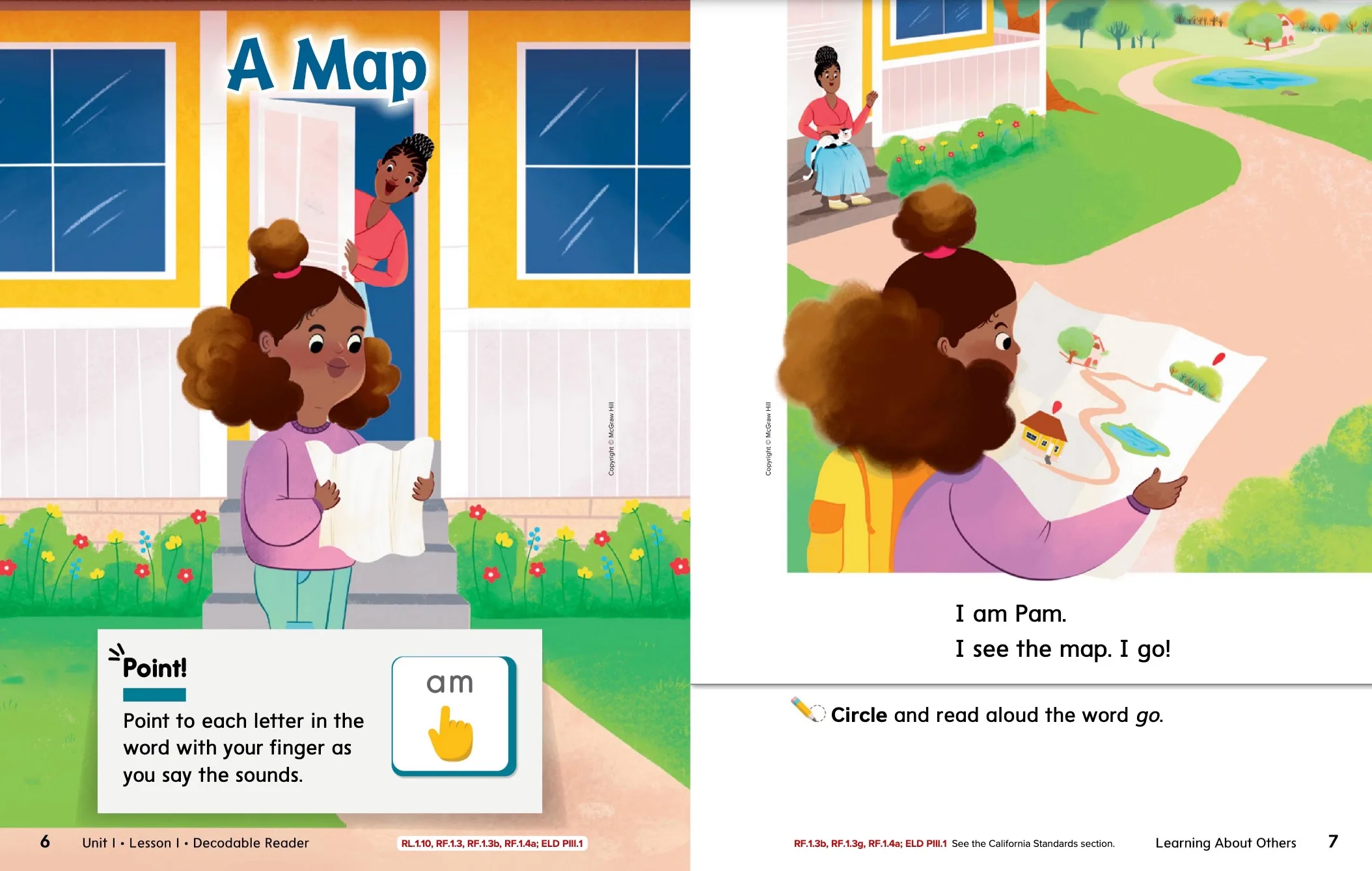
In McGraw Hill Literacy programs, teachers use a curriculum focused on rigorous grade-level content that incorporates research-based instructional practices and integrates writing instruction throughout the lessons and activities. Teachers help students understand the reciprocal relationship between reading and writing, allowing for a gradual release of responsibility from teacher modeling to independent practice and application by students.

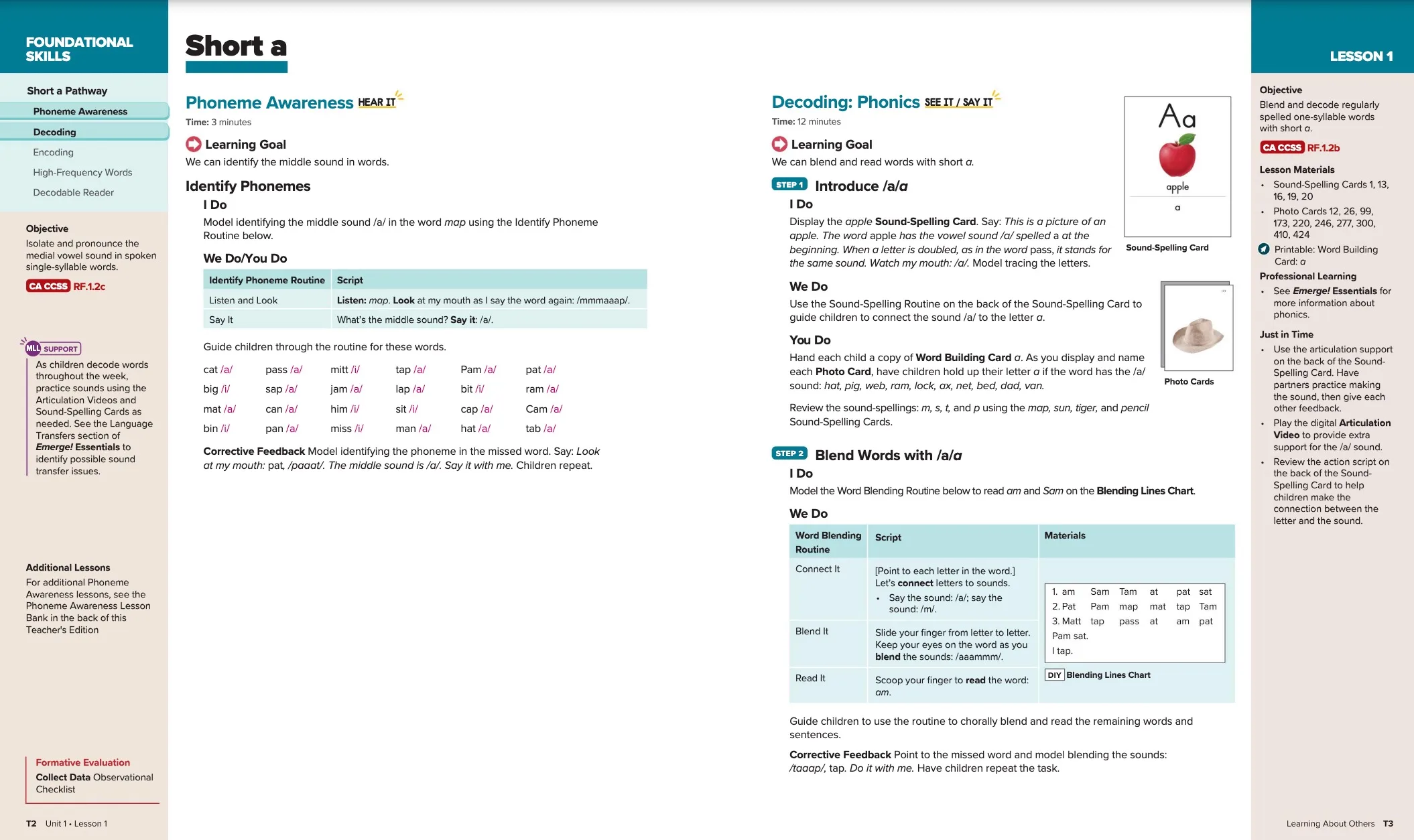
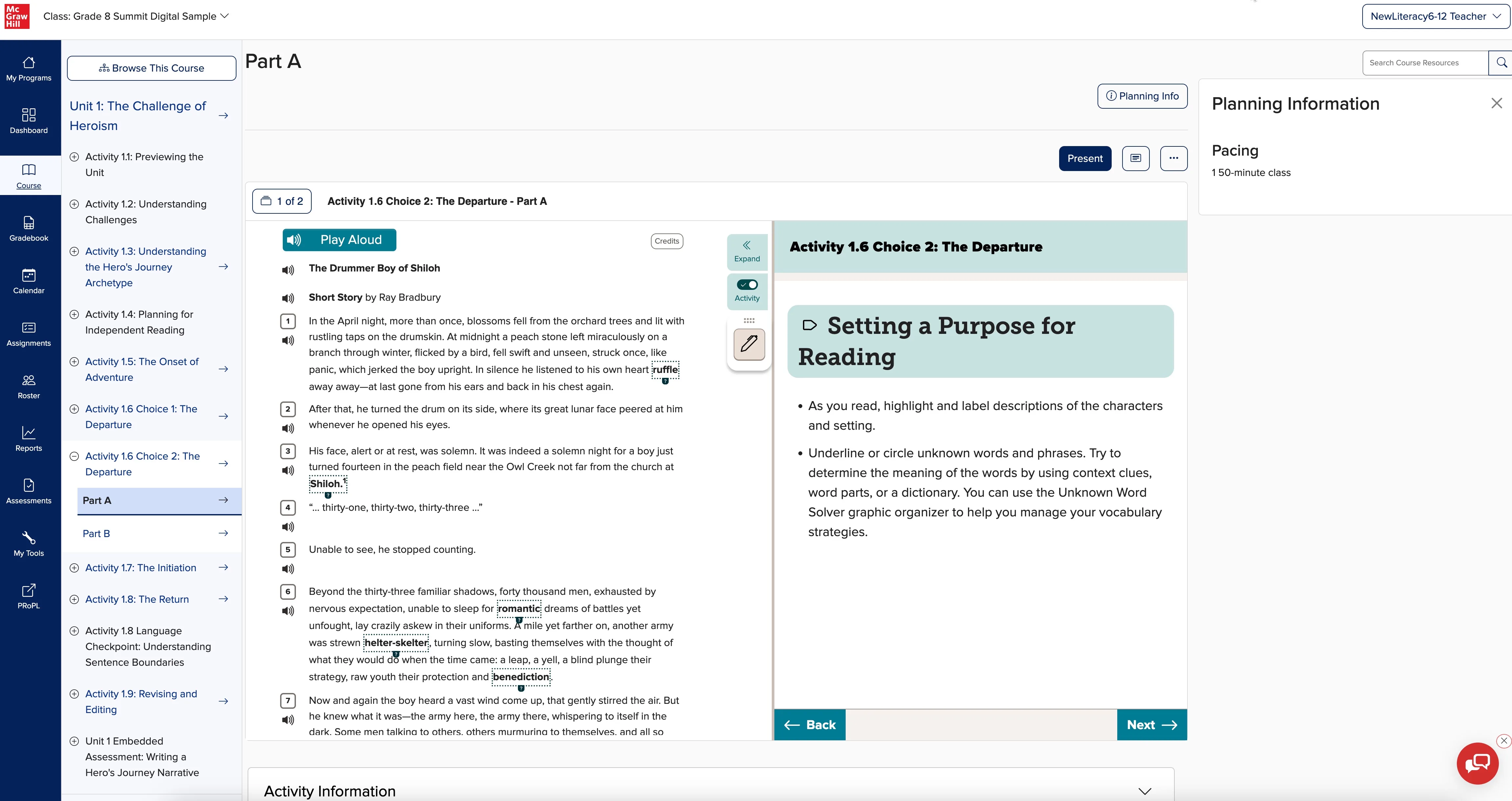
Research-based instructional routines are embedded throughout the Emerge! Teacher Edition, helping educators bring the Science of Literacy to life in daily instruction.

The curriculum blends research-based instruction with digital and AI-powered components. How do those tools add value for teachers and students, and how does your team think about the role of technology within the broader learning experience?

Nicole: At McGraw Hill, we believe technology used in the classroom can help educators identify learning gaps, personalize instruction, and provide support at critical moments. It should strengthen productive struggle, not eliminate it.

For teachers, tools built into Open Learning, including Teacher Assistant, Writing Assistant, and the new Digital Writing Experience, support lesson planning, instruction, progress monitoring, and professional learning.  Open Learning also leverages the Standards and Skills Graph to bring together information from formative assessments, observational checklists, and unit assessments, helping teachers understand student progress and identify opportunities for additional support. Using those insights, educators can access personalized instructional recommendations and resources aligned to their students' needs. These capabilities are also built directly within the Emerge!, Summit!, and Soar! experience, making data-driven instruction a natural part of teachers' existing workflow.

Digital tools within Open Learning help teachers plan instruction, monitor progress, and personalize support based on student needs.

Daniela: We have been intentional about students’ use of technology as we considered the learning journey from kindergarten through high school. McGraw Hill Literacy balances print and digital activities, with digital tools introduced gradually across grade spans for different purposes. In the primary grades, students have limited use of digital tools, with options for skills practice, differentiation, and engagement. In secondary grades, digital writing tools support idea generation, revision, editing, and feedback. Across all grades, digital tools are used to support the application of instruction while respecting research on screen time.

When you step back and look at where literacy education is headed, where does McGraw Hill fit into that future, and what are you most proud to be building?

Daniela: McGraw Hill has a long history of developing literacy instructional materials grounded in research and evidence. That heritage allows us to continue innovating by putting research into practice for educators. We are also looking at learning differences in a new way by valuing what every learner brings to the classroom, honoring  students’ sense of self and encouraging belonging, developing student efficacy, and providing curriculum that emphasizes belonging This approach supports deeper knowledge building, analysis, and critical thinking, skills that will become increasingly important as access to information becomes more immediate. Students will need to synthesize information, articulate what it means, and determine what to do with it. I am proud that McGraw Hill Literacy is designed to help students build those capabilities while becoming confident readers, writers, speakers, and thinkers. 

Nicole: McGraw Hill’s foundation of pedagogically sound instruction makes it possible to develop new ways of collecting and interpreting information. Technology can help teachers understand what worked and what did not with less time between feedback cycles, allowing support to be provided closer to the moment it is needed. Teachers know their students best, so the goal is to recommend evidence-based tools and structures for growth while allowing educators to focus on their craft.  We are also proud of the rich, meaningful texts at the heart of these programs and the way they inspire students to read, write, and share ideas. I am most excited about bringing rich texts and purposeful technology together to make learning more responsive, accessible, and connected.