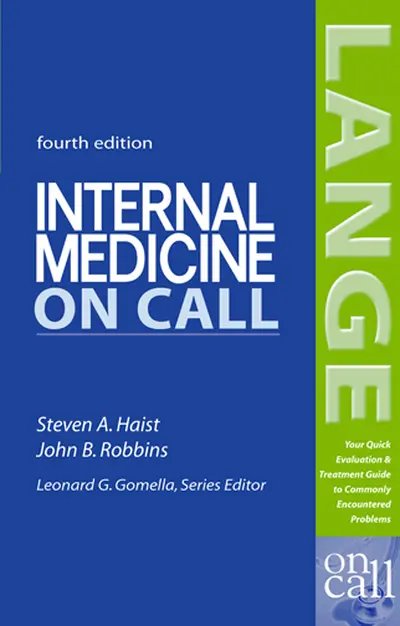
ISBN10: 0071439021 | ISBN13: 9780071439022

ISBN10: 0071439021
ISBN13: 9780071439022
By Steven A. Haist and John B. Robbins

Step 1. Download Adobe Digital Editions to your PC or Mac desktop/laptop.

Step 2. Register and authorize your Adobe ID (optional). To access your eBook on multiple devices, first create an Adobe ID. Then, open Adobe Digital Editions, go to the Help menu, and select "Authorize Computer" to link your Adobe ID.

Step 3. Open Your eBook. Use Adobe Digital Editions to open the file. If the eBook doesn’t open, contact customer service for assistance.

Publisher's Note: Products purchased from Third Party sellers are not guaranteed by the publisher for quality, authenticity, or access to any online entitlements included with the product.
Use the ON CALL series when you want on-the-spot treatment advice for the most frequently encountered problems in internal medicine.
• Comprehensive overview of the initial evaluation and treatment of more than 60 of the most common problems seen daily on the wards
• Unique ON CALL FORMAT is organized for quick access to essential information you need to manage patients efficiently
• Thoroughly updated on-call problems reflect current the latest diagnostic tests and treatment options
• Essential guide to interpretation of laboratory tests and bedside procedures
ON CALL THERAPEUTICS SECTION offers a quick reference to commonly used medications and includes both generic drugs as well as vitamins, minerals, and natural products
Visit us at www.accessmedbooks.com

I.On Call Problems

1.Abdominal Pain

2.Acidosis

3.Alkalosis

4.Anaphylactic Reaction

5.Anemia

6.Arterial Line Problems

7.Aspiration

8.Bradycardia

9.Cardiopulmonary Arrest

10.Central Venous Line Problems

11.Chest Pain

12.Coagulopathy

13.Coma, Acute Mental Status Changes

14.Constipation

15.Cough

16.Delirium Tremens

17.Diarrhea

18.Dizziness

19.Dyspnea

20.Dysuria

21.Falls

22.Fever

23.Fever in the HIV-Positive Patient

24.Foley Catheter Problems

25.Headache

26.Heart Murmur

27.Hematemesis, Melena

28.Hematochezia

29.Hematuria

30.Hemoptysis

31.Hypercalcemia

32.Hyperglycemia

33.Hyperkalemia

34.Hypernatremia

35.Hypertension

36.Hypocalcemia

37.Hypoglycemia

38.Hypokalemia

39.Hypomagnesemia

40.Hyponatremia

41.Hypophosphatemia

42.Hypotension

43.Hypothermia

44.Insomnia

45.Irregular Pulse

46.Jaundice

47.Joint Swelling

48.Leukocytosis

49.Leukopenia

50.Nausea and Vomiting

51.Oliguria/Anuria

52.Overdoses

53.Pacemaker Troubleshooting

54.Pain Management

55.Polycythemia

56.Pruritis

57.Pulmonary Artery Catheter Problems

58.Seizures

59.Syncope

60.Tachycardia

61.Thrombocytopenia

62.Transfusion Reaction

63.Wheezing

II.Laboratory Diagnosis

III.Procedures

1.Arterial Line Placement

2.Arterial Puncture

3.Arthrocentesis

4.Bladder Catheterization

5.Bone Marrow Aspiration and Biopsy

6.Central Venous Catheterization

7. Endotracheal Intubation

8.Gastrointestinal Tubes

9.Intravenous Techniques

10.Lumbar Puncture

11.Paracentesis

12.Pulmonary Artery Catheterization

13.Skin Biopsy

14.Thoracentesis

IV.Fluids and Electrolytes

V.Blood Component Therapy

VI.Ventilator Management

1.Indications and Setup

2.Routine Modification of Settings

3.Troubleshooting

A. Agitation

B. Hypoxemia

C. Hypercarbia

D. High Peak Pressures

4.Weaning

VII.Therapeutics

Need support?   We're here to help - Get real-world support and resources every step of the way.

Top