The Economic Naturalist: Using Everyday Questions to Teach Economic Reasoning with Robert Frank

A practical approach to teaching students to see incentives, tradeoffs, and opportunity cost in the world around them.

  • Higher Education
  • Webinar
  • Event
  • Virtual
  • Economics
  • Principles of Economics
  • Principles of Microeconomics
  • Principles of Macroeconomics
  • Connect
  • 60 Minutes
  • Live Webinar

Register

Fields marked by * are required.

Successfully Registered!

You are now registered for this event.

Your information will be used to provide you with the requested information and other information about McGraw Hill’s products and services. You may opt out at any time by contacting McGraw Hill’s local privacy officer or selecting “unsubscribe” at the bottom of any email you receive from us.

Description

Economics students often leave introductory courses able to recite concepts, but unable to apply economic reasoning to the world around them. In this engaging webinar, economist Robert Frank explores how curiosity-driven storytelling and “Economic Naturalist” questions can help students think more deeply, intuitively, and critically about core economic principles.

Drawing on years of classroom experience, Frank demonstrates how everyday observations, from airline pricing and wedding attire to opportunity cost and incentives, can become powerful entry points for teaching economic thinking. The session examines why traditional approaches to instruction often fail to produce lasting economic literacy and how narrative, active learning, and real-world applications can make economics more memorable and meaningful for students.

Attendees will gain practical ideas for increasing student engagement, strengthening economic intuition, and helping students connect foundational concepts to the decisions and behaviors they encounter every day.

Time Slots

About Your Speaker

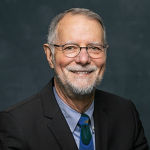
Robert H. Frank

Robert H. Frank is the Henrietta Johnson Louis Professor emeritus of Management and professor emeritus of economics at the Samuel Curtis Johnson Graduate School of Management and a distinguished senior fellow at Demos. For more than a decade, his "Economic View" column appeared monthly in The New York Times. He received his BS in mathematics from Georgia Tech, and then taught math and science for two years as a Peace Corps Volunteer in rural Nepal. He holds an MA in statistics and a PhD in economics, both from the University of California at Berkeley. His papers have appeared in the American Economic Review, Econometrica, Journal of Political Economy, and other leading professional journals.

Frank's books have been translated into 23 languages, including Choosing the Right Pond, Passions Within Reason, Microeconomics and Behavior, Principles of Economics (with Ben Bernanke), Luxury Fever, What Price the Moral High Ground?, Falling Behind, The Economic Naturalist, The Darwin Economy, and Success and Luck. The Winner-Take-All Society, coauthored with Philip Cook, received a Critic's Choice Award, was named a Notable Book of the Year by The New York Times, and was included in Business Week's list of the 10 best books of 1995.

Frank is a corecipient of the 2004 Leontief Prize for Advancing the Frontiers of Economic Thought. He was awarded the Johnson School's Stephen Russell Distinguished Teaching Award in 2004, 2010, and 2012, and its Apple Distinguished Teaching Award in 2005.