
How Indie Colas Compete with Coke: Real-World Strategies Around the Globe
Kofola, Thums Up, and Salaam Cola prove niche beverage brands can compete with Coca-Cola by mastering the marketing mix and local identity.
- Higher Education
- Article
- Blog
- Ferrell Business in the News
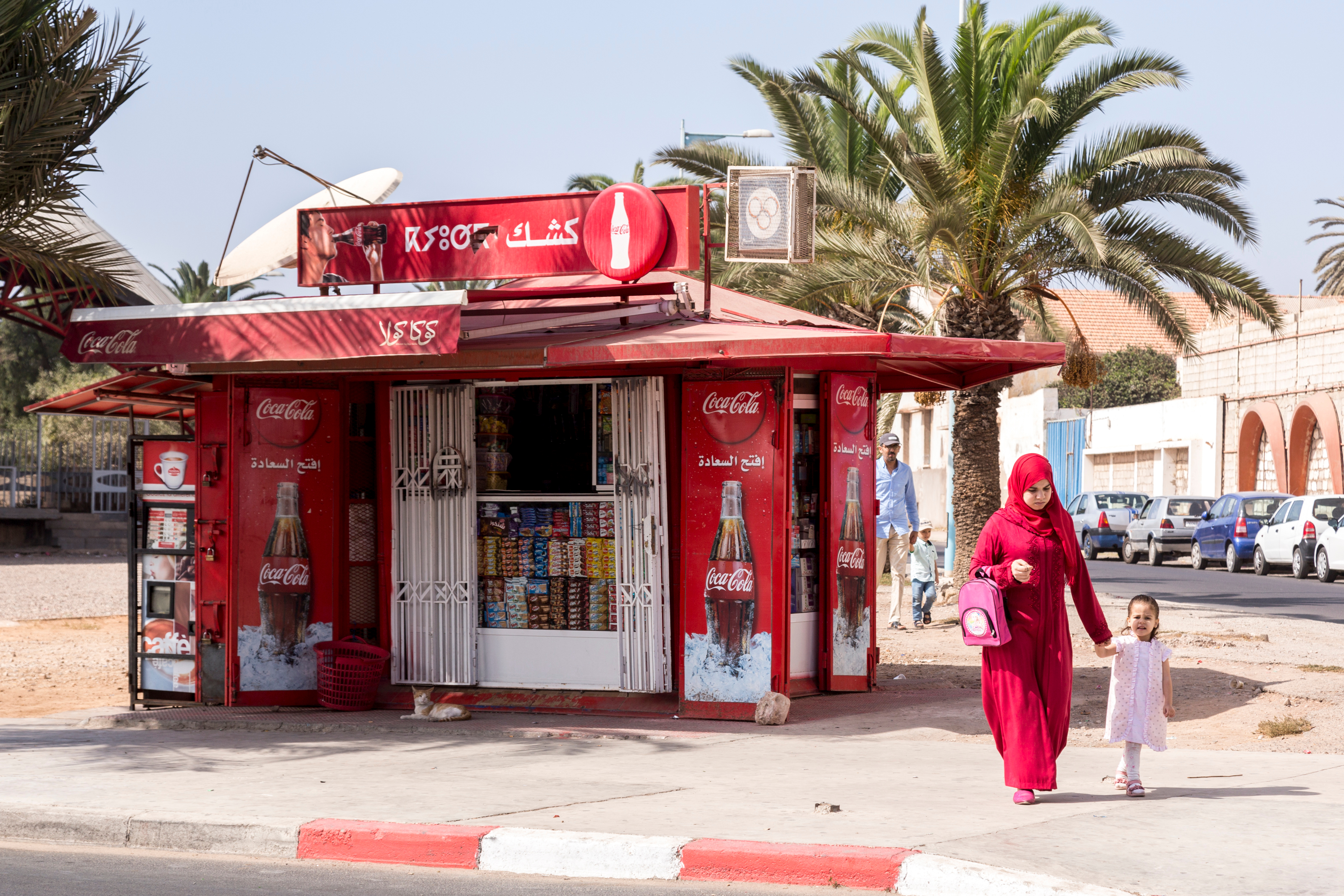
Coca-Cola is one of the world’s most recognizable brands, with extensive distribution, major advertising resources, and a product sold in more than 200 countries. Competing against that kind of market power may seem unrealistic for a small beverage company. Yet niche colas around the world continue to attract customers and build distinct identities by connecting their products to local history, ingredients, tastes, and values.
Some local colas emerged because political or economic conditions limited access to foreign products. Others were created around regional ingredients, health preferences, cultural identity, or social values. Their success shows how businesses can use the marketing mix to stand apart from larger competitors.
Kofola: Competing Through Heritage
Kofola was created in communist Czechoslovakia after government authorities asked the pharmaceutical company Galena Opava to develop a local alternative to Coca-Cola and Pepsi. Western colas were not widely available in the communist bloc, so Kofola was designed to fill that gap.
The product differed from American-style cola from the beginning. Its proprietary Kofo syrup contains 14 herbal and fruit extracts. The ingredients include raspberry, blackberry, strawberry, cinnamon, licorice, caramel, apple, cherry, and orange peel. Kofola also contains 30 percent less sugar than Coca-Cola. These product features give it a more herbal flavor than a typical cola.
Kofola’s history also contributes to its brand identity. Many businesses associated with the communist period struggled after the transition to a market economy, when Western companies and products entered the region. Kofola survived that competition and remained a recognizable Czech brand. Its promotion uses this distinctive personality. The company states that “love is in Kofola’s DNA.”
Thums Up: Selling Boldness and Identity
Thums Up was introduced in India after Coca-Cola left the country in 1977. Coca-Cola’s departure followed changes in Indian regulations affecting multinational companies. The exit created an opening for local beverage businesses.
The Parle Group introduced Thums Up as one of several Indian soft drinks intended to fill the gap. The product developed a clear flavor difference. It was described as fizzier, spicier, and less sweet than competing colas. Its stronger taste also paired well with spicy food, making the product well suited to regional preferences.
Distribution played an important role in the brand’s early growth. Parle also produced Limca, a popular lemon-lime drink. The company required some retailers that wanted to stock Limca to carry Thums Up as well. This approach helped Thums Up gain shelf space and reach more customers.
Promotion gave the cola an equally strong identity. The slogan “Taste the Thunder” presented Thums Up as adventurous, energetic, and daring. Advertisements featured exciting activities and appealed strongly to teenage boys, an important group of soft-drink customers.
The brand also benefited from its Indian origins. When Pepsi and Coca-Cola returned to India as the country opened its economy, Thums Up was already familiar to consumers. Its local roots contributed to national pride, while its distinctive taste and promotional message helped it compete against the returning multinational brands. Coca-Cola purchased Thums Up from Parle after re-entering India in 1993. Although Coca-Cola discontinued several other local brands, it kept Thums Up because customers continued to buy it.
Toba Toba Cola: Turning Distribution into Product Value
Toba Toba Cola comes from Kikaijima, a small Japanese island located about 240 miles south of mainland Japan. Its product strategy is built around ingredients and versatility. The cola combines kola nut, the island’s native shiiku citrus fruit, raw brown sugar, and 14 spices. Some of the spices are ground by hand. The result is a concentrated syrup rather than a ready-to-drink canned soda. Customers can mix the syrup with carbonated water to make cola, but the product can also be added to tea, milk, wine, beer, or whiskey. This flexibility allows customers to use the same product in several ways. It also distinguishes Toba Toba from standard bottled or canned colas.
The brand name adds another local connection. In the Kikaijima dialect, Toba Toba means excited, uplifted, or joyful. This meaning links the product to its place of origin while giving the brand a positive emotional message. Toba Toba has also received attention from publications including Elle Japan and National Geographic France. That coverage has introduced the product and its island back-story to audiences beyond Kikaijima.
Salaam Cola: Building a Brand Around Purpose
Salaam Cola was launched in the United Kingdom in 2023 by entrepreneur Aykiz Shah, who developed the first batches in her kitchen. The brand later established production facilities in Turkey and expanded rapidly into international markets. The product is halal-certified and has a flavor described as combining earthy herbs, warm spices, and a sharp citrus finish. These characteristics help distinguish it from more conventional colas.
Salaam Cola’s promotion centers on political awareness, social activism, and humanitarian support. The company pledges 10 percent of its profits to aid projects carried out in partnership with Muslims in Need, a registered charity in the United Kingdom. The mission is not presented as a minor addition to the brand. It is a central part of the company’s message. Shah has explained that the cola was created not only to provide aid, but also to help rebuild lives. The brand expanded into 18 countries within 16 months and is now sold in 34 countries.
What Niche Colas Teach About the Four Ps
Each of these brands competes with Coca-Cola in a different way. Kofola relies on heritage and familiarity. Thums Up emphasizes bold flavor and excitement. Toba Toba highlights craftsmanship and regional ingredients. Salaam Cola connects its product to religious certification and social impact. Their strategies show that differentiation must matter to a specific target market. Product, price, place, and promotion should work together to communicate a consistent position.
In the Classroom
This article can be used to discuss global reach (Chapter 3: Business in a Borderless World) and marketing strategy (Chapter 12: Dimensions of Marketing Strategy).
Discussion Questions
- How did Kofola turn its political and cultural history into a competitive advantage?
- How did Thums Up use product and promotion to distinguish itself in India?
- How did the “Taste the Thunder” campaign support the position of Thums Up in India?
This article was developed with the support of Kelsey Reddick for and under the direction of O.C. Ferrell, Linda Ferrell, and Geoff Hirt.
Daniela Lazarová, “Iconic Czech Brands That Survived Competition from the West After the Fall of Communism,” Radio Prague International, November 4, 2019
Kylie Obermeier, “When India Kicked Out Coca-Cola, Local Sodas Thrived,” Atlas Obscura, February 15, 2019
Mike Dunphy, “Communist Scientists Built a Cold War Cola to Beat Coke. It’s Still a Hit, Along with These 7 Other Global Rivals,” CNN, July 17, 2026

O.C. Ferrell is the James T. Pursell Sr. Eminent Scholar in Ethics and Director of the Center for Ethical Organizational Cultures in the Raymond J. Harbert College of Business, Auburn University. He was formerly Distinguished Professor of Leadership and Business Ethics at Belmont University and University Distinguished Professor at the University of New Mexico. He has also been on the faculties of the University of Wyoming, Colorado State University, University of Memphis, Texas A&M University, Illinois State University, and Southern Illinois University. He received his Ph.D. in marketing from Louisiana State University.

Geoffrey A. Hirt of DePaul University previously taught at Texas Christian University and Illinois State University, where he was chairman of the Department of Finance and Law. At DePaul, he was chairman of the Finance Department from 1987 to 1997 and held the title of Mesirow Financial Fellow. He developed the MBA program in Hong Kong and served as director of international initiatives for the College of Business, supervising overseas programs in Hong Kong, Prague, and Bahrain, and was awarded the Spirit of St. Vincent DePaul award for his contributions to the university. Dr. Hirt directed the Chartered Financial Analysts (CFA) study program for the Investment Analysts Society of Chicago from 1987 to 2003. He has been a visiting professor at the University of Urbino in Italy, where he still maintains a relationship with the economics department. He received his Ph.D. in finance from the University of Illinois at Champaign-Urbana, his MBA at Miami University of Ohio, and his BA from Ohio Wesleyan University.

Linda Ferrell is the Roth Family Professor of Marketing and Business Ethics in the Raymond J. Harbert College of Business, Auburn University. She was formerly Distinguished Professor of Leadership and Business Ethics at Belmont University. She completed her Ph.D. in business administration, with a concentration in management, at the University of Memphis. She has taught at the University of Tampa, Colorado State University, University of Northern Colorado, University of Memphis, University of Wyoming, and the University of New Mexico. She has also team-taught classes at Thammasat University in Bangkok, Thailand.