How Airbnb and Uber Are Staying in the Game
ou use Uber for rides and Airbnb for stays, but both apps want to be so much more. Here's the bold strategy behind their biggest transformation yet.
- Higher Education
- Article
- Blog
- Ferrell Business in the News
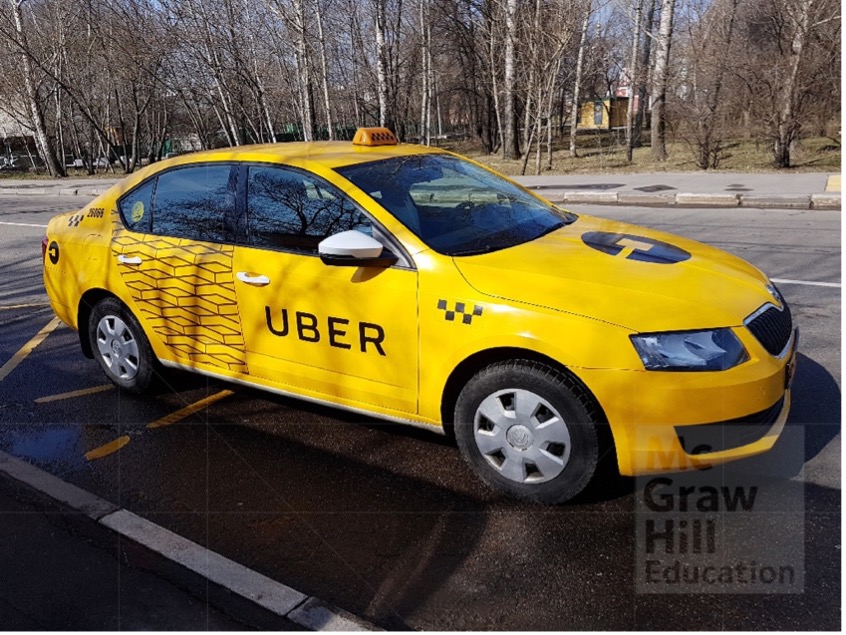
For years, Uber and Airbnb have served as the quintessential examples of disruption. Uber changed the taxi industry by making it easy to request a ride with a smartphone. Airbnb transformed the hospitality industry by turning spare bedrooms and vacation homes into lodging options for millions of travelers. But nearly 20 years after their founding, both companies face a new challenge: How do businesses that disrupted entire industries avoid becoming disrupted themselves?
The answer, at least for Uber and Airbnb, seems to be expansion. Both companies are evolving into broader travel platforms. Their goal is to become the one app travelers use for nearly everything, from transportation and lodging to food, groceries, airport pickups, and local experiences.
Why Evolution Is Sometimes Necessary
Products and businesses move through the product life cycle. Many new ideas are introduced, grow rapidly, mature, and eventually risk decline if customer interest fades or competitors catch up. Uber and Airbnb are far from disappearing, but both have entered a stage where growth is harder to find. Their core businesses remain strong, but the status quo may not be enough to keep investors and customers excited.
Both Uber and Airbnb are trying to add new layers to their businesses to stay relevant. The strategy resembles what large companies such as Amazon have done for years. Amazon began as an online bookstore, then expanded into nearly every corner of retail, entertainment, and cloud computing. Uber and Airbnb appear to be taking a similar approach within the travel industry.
Uber Wants to Be More Than a Ride
Uber’s transformation may be the most obvious. At its Go-Get product event, the company announced several features designed to make its app useful for an entire trip, not just the ride to the airport. Through a partnership with Expedia, Uber users can now book hotels directly in the app. Later, vacation rentals from Vrbo are expected to join the platform as well. The company is also expanding food and shopping services. Travelers can order forgotten essentials, such as phone chargers or toiletries, directly to hotels through Uber Eats. Riders in some cities can even ask drivers to stop for coffee or breakfast during a trip.
Uber executives describe this as simplifying travel. Instead of bouncing between separate apps for hotels, meals, rides, and shopping, customers could potentially manage everything in one place. The strategy also encourages customer loyalty. Uber One, the company’s subscription program, rewards members with discounts and credits across services. The more activities customers complete through Uber, the harder it becomes to switch to competitors. That “stickiness” matters. Businesses often spend significant amounts acquiring customers, so keeping them engaged over time becomes essential to long-term profits.
Airbnb Is Expanding Beyond the Stay
Airbnb is making similar moves. Originally known for home rentals, Airbnb has spent recent years broadening its offerings. The company relaunched Airbnb Experiences, allowing travelers to book activities, and introduced services such as chefs, massages, and other hospitality-related features. More recently, Airbnb began testing airport pickups in certain markets, a move that places it closer to Uber’s territory. The company also partnered with Instacart so travelers can order groceries directly to their rental homes.
These changes reflect a larger goal that’s similar to Uber: Airbnb wants to become a one-stop travel platform. Airbnb recently hired longtime Uber executive Gus Fuldner to oversee operations, safety, and support. Bringing in leadership with rideshare experience signals that Airbnb may be preparing for more transportation-related services.
Maybe AI Is a Bigger Threat
Although Uber and Airbnb are swerving into each other’s lanes, artificial intelligence (AI) may be the bigger threat. The technology is rapidly changing how consumers search for travel options. AI assistants are becoming increasingly powerful at researching and comparing things such as flights, hotels, rides, and vacation rentals. This threatens businesses that depend on customers opening their apps first.
Autonomous vehicles may pose an even more immediate threat to Uber. Waymo, Alphabet's self-driving car division, has rapidly expanded across the United States and is now valued at $126 billion. Unlike a traditional competitor, Waymo removes the human driver from the equation entirely, cutting into the core of what Uber's business model depends on. Uber and Waymo have partnered in select markets, but Waymo has bypassed Uber in 24 consecutive new market announcements, signaling that the two companies may be heading toward direct competition rather than cooperation.
To stay competitive, Uber and Airbnb are trying to create ecosystems that offer more than simple bookings. Their advantage lies in customer relationships and data. They already understand travel habits, spending patterns, and preferences. Uber is even adding AI-powered voice booking tools that allow users to schedule rides through conversations rather than typing.
Looking to the Future
It is easy to think of successful companies as finished products, but business history shows that remaining stagnant can be dangerous. Companies that dominate one era often struggle when markets shift. That reality helps explain why Uber and Airbnb are expanding. By introducing additional services, the companies are trying to extend the life of their brands rather than drift into decline.
In the Classroom
This article can be used to discuss the product life cycle (Chapter 12: Dimensions of Marketing Strategy).
Discussion Questions
- Describe how Uber and Airbnb are expanding beyond their original business models.
- Why does artificial intelligence create both opportunities and risks for Uber and Airbnb?
- Which stage of the product life cycle do you believe Uber and Airbnb are currently in (introduction, growth, maturity, or decline), and what evidence supports your position?
This article was developed with the support of Kelsey Reddick for and under the direction of O.C. Ferrell, Linda Ferrell, and Geoff Hirt.
Allison Pohle, "Airbnb Taps Uber Executive as New Operations Chief," The Wall Street Journal, March 10, 2026
Cheung and Maya Hunter, "Uber Adds Hotel Bookings and Vacation Rentals in Push to Become a One-Stop Shop for Travel, NBC News, April 29, 2026
Grayson Bruite, "Uber’s Autonomy Paradox: Their Greatest Hedge Is Also Their Greatest Vulnerability," Road to Autonomy, February 8, 2026
Natalie Lung, "Airbnb and Uber Are Competing to Be the Next Big Travel Super App," Bloomberg, May 27, 2026
Samantha Subin, "Uber Makes Big Bets on Travel, Hotels and AI Voice Bookings at Annual Product Showcase," CNBC, April 29, 2026

O.C. Ferrell is the James T. Pursell Sr. Eminent Scholar in Ethics and Director of the Center for Ethical Organizational Cultures in the Raymond J. Harbert College of Business, Auburn University. He was formerly Distinguished Professor of Leadership and Business Ethics at Belmont University and University Distinguished Professor at the University of New Mexico. He has also been on the faculties of the University of Wyoming, Colorado State University, University of Memphis, Texas A&M University, Illinois State University, and Southern Illinois University. He received his Ph.D. in marketing from Louisiana State University.

Linda Ferrell is the Roth Family Professor of Marketing and Business Ethics in the Raymond J. Harbert College of Business, Auburn University. She was formerly Distinguished Professor of Leadership and Business Ethics at Belmont University. She completed her Ph.D. in business administration, with a concentration in management, at the University of Memphis. She has taught at the University of Tampa, Colorado State University, University of Northern Colorado, University of Memphis, University of Wyoming, and the University of New Mexico. She has also team-taught classes at Thammasat University in Bangkok, Thailand.

Geoffrey A. Hirt of DePaul University previously taught at Texas Christian University and Illinois State University, where he was chairman of the Department of Finance and Law. At DePaul, he was chairman of the Finance Department from 1987 to 1997 and held the title of Mesirow Financial Fellow. He developed the MBA program in Hong Kong and served as director of international initiatives for the College of Business, supervising overseas programs in Hong Kong, Prague, and Bahrain, and was awarded the Spirit of St. Vincent DePaul award for his contributions to the university. Dr. Hirt directed the Chartered Financial Analysts (CFA) study program for the Investment Analysts Society of Chicago from 1987 to 2003. He has been a visiting professor at the University of Urbino in Italy, where he still maintains a relationship with the economics department. He received his Ph.D. in finance from the University of Illinois at Champaign-Urbana, his MBA at Miami University of Ohio, and his BA from Ohio Wesleyan University.