From Study App to Enterprise Platform: The Builders Powering Sharpen Advantage

Explore how Sharpen Advantage is redefining learning and setting a new standard for responsible AI in higher education


Tags: Personalized Learning, Article, Artificial Intelligence (AI), Blog, Corporate
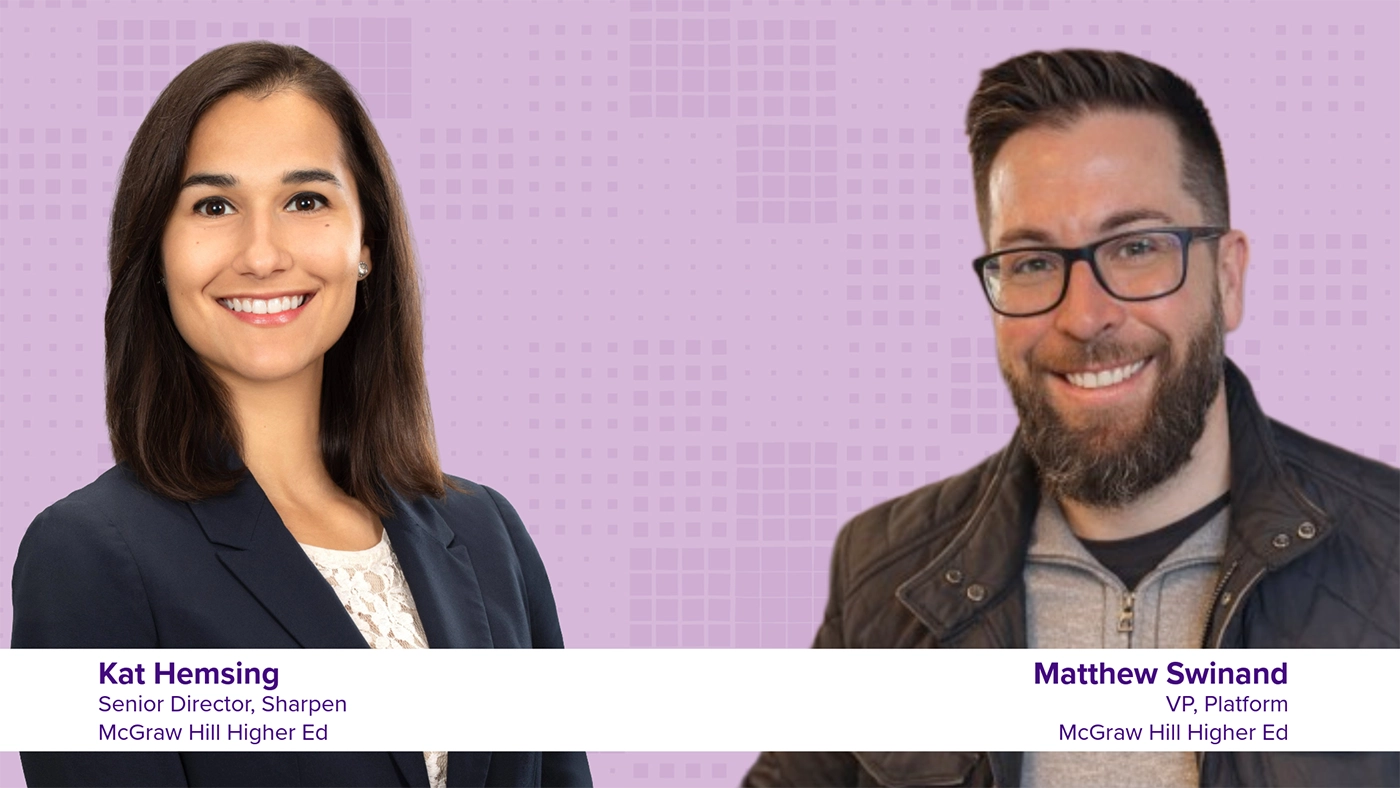
Profile photo of Kat Hemsing and Ashish Gupta

Higher education is undergoing a profound transformation as AI reshapes how students learn, instructors teach, and institutions operate. With much of today’s AI use happening outside of institutional systems, campuses face heightened concerns around risk, workload, and the reliability of academic content. Built as a mobile‑first, vetted study app, McGraw Hill’s Sharpen has quickly expanded into a portfolio to meet these challenges.

Sharpen Advantage extends that foundation into a campuswide, AI-powered academic support solution that uses vetted content, learning intelligence, and real-time insight to help institutions identify at-risk learners early, personalize reinforcement at scale, and support improved outcomes responsibly. Designed by expert teams committed to transparency and academic integrity, it equips instructors, support staff, and administrators with the tools they need to intervene earlier and more effectively.

In this spotlight, we ask Kat Hemsing, Senior Director of Sharpen, and Ashish Gupta, Vice President of Software Engineering for Digital Enterprise Solutions, how Sharpen Advantage is redefining learning and setting a new standard for responsible AI in higher education.

What uniquely separates Sharpen Advantage’s AI approach, and why does it matter for institutions right now?

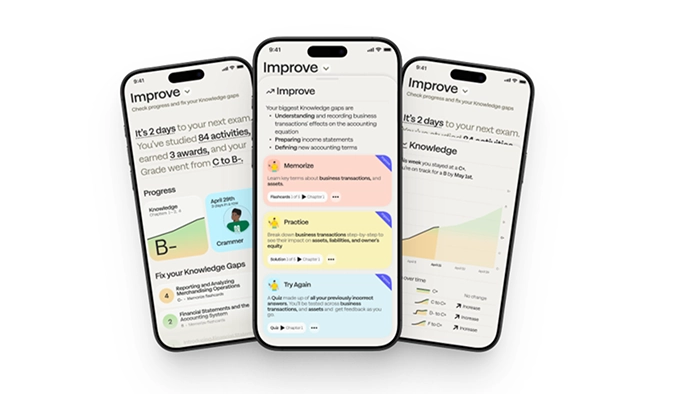
Kat: Sharpen Advantage stands apart because it’s a purpose‑built, AI system designed to support student learning at scale. Our machine learning engines identify knowledge and engagement gaps, proactively flag students who may be struggling in the course, and recommend targeted study activities to help address gaps in understanding. Sharpen also layers in GenAI capabilities to support students with Socratic-style learning and educators with seamless content personalization.

Students and faculty trust Sharpen because of its curriculum‑aligned content. That trust, combined with transparent guardrails and clear attribution, gives administrators confidence that what they’re offering their students and faculty is both powerful and responsible.  Sharpen Advantage gives institutions the insight they need to intervene early and the power to create and deliver academic support in the format students love most, right on their mobile devices.

How does Sharpen Advantage reflect McGraw Hill’s approach to responsible AI?

Ashish: We built responsible AI into the core of Sharpen Advantage, guided by McGraw Hill’s guardrails around transparency, data protection, and academic integrity.  Students and instructors can see whether support comes from Sharpen’s vetted library, their institution’s materials, or AI‑generated assistance, which keeps the experience clear and academically aligned. We also protect institutional data with strict privacy controls—campus data is never used to train external models. Coupled with Sharpen’s trusted content foundation, this responsible‑by‑design approach is also what makes the platform effective.

How does Sharpen Advantage enhance the teaching and learning experience for instructors and administrators?

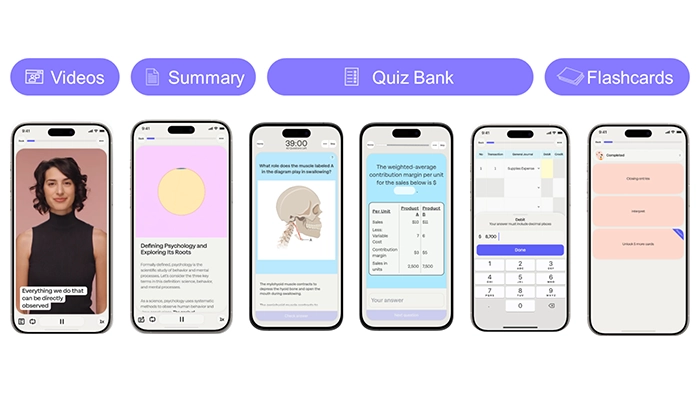
Ashish: Sharpen Advantage is designed so each component works together to support teaching and learning at scale. Radar provides instructors with real‑time visibility into patterns of student engagements and progress, highlighting potential areas of concerns so they can intervene proactively. Creator and Playlists let faculty build or customize study content and send targeted support to students without redesigning a course. Finally, the AI-powered feature Ask Sharpen sits on top of vetted content, with generated quizzes, explanations, and summaries designed to align with academically vetted materials. Together, these features form a closed‑loop system that helps educators support more students without adding to their workload.

What early feedback or results are you seeing from students and institutions?

Kat: Early feedback has been extremely encouraging. We’re seeing strong performance gains: learners using Sharpen demonstrate higher exam scores, better course grades, and a 76% recommendation rate. Students who interact with our AI-powered Ask Sharpen feature complete twice as many study activities as non-users and choose to engage with vetted Sharpen content four times more than the AI-generated activities, reinforcing how much they rely on academically aligned support. Institutions piloting Sharpen Advantage have appreciated the student performance data and love how easy it is to customize the study experience across courses or cohorts.

Where is Sharpen Advantage headed next?

Kat: We’re continuing to evolve Sharpen Advantage into a unified institutional layer that combines trusted content, longitudinal data, advanced analytics, and instructional workflows to support academic student success. Our roadmap includes expanding our content offerings, strengthening the Creator experience, and enhancing Radar’s insights for more timely, actionable remediation. Our goal is to ensure every student can access trusted, AI-powered learning experiences, no matter their course or starting point.

Ashish: From an engineering standpoint, we’re making the system even more adaptive by improving how it responds to learning patterns and instructor authored content. The idea is one thing; making it real is the hard part. What gives me confidence is the Sharpen team itself—they’re mission-driven, fast, focused, and deeply collaborative. Building something as sophisticated as Sharpen Advantage in such a short time is a remarkable achievement, and all credit goes to them. Their discipline and integrity are a big part of why institutions trust us to innovate responsibly.