



 67 / 121

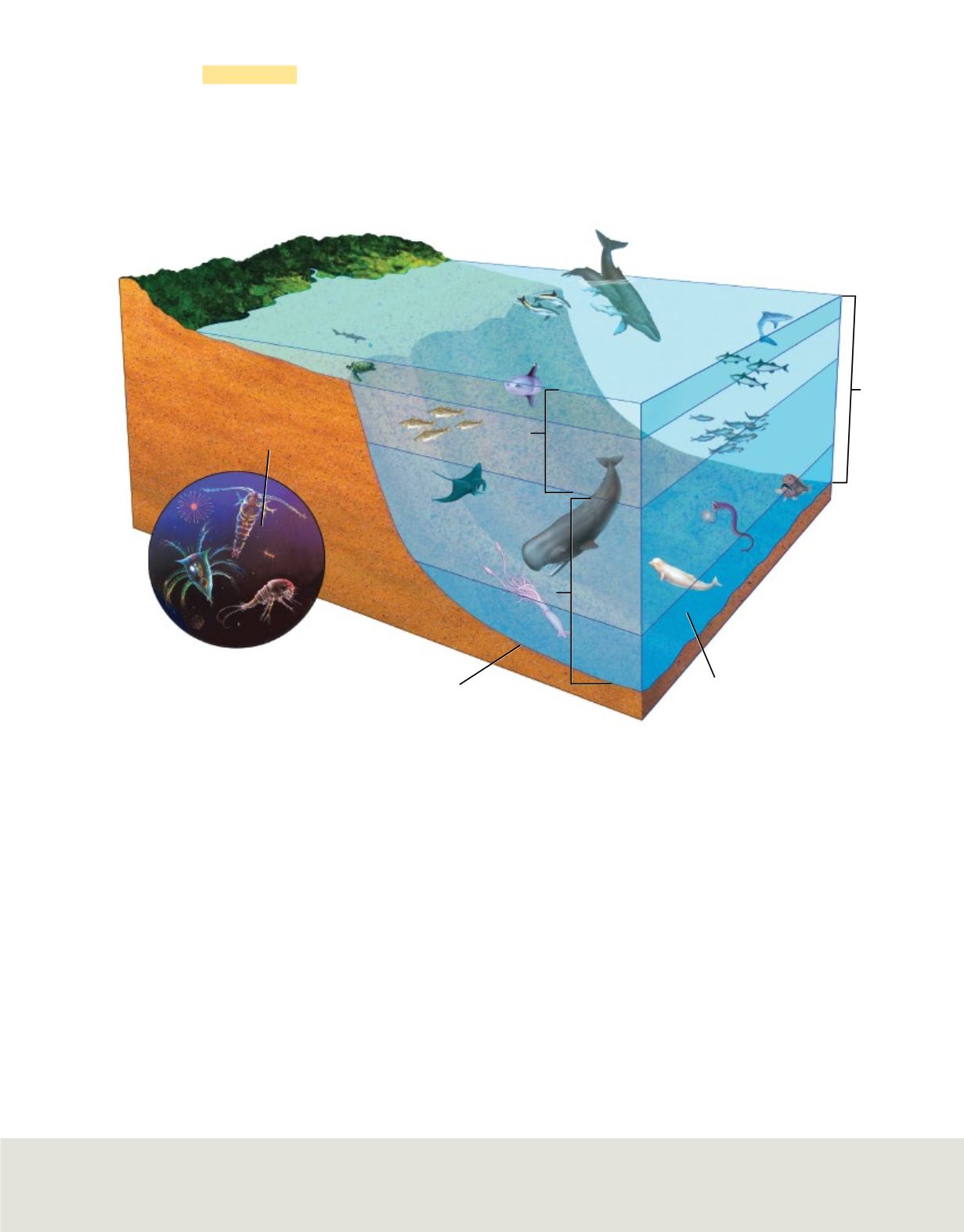
Pelagic
zone
Abyssal
zone
Benthic
zone
Plankton
Photic
zone
Aphotic
zone
The
benthic zone
is the area along the ocean floor that consists of sand, silt, and dead
organisms. In shallow benthic zones, sunlight can penetrate to the bottom of the ocean
floor. As depth increases, light and temperature decrease. Species diversity tends to
decrease with depth, except in areas with hydrothermal vents, where shrimp, crabs,
and many species of tubeworms are found. Many species of fishes, octopuses, and
squids live in the benthic zone.
Figure 24
Producers are found mainly in the photic zone. Consumers live in the pelagic (photic and aphotic)
and benthic zones.
Coastal ocean and coral reefs
One of the world’s largest coral reefs is off the southern coast of Florida. Coral reefs are
among the most diverse ecosystems. They are widely distributed in warm shallow
marine waters. Coral reefs form natural barriers along continents that protect shorelines
from erosion. The dominant organisms in coral reefs are corals. When you think of
coral, you might picture a hard, stony structure, but this is only the framework secreted
by tiny animal polyps. Corals are soft-bodied invertebrates that live in the stonelike
structures.
Most coral polyps have a symbiotic relationship with algae called zooxanthellae (zoo
uh zan THEL uh). These algae provide corals with food, and in turn, the coral provides
protection and access to light for the algae. Corals also feed by extending tentacles
to obtain plankton from the water. Other coral reef animals include species of
microorganisms, sea slugs, octopuses, sea urchins, sea stars, and fishes.
Lesson 3 • Aquatic Ecosystems
69