



 62 / 121

Headwater
River
Lake
Mouth
Estuary region
Earth’s water
97.5%
Saltwater
2.5%
Freshwater
Freshwater
68.9%
Glaciers
0.3%
Lakes and rivers
30.8%
Groundwater
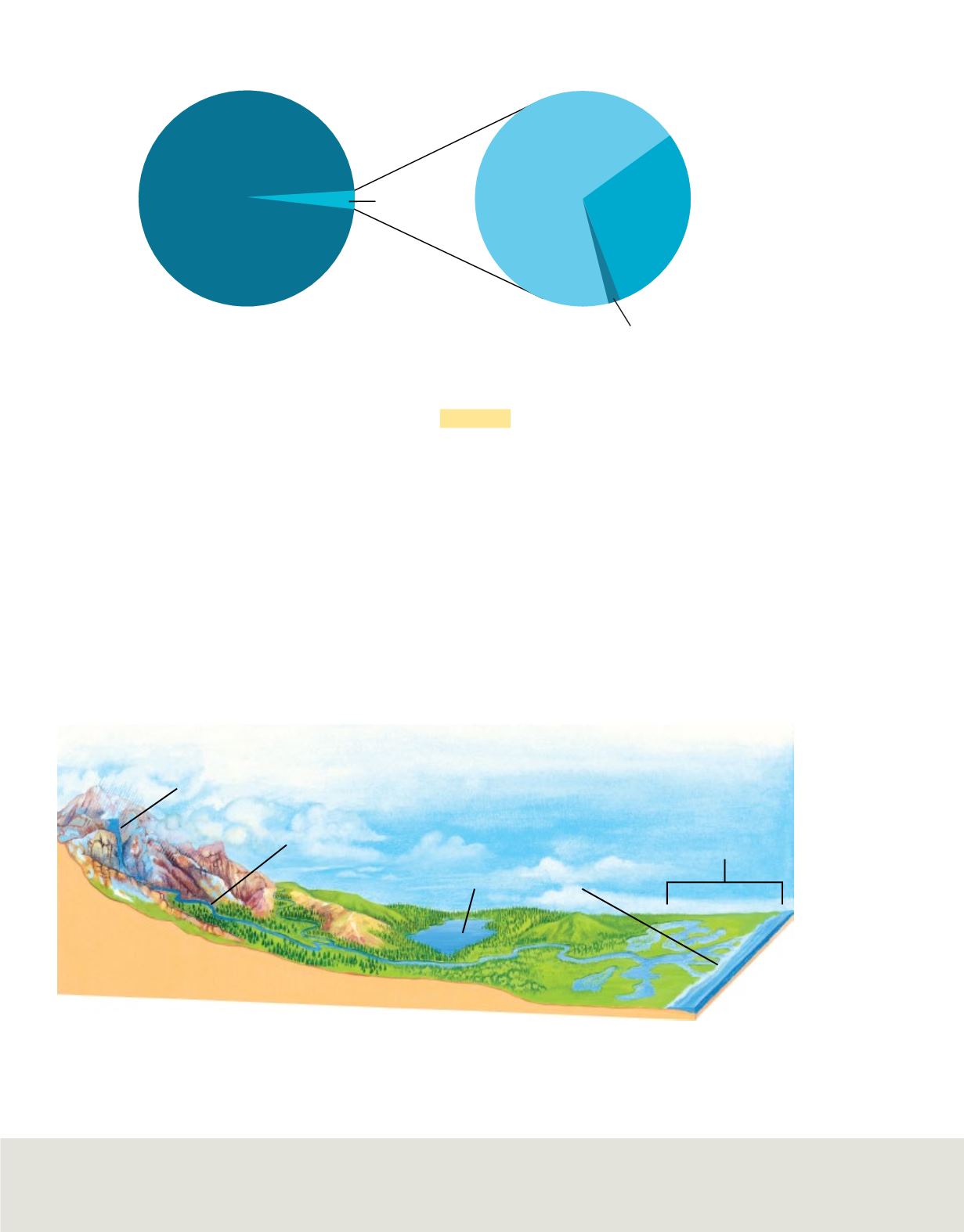
Figure 18
The vast majority of Earth’s water is salt water. Most of the freshwater supply is locked in glaciers.
Figure 19
Mountain streams have clear, cold water that is highly oxygenated and supports the larvae of
many insects and the coldwater fish that feed on them. Rivers become increasingly wider, deeper, and
slower. At the mouth, many rivers divide into many channels where wetlands or estuaries form.
Rivers and streams
The water in rivers and streams flows in one
direction, beginning at a source called a head-
water and traveling to the mouth, where the
flowing water empties into a larger body of
water, as illustrated in
Figure 19.
Rivers and
streams also might start from underground
springs or from snowmelt. The slope of the
landscape determines the direction and speed of
the water flow. When the slope is steep, water
flows quickly, causing a lot of sediment to be
picked up and carried by the water.
Sediment
is material that is deposited by water,
wind, or glaciers. As the slope levels, the speed
of the water flow decreases and sediments are
deposited in the form of silt, mud, and sand.
The characteristics of rivers and streams change
during the journey from the source to the
mouth. Interactions between wind and the
water stir up the water’s surface, which adds a
significant amount of oxygen to the water.
Interactions between land and water result in
erosion, in nutrient availability, and in changing
the path of the river or stream.
64
Module 3 • Communities, Biomes, and Ecosystems