



 64 / 121

Littoral zone
Limnetic
zone
Profundal
zone
Bottom-dwelling
organisms
Fishes
WORD ORIGINS
eutrophic/oligotrophic
eu
- prefix; from Greek, meaning
well
oligo-
prefix; from Greek, meaning
few
-trophic;
from Greek, meaning
nourish
During the winter, most of the water in a lake or pond is the same temperature. In
the summer, the warmer water on top is less dense than the colder water at the bottom.
During the spring and fall, as the water at or near the surface warms or cools, turnover
occurs. The top and bottom layers of water mix, often due to winds, and this results in a
uniform water temperature. This mixing circulates oxygen and brings nutrients from
the bottom to the surface.
Nutrient-poor lakes, called oligotrophic (uh lih goh TROH fihk) lakes, are often found
high in the mountains. Few plant and animal species are present as a result of small
amounts of organic matter and nutrients. Nutrient-rich lakes, called eutrophic (yoo
TROH fihk) lakes, usually are found at lower altitudes. Many plant and animal species
are present as a result of organic matter and plentiful nutrients, some of which come
from agricultural and urban activities.
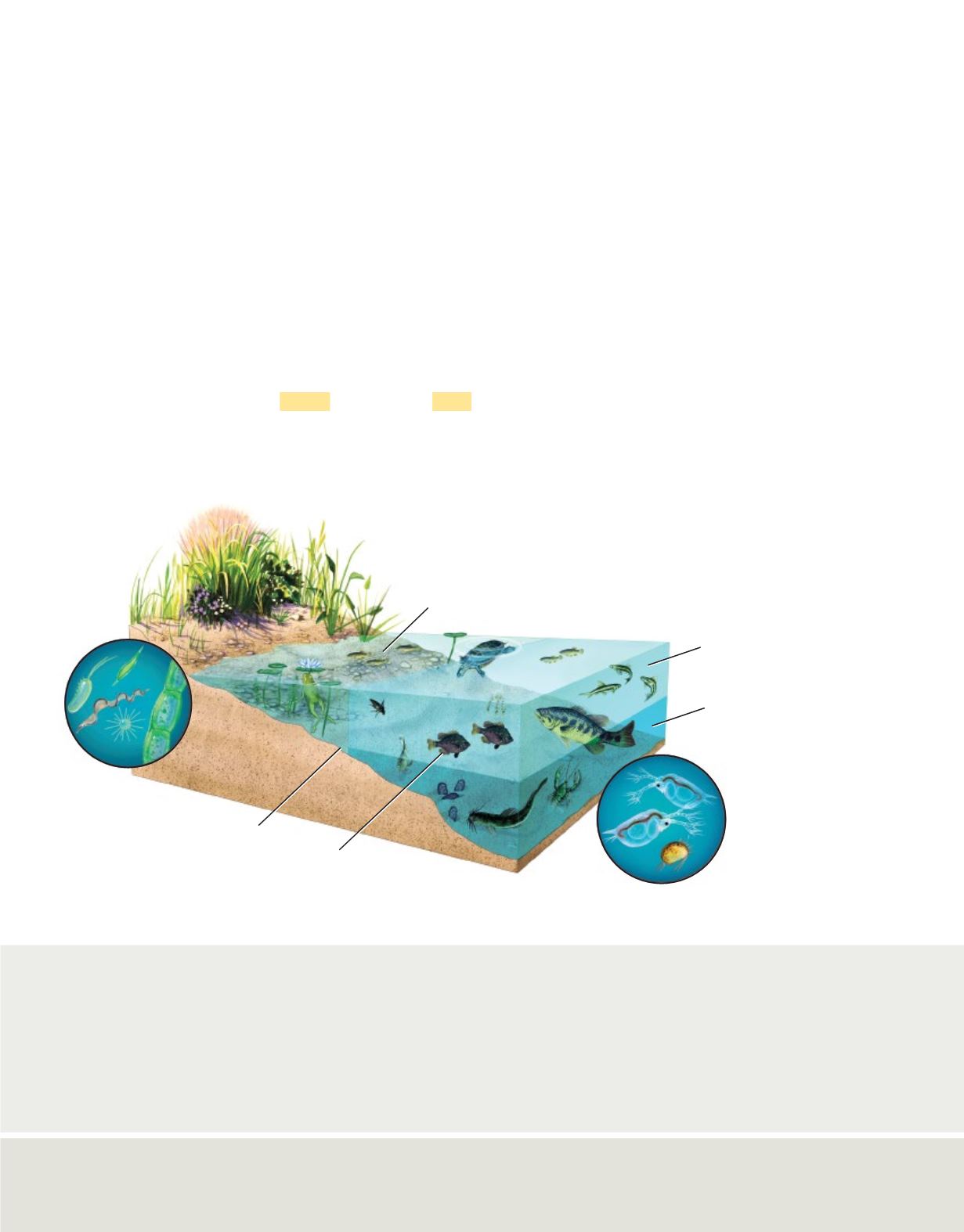
Figure 22
identifies the zones and biodiversity of lakes and ponds. Lakes and ponds are
divided into three zones based on the amount of sunlight that penetrates the water. The
area closest to the shore is the
littoral
(LIH tuh rul)
zone.
The water in this zone is
shallow, which allows sunlight to reach the bottom. Many producers, such as aquatic
plants and algae, live in these shallow waters. The abundance of light and producers
make the littoral zone an area of high photosynthesis. Many consumers, including
frogs, turtles, worms, crustaceans, insect larvae, and fish also inhabit this zone.
Figure 22
Most of a lake’s biodiversity is found in the littoral and limnetic zones. However, many species of
bottom dwellers depend on nutrients and materials that drift down from above.
66
Module 3 • Communities, Biomes, and Ecosystems