



 65 / 121

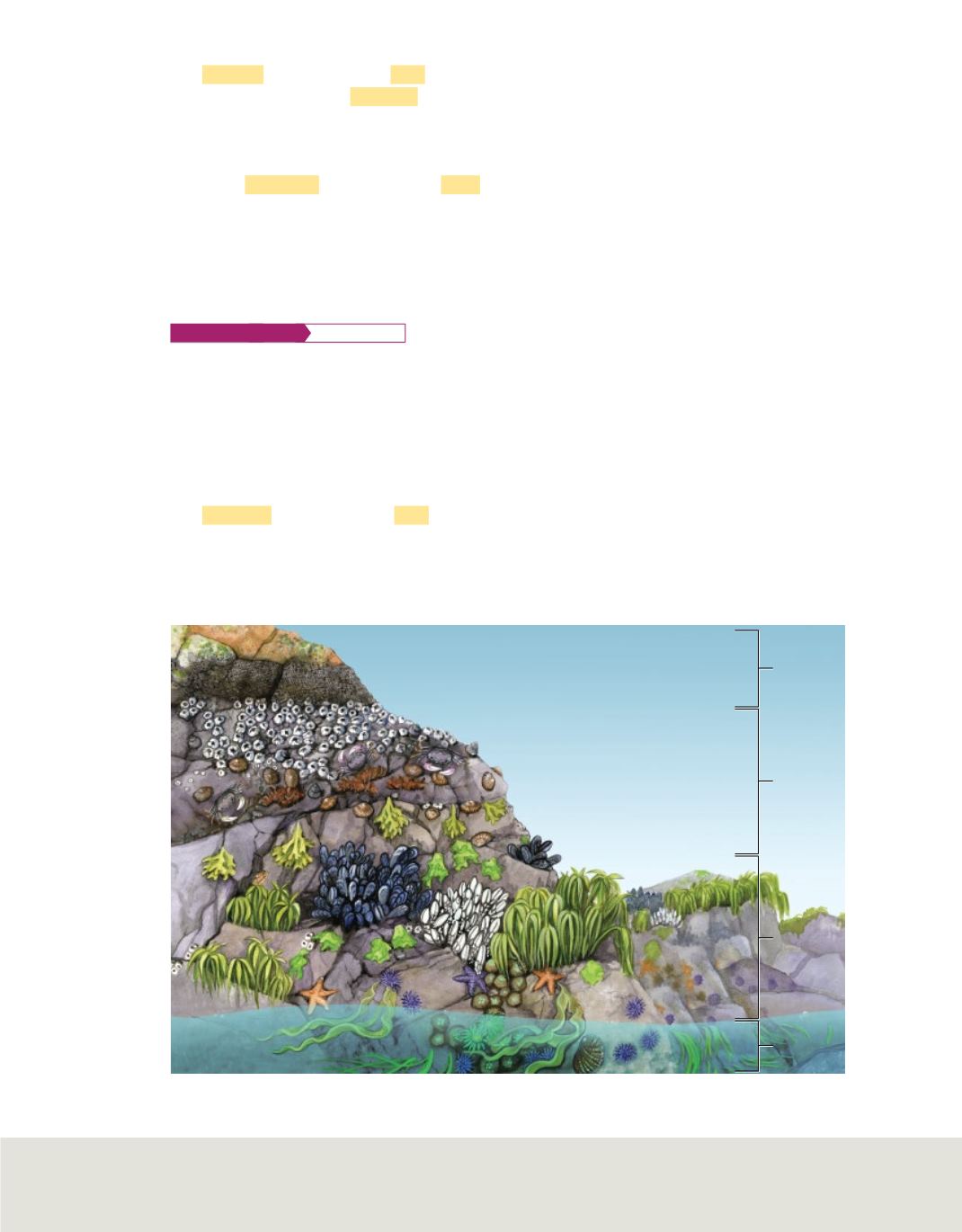
Spray
zone
High-tide
zone
Mid-tide
zone
Low-tide
zone
High tide
Low tide
The
limnetic
(lihm NEH tihk)
zone
is the open water area that is well lit and is
dominated by plankton.
Plankton
are freefloating autotrophs and heterotrophs that
live in freshwater or marine ecosystems. Many species of freshwater fish live in the
limnetic zone because food, such as plankton, is readily available. Minimal light is able
to penetrate through the limnetic zone into the deepest areas of a large lake, which is
called the
profundal
(pruh FUN dul)
zone.
The profundal zone is therefore much colder
and lower in oxygen than the other two zones. A limited number of species live in this
harsh environment.
Marine Ecosystems
Earth is sometimes called “the water planet.” As such,
marine ecosystems have a significant impact on the planet. For example, through
photosynthesis, marine algae consume carbon dioxide from the atmosphere and
produce over 50 percent of the atmosphere’s oxygen. Additionally, the evaporation of
water from oceans eventually provides the majority of precipitation—rain and snow.
Like ponds and lakes, oceans are separated into distinct zones.
Intertidal zone
The
intertidal
(ihn tur TY dul)
zone
is a narrow band where the ocean meets land.
Organisms that live in this zone must be adapted to the constant changes that occur as
daily tides and waves alternately submerge and expose the shore. The intertidal zone is
further divided into vertical zones, as illustrated in
Figure 23.
Figure 23
The intertidal zone is further divided into zones where different communities exist.
Compare and contrast
the zones illustrated in
Figures 22
and
23
.
Connection
EARTH SCIENCE
Lesson 3 • Aquatic Ecosystems
67