


 63 / 121

Fall Overturn
Wind
Winter Stratification
most of lake
4˚C
2˚–3˚C
Wind
Ice
Wind
Spring Overturn
Summer Stratification
camvisions/Shutterstock.com
The currents and turbulence of fast-moving rivers and
streams prevent much accumulation of organic materials
and sediment. For this reason, there are usually fewer
species living in rapid waters like those in
Figure 20.
An
important characteristic of life in rivers and streams is the
ability to withstand the constant water current. Plants
that root themselves into the streambed are common in
areas where water is slowed by rocks or sandbars. Young
fish hide in these plants and feed on the drifting micro-
scopic organisms and aquatic insects. In slow-moving
water, insect larvae are the primary food source for many
fish, including American eel, brown bullhead catfish, and
trout. Other organisms, such as crabs, worms, newts,
tadpoles, and frogs are often present in slow-moving or
calm water.
Lakes and ponds
An inland body of standing water is called a lake or a pond. It can be as small as a few
square meters or as large as thousands of square meters. Some ponds might be filled
with water for only a few weeks or months each year, whereas some lakes have existed
for thousands of years.
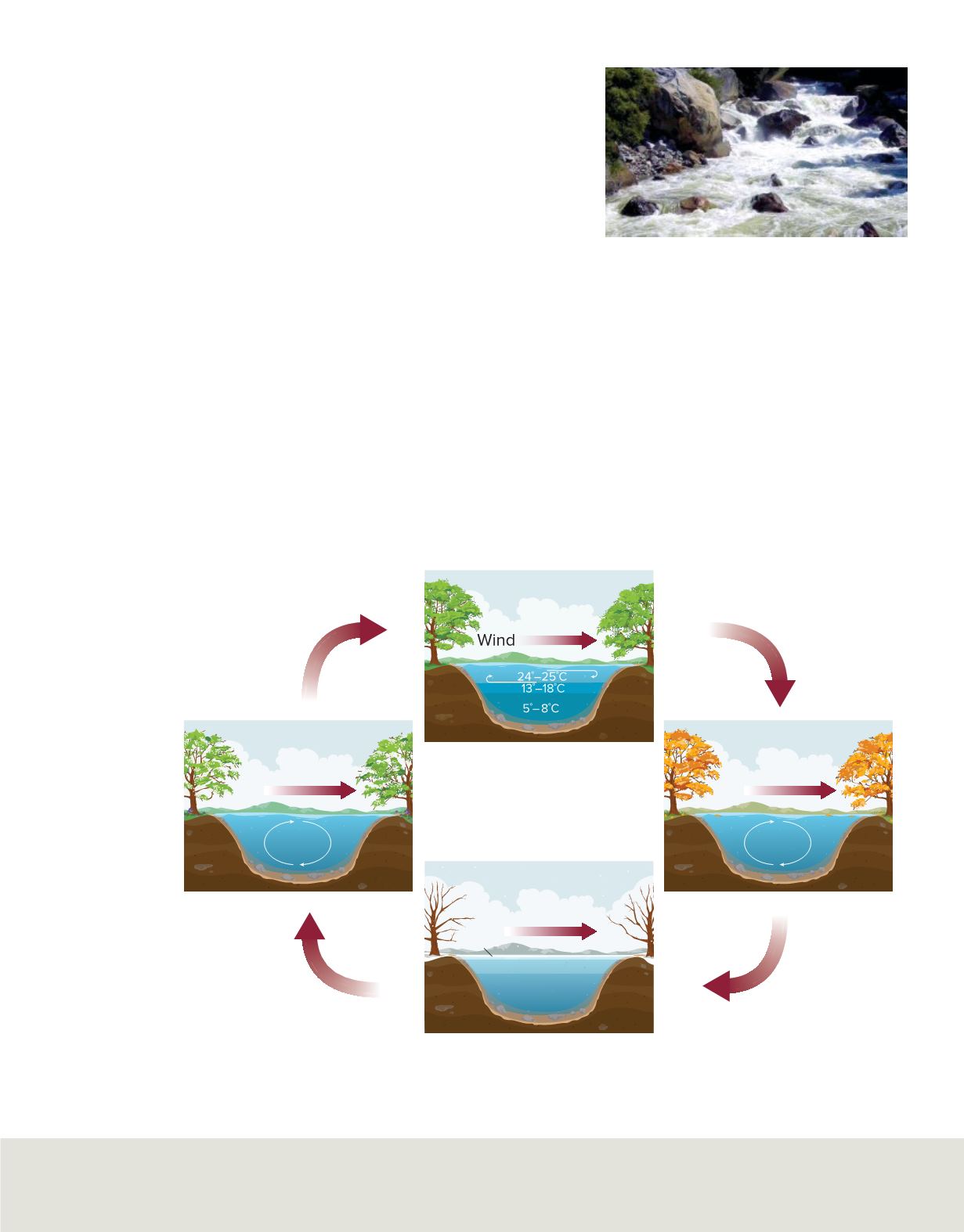
Figure 21
illustrates how in temperate regions the temperature
of lakes and ponds varies depending on the season.
Figure 20
The turbulent churning action of
fast-moving rivers and streams does not allow for
many species to inhabit these waters.
Figure 21
The temperature of lakes and ponds varies depending on the season. During spring and autumn, deep
water receives oxygen from the surface water and surface water receives inorganic nutrients from the deep water.
Compare
the type of life that might live in a shallow lake in the tropics to one in the mid-latitudes.
Lesson 3 • Aquatic Ecosystems
65