



 60 / 121

Ted Mead/Photodisc/Getty Images
Go online to follow your personalized learning path to review, practice,
and reinforce your understanding.
Summary
• Two major abiotic factors,
latitude and climate, determine
terrestrial biomes.
• Latitude affects terrestrial
biomes because of the
different angles at which
sunlight strikes Earth.
• Latitude, elevation, ocean
currents, and other abiotic
factors determine climate.
• There are nine major terrestrial
biomes.
• There are two additional
terrestrial regions, mountains
and polar regions, that do not
fit into these categories.
• Terrestrial biomes are defined
primarily by the characteristics
of their plants.
Demonstrate Understanding
1.
Describe
the nine major terrestrial biomes.
2.
Describe
the changes in a temperate forest ecosystem
that result from changing seasons.
3.
Summarize
variations in climate among three major
zones as you travel south from the equator toward the
South Pole.
4.
Indicate
the differences between temperate
grasslands and tropical savannas.
5.
Compare and contrast
the climate and biotic factors of
tropical seasonal forests and temperate forests.
Explain Your Thinking
6.
Hypothesize
why the tropical rain forests have the
greatest diversity of living things.
7.
Connection
WRITING
Tropical forests are being
felled at a rate of 17 million hectares per year, which
represents almost two percent of the forests' area. Use
this information to write a pamphlet describing how
much rain forest area exists and when it might be gone.
Polar regions
Polar regions border the tundra at high
latitudes, and are cold all year. The
coldest temperature ever recorded,
–
89°C, was in Antarctica, the continent
that lies in the southern polar region.
Whales and seals patrol the coast,
preying on fish, shrimp-like inverte-
brates called krill, or penguins like
the ones shown in
Figure 17.
Animals like polar bears and arctic foxes
inhabit the arctic polar region, and
human societies have also inhabited this
region throughout history. The Arctic
includes the Arctic Ocean and several
large islands, including Greenland, but
does not have a continental land mass
like that of Antarctica.
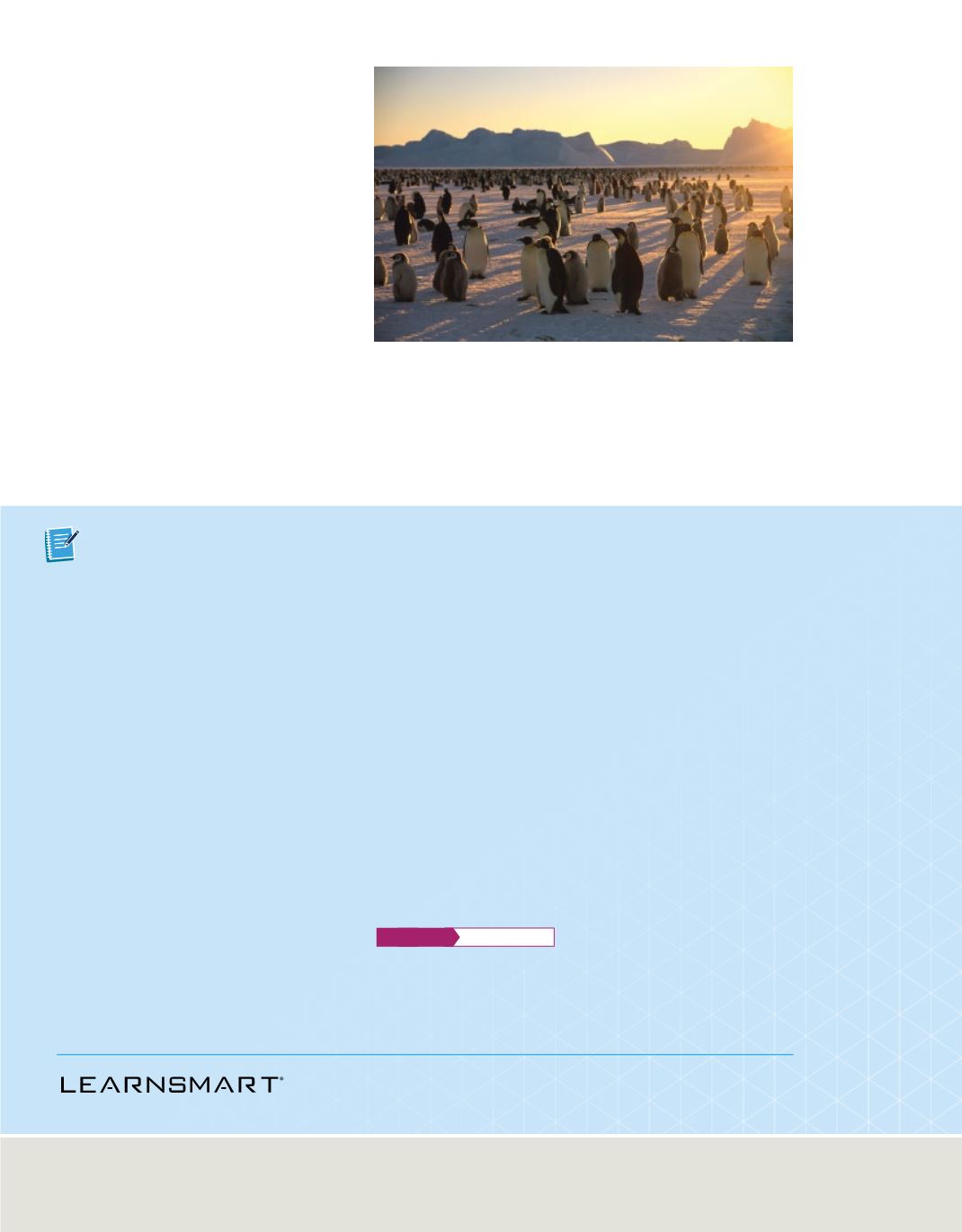
Figure 17
A surprising number of species inhabit the polar regions,
including these penguins in Antarctica.
Check Your Progress
62
Module 3 • Communities, Biomes, and Ecosystems