



 58 / 121

(tl)©Jill Wilson; (tr)iStockphoto/Getty Images; (bl)dsy88/Shutterstock.com; (br)Martyn Colbeck/Photodisc/Getty Images
Tropical savanna
A
tropical savanna
is characterized by grasses
and scattered trees in climates that receive less
precipitation than some other tropical areas.
Tropical savanna biomes occur in Africa, South
America, and Australia. Herds of grazing ani-
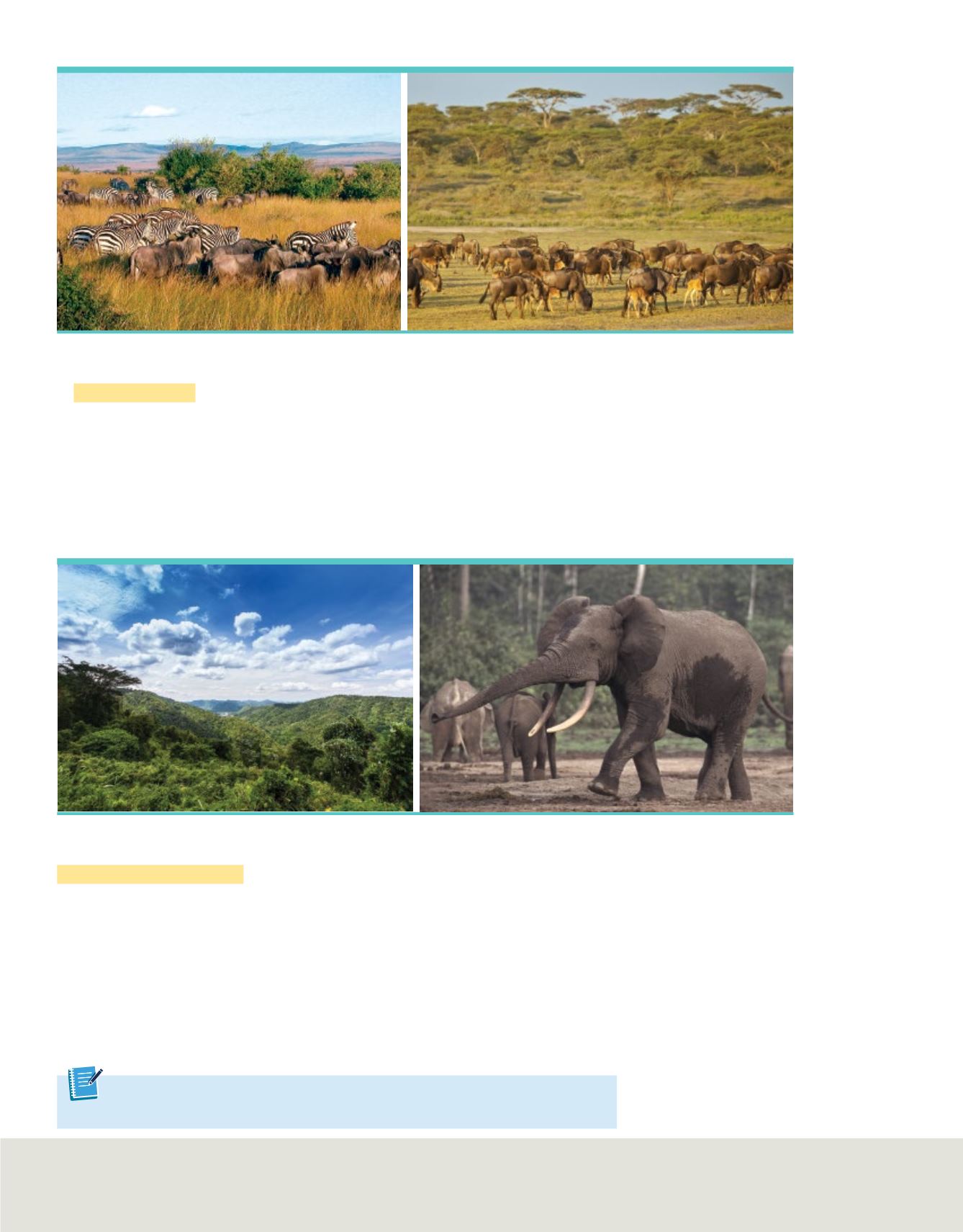
mals like the zebras and wildebeest shown in
Figure 13
are common to tropical savannas.
Figure 13
Tropical savanna
Average precipitation:
50–130 cm per year
Temperature range:
20˚C to 30˚C
Plant species:
grasses and scattered trees
Animal species:
lions, hyenas, wildebeest, cheetahs,
elephants, giraffes, zebras, koalas, emus, insects
Geographic location:
Africa, South America, and Australia
Abiotic factors:
summers are hot and rainy; winters are cool
and dry
Tropical seasonal forest
Tropical seasonal forests,
also called tropical dry
forests, grow in areas of Africa, Asia, Australia,
and South and Central America. In one way, the
tropical seasonal forest resembles the temperate
deciduous forest because during the dry season,
almost all of the trees drop their leaves to con-
serve water. Animals like the African forest
elephant in
Figure 14
also have adaptations that
help them conserve water.
Figure 14
Tropical seasonal forest
Average precipitation:
>200 cm per year
Temperature range:
20˚C to 25˚C
Plant species:
deciduous and evergreen trees, orchids,
mosses
Animal species:
elephants, tigers, monkeys, koalas, rabbits,
frogs, spiders
Geographic location:
Africa, Asia, Australia, and South and
Central America
Abiotic factors:
rainfall is seasonal
Get It?
Compare and contrast
tropical savannas and tropical seasonal forests.
60
Module 3 • Communities, Biomes, and Ecosystems