


 108 / 121

1000 m
1000 m
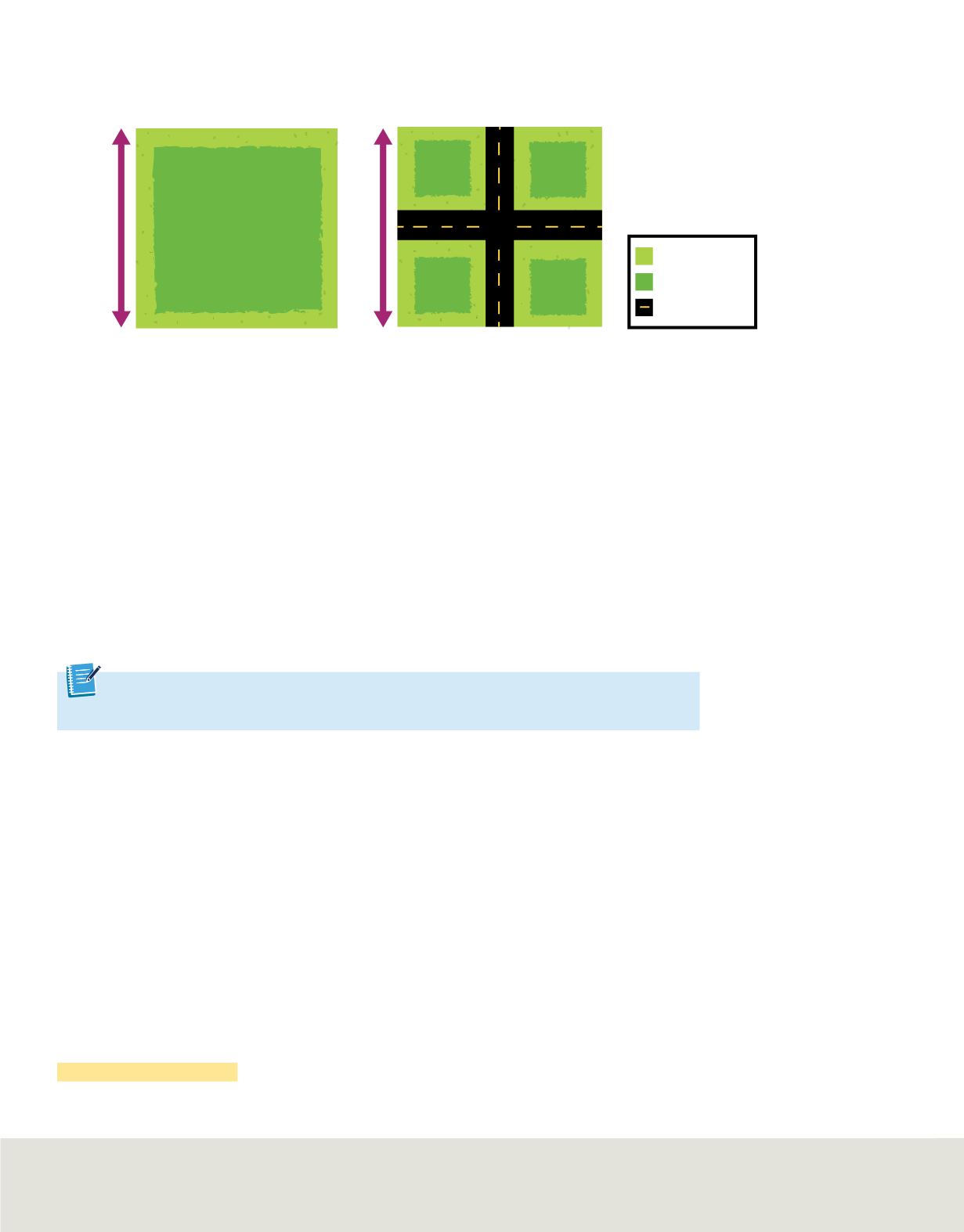
Edge
Interior habitat
Roads
Patch of Habitat
More edges in the habitat
increases the percentage of
the patch that is edge habitat.
Figure 13
The smaller the habitat size, the greater percentage of the habitat that is subject to edge effects.
Typically, the temperature and wind will be higher and the humidity lower on the edges in
a tropical forest. Species that thrive deep in the dense forest might perish on the edges of
the ecosystem. Predators and parasites also thrive on the boundaries of ecosystems, which
makes the species in these areas more vulnerable to attack.
Climate Change
Species have evolved to live within certain temperature ranges. When these tempera-
tures increase, the species members that cannot adapt die. This threatens the survival of
the species as well as other species that depend on it for survival. Climate change is
expected to overtake habitat destruction as the greatest threat to biodiversity in the first
half of this century. In fact, scientists predict that climate change will threaten approxi-
mately 25 percent of all land species by 2050.
Pollution
Pollution and atmospheric changes threaten biodiversity and global stability. Pollution
changes the composition of air, soil, and water. There are many types of pollution.
Substances—including many humanmade chemicals that are not found in nature—are
released into the environment.
Pesticides, such as DDT (dichloro-diphenyl-trichlor oethane), and industrial chemicals, such
as PCBs (polychlo rinated biphenyls), are examples of substances that are found in food
webs. These substances are ingested by organisms when they drink water or eat other
organisms that contain the toxic substances. Some substances are metabolized by an
organism and excreted with other waste products.
However, other substances, such as DDT and PCBs, accumulate in the tissues of
organisms. Carnivores at the higher trophic levels seem to be most affected by the
accumulation of toxic substances because of a process called biological magnification.
Biological magnification
is the increasing concentration of toxic substances in
organisms as trophic levels increase in a food chain or food web.
Get It?
Explain
how an increase in global temperatures threatens biodiversity.
110
Module 5 • Biodiversity and Conservation