



 106 / 121

(tl) Tom Smylie/U.S. Fish & Wildlife Service; (tr) William Davies/E+/Getty Images; (b)Richard Whitcombe/Shutterstock
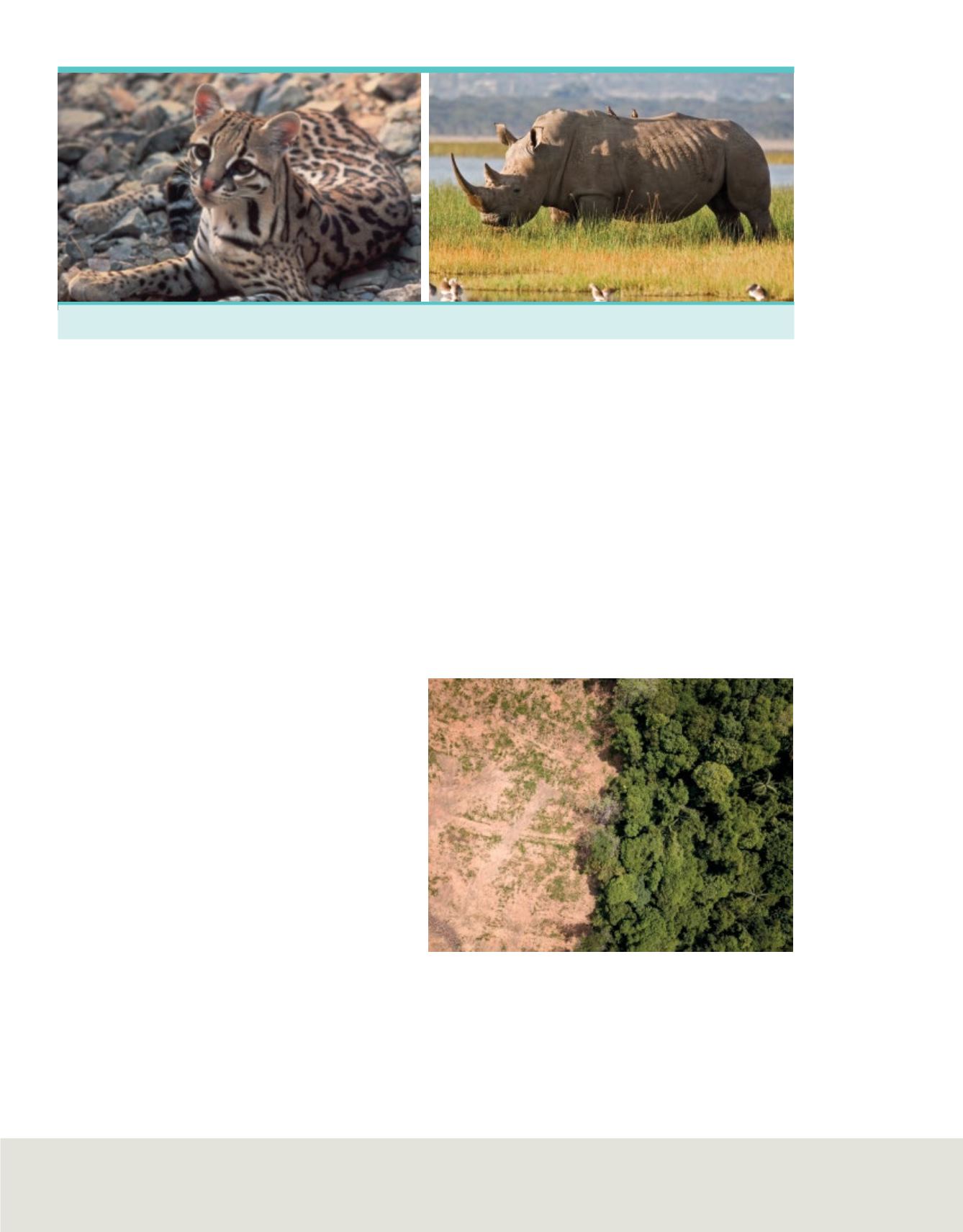
Figure 10
The ocelot and all species of rhinos, including the white rhinoceros, are in danger of becoming
extinct, due in part to overexploitation.
The ocelot, shown in
Figure 10
, is found from Texas to Argentina and is in danger of
becoming extinct. The increasing loss of their habitat and the commercial value of their fur
are reasons for their declining numbers. The white rhinoceros, also shown in
Figure 10
,
is one of five species of rhinos, all of which are in danger of becoming extinct. They are
hunted and killed for their horns, which are then sold for so-called medicinal purposes.
Historically, overexploitation was the primary cause of species extinction. However, the
number one cause of species extinction today is the destruction of habitat.
Habitat loss
If a habitat is destroyed or disrupted, the native species might have to relocate or they
will die. For example, humans are clearing areas of tropical rain forests and are
replacing the native plants with agricultural crops or grazing land.
Destruction of habitat
The clearing of
tropical rain forests, like what is shown in
Figure 11
, has a direct impact on global
biodiversity. As mentioned earlier, the tropical
latitudes contain much of the world’s
biodiversity in their native populations. In fact,
estimates show that more than half of all
species on Earth live in the tropical rain
forests. The removal of so much of the natural
forest will cause many species on Earth to
become extinct as a result of habitat loss.
Ocelot
White rhinoceros
Figure 11
Cleared land often is used for agricultural crops or
as grazing land for livestock. Planting large expanses of crops
reduces the biodiversity of the area.
108
Module 5 • Biodiversity and Conservation