



 112 / 121

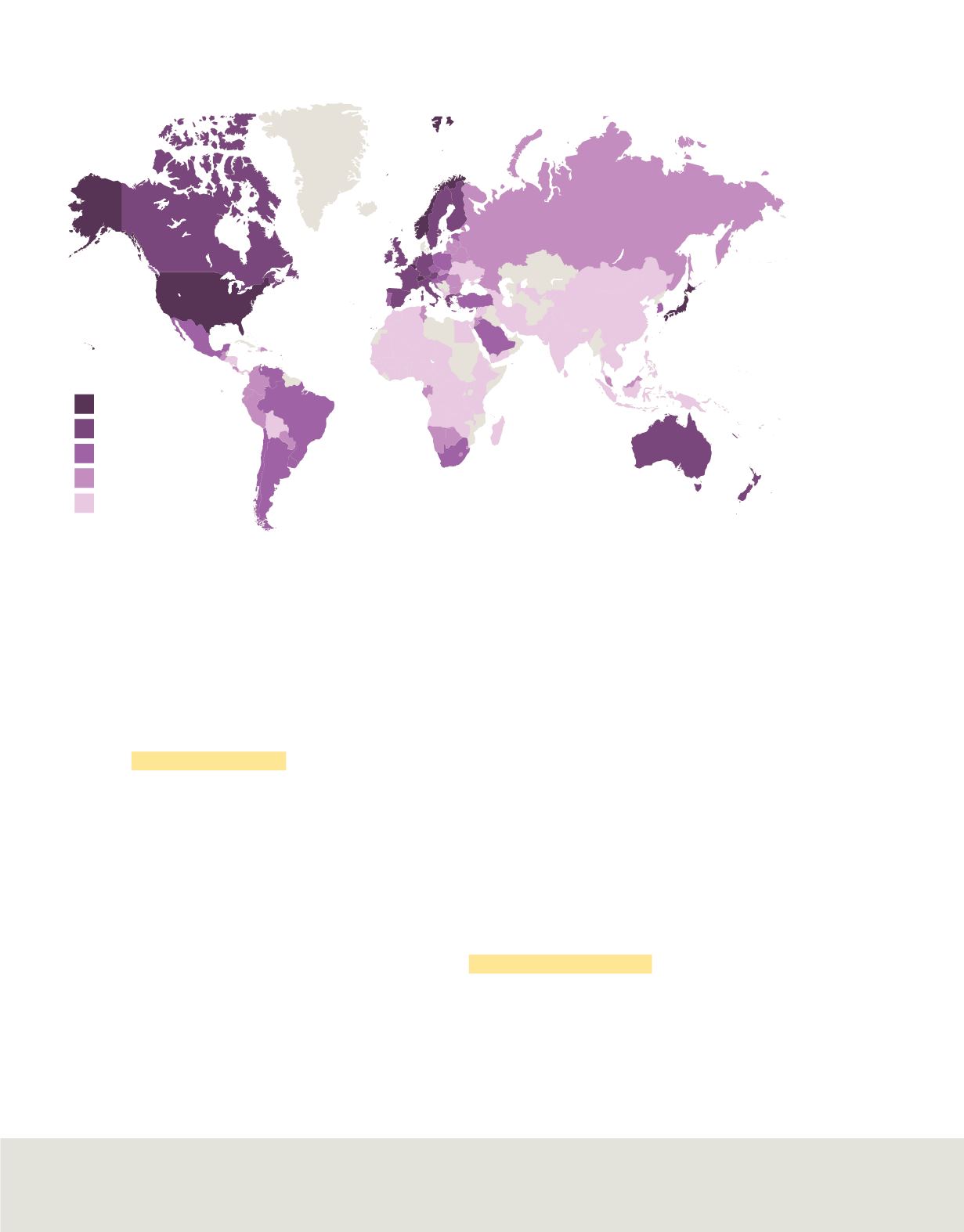
Global Consumption of Natural Resources per Capita (expressed in US dollars)
More than 15,000
7,500-15,000
2,000-7,500
1,000-2,000
Less than 1,000
Renewable resources
Plans for long-term use of natural resources must take into consideration the difference
between the two groups of natural resources—renewable and nonrenewable resources.
Those resources that are replaced by natural processes faster than they are consumed
are called
renewable resources.
Solar energy is considered a renewable resource
because the supply appears to be endless. Agricultural plants, animals, clean water, and
clean air are considered renewable because they are normally replaced faster than they
are consumed. However, the supply of these resources is not unlimited. If the human
demand exceeds the supply of any natural resource, the resource might become
depleted.
Nonrenewable resources
Resources that are found on Earth in limited amounts or that are replaced by natural
processes over extremely long periods of time are called
nonrenewable resources.
Fossil
fuels such as coal, natural gas, and oil, and mineral deposits, such as radioactive
uranium, are considered nonrenewable resources. Species are considered renewable
resources until the last individual of a species dies. When extinction occurs, a species is
nonrenewable because it is lost forever.
Figure 16
This map shows the consumption of natural resources per person.
Explain
why the use of natural resources is high for developed countries but is low for developing countries.
114
Module 5 • Biodiversity and Conservation