



 107 / 121

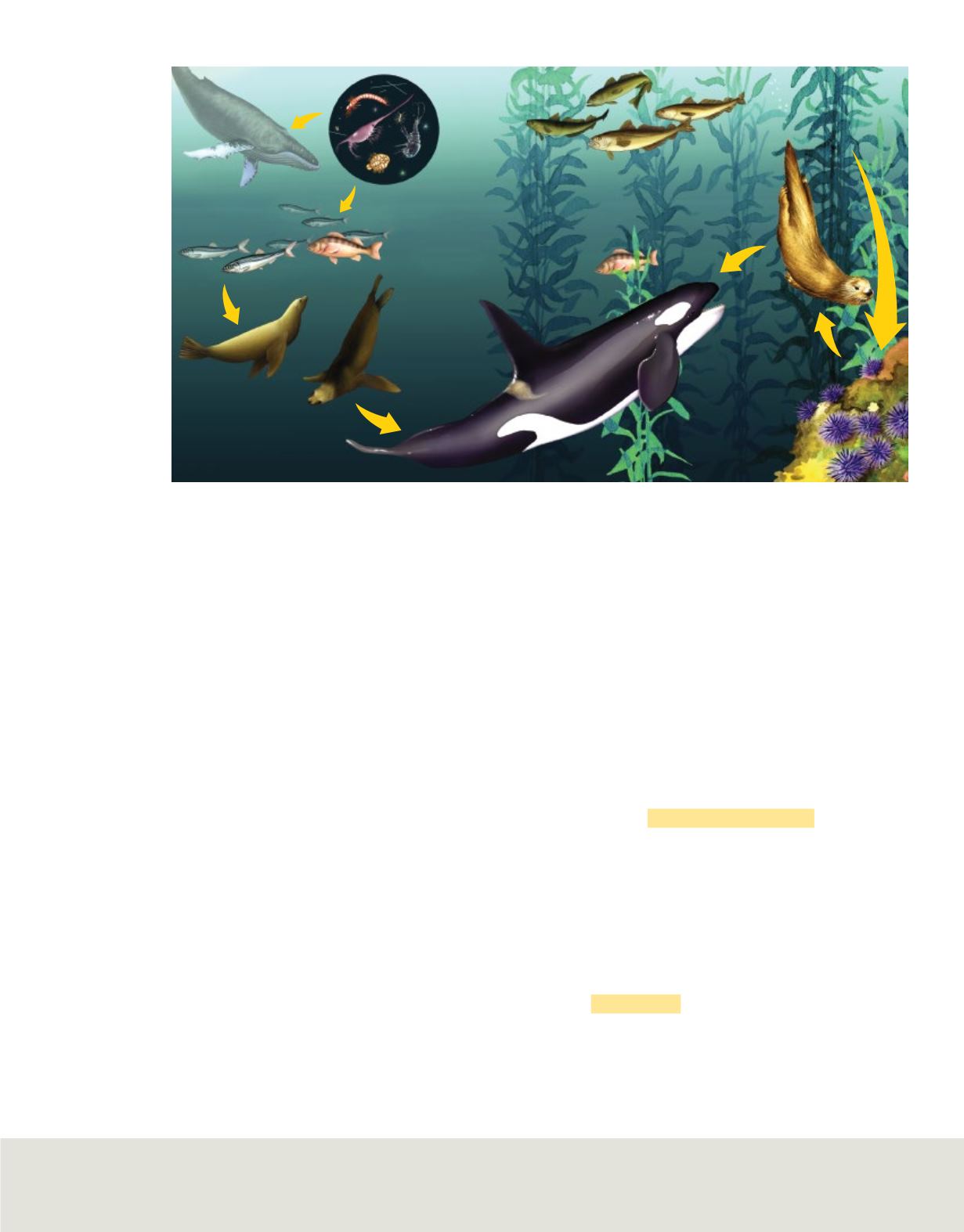
Whales
Fish
Sea lions and
harbor seals
Killer whales
Kelp forests
Sea urchins
Sea otters
Figure 12
A declining population of one species can affect an entire ecosystem. When the number of harbor
seals and sea lions declined, killer whales ate more sea otters. The decline in sea otter population led to an
increase in sea urchins, which eat kelp. This led to the ultimate decline in kelp forests.
Disruption of habitat
Some habitats might not be destroyed, but they can be
disrupted. For example, off the coast of Alaska, a chain of events occurred in the 1970s
that demonstrates how the declining numbers of one member of a food web can affect
the other members. As you can see from the chain of events shown in
Figure 12
, the
decline of one species can affect an entire ecosystem. When one species plays such a
large role in an ecosystem, that species is called a keystone species. A decline in various
fish populations, possibly due to overfishing, has led to a decline in sea lion and harbor
seal populations. Some scientists hypothesize that climate change also played a role in
the decline. This started a chain reaction that affected many species.
Fragmentation of habitat
The separation of an ecosystem into small pieces of land is called
habitat fragmentation.
Populations often stay within the confines of the small parcel because they are unable
or unwilling to cross the human-made barriers. The smaller the parcel of land, the fewer
species it can support. Fragmentation also reduces genetic diversity because it reduces
the opportunities for individuals in one area to reproduce with individuals from another
area. Smaller, separated, and less genetically diverse populations are less able to resist
disease or respond to changing environmental conditions.
Carving the large ecosystem into small parcels increases the number of edges, creating
edge effects, as illustrated in
Figure 13
, on the next page.
Edge effects
are different
environmental conditions that occur along the boundaries of an ecosystem. For
example, edges of a forest near a road have different abiotic factors, such as
temperature, wind, and humidity, than does the interior of a forest.
Lesson 2 • Threats to Biodiversity
109