


 109 / 121

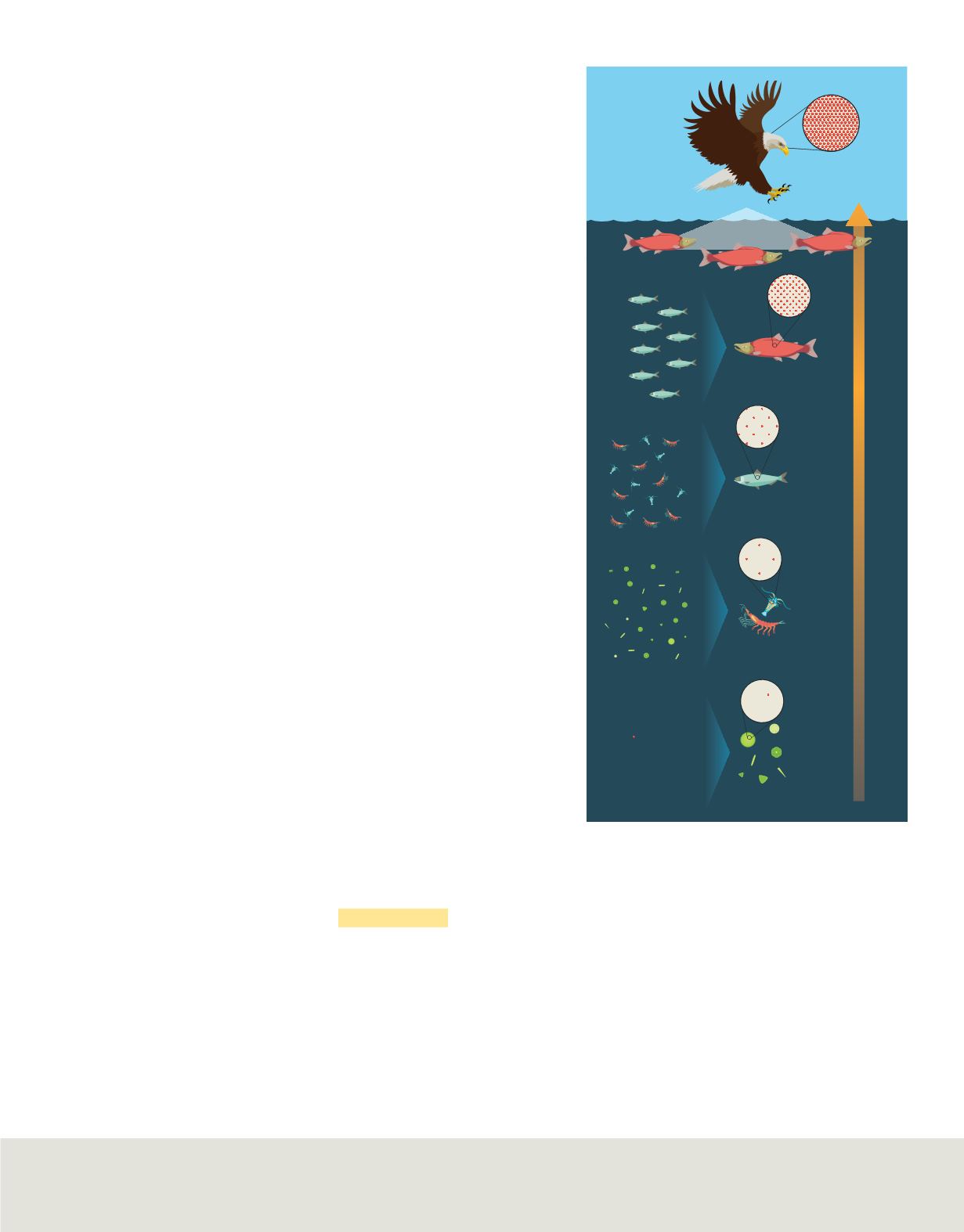
25 ppm
Fish-eating birds
0.5 ppm
Small fish
0.04 ppm
Zooplankton
0.001 ppm
Producers
0.000003 ppm
Water
2 ppm
Large fish
Figure 14
The concentration of toxic substances
increases as the trophic level in a food chain
increases.
An example of biological magnification is shown in
Figure 14
. The concentration of a toxic substance is
relatively low when it enters the food web; it is only
at 0.001 parts per million (ppm) in producers. The
concentration of a toxic substance in individual
organisms increases as it spreads to higher trophic
levels, ultimately resulting in a concentration of 25
ppm in the organisms that live in the highest trophic
level of the food web.
Current research implies that these substances might
disrupt normal processes in some organisms. For
example, DDT might have played a role in the near
extinction of the American bald eagle and the
peregrine falcon. DDT is a pesticide that was used
from the 1940s to the 1970s to control crop-eating and
disease-carrying insects. DDT proved to be a highly
effective pesticide, but evidence suggested that it
caused the eggshells of fish-eating birds to be fragile
and thin, which led to the death of the developing
birds. Once these toxic effects were discovered, the use
of DDT was banned in some parts of the world.
Acid precipitation
Another pollutant that affects
biodiversity is acid precipitation. When fossil fuels are
burned, sulfur dioxide is released into the
atmosphere. In addition, the burning of fossil fuels in
automobile engines releases nitrogen oxides into the
atmosphere. These compounds react with water and
other substances in the air to form sulfuric acid and
nitric acid. These acids eventually fall to the surface of
Earth in rain, sleet, snow, or fog. Acid precipitation
removes calcium, potassium, and other nutrients
from the soil, depriving plants of these nutrients. It
damages plant tissues and slows their growth.
Sometimes, the acid concentration is so high in lakes,
rivers, and streams that fish and other organisms die.
Eutrophication
Another form of water pollution,
called eutrophication, destroys underwater habitats for
fish and other species.
Eutrophication
(yoo troh fih KAY shun) occurs when fertilizers,
animal waste, sewage, or other substances rich in nitrogen and phosphorus flow into
waterways, causing extensive algae growth.
The algae use up the oxygen supply during their rapid growth and after their deaths
during the decaying process. Other organisms in the water suffocate. In some cases,
algae also give off toxins that poison the water supply for other organisms. Eutrophication
is a natural process, but human activities often accelerate the rate at which it occurs.
Lesson 2 • Threats to Biodiversity
111