


 110 / 121

Mathisa/Shutterstock.com
Go online to follow your personalized learning path to review, practice,
and reinforce your understanding.
Summary
• Some scientists estimate that
the current rate of species
extinction is abnormally high.
• Species on islands are particu-
larly vulnerable to extinction.
• Historically, overexploitation by
humans has led to the extinc-
tion of some species.
• Human activities can result in a
decrease in biodiversity.
Demonstrate Understanding
1.
Describe
what happens when species cannot adapt to
ecosystem changes that are too fast.
2.
Explain
three ways that anthropogenic changes
threaten biodiversity.
3.
Choose
one of the factors that threatens biodiversity
and suggest one way in which biodiversity can be
preserved in a real-life scenario.
4.
Summarize
how the overharvesting of a single spe-
cies, such as the fish eaten by sea lions, can affect an
entire ecosystem.
Explain Your Thinking
5.
Design
a planned community that preserves biodiversity
and accommodates the human population. Work in
small groups to accomplish this task.
6.
Survey
your community to identify at least five threats
to biodiversity and suggest ways in which biodiversity
can be preserved.
Check Your Progress
Invasive species
Introduced species are either intentionally or uninten-
tionally transported to a new habitat. Not all introduced
species become invasive. Species that can significantly
modify or disrupt that habitat are known as
invasive
species.
These species are not a threat to biodiversity in
their native habitats. Predators, parasites, and competition
between species keep the native ecosystem in balance.
However, when these species are introduced into a new
area, these controlling factors are not in place. Invasive
species often reproduce in large numbers because of a
lack of predators.
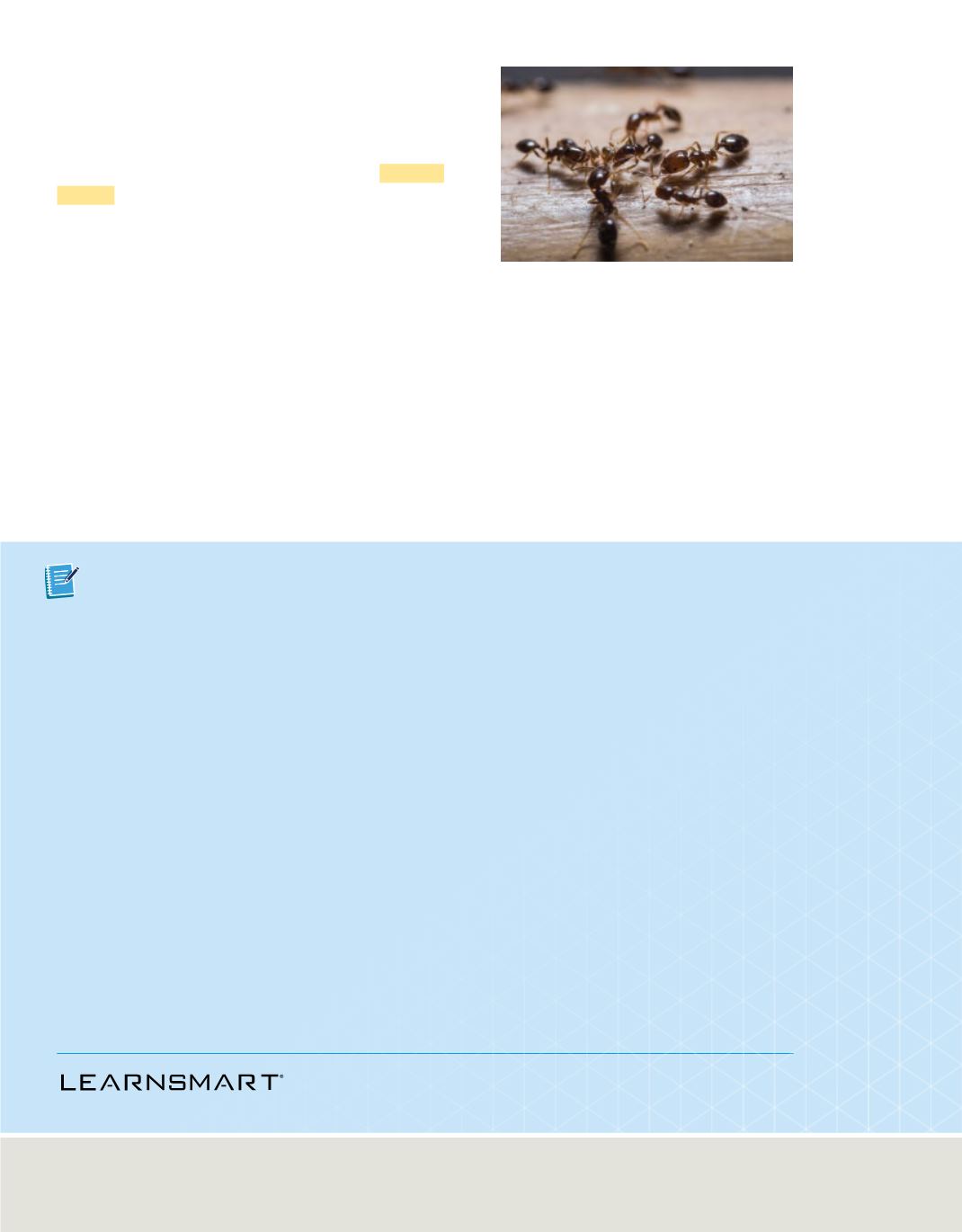
The imported fire ant shown in
Figure 15
is a species that was accidentally introduced
to the United States through the port of Mobile, Alabama, in the 1920s by ships from
South America. The fire ants spread throughout the southern and southwestern United
States. Fire ants attack and feed on some wildlife, such as newborn deer and hatching
or newly hatched ground-nesting birds. Invasive species are a worldwide environmental
problem. An estimated 40 percent of the extinctions that have occurred since 1750 are a
result of invasive species, and billions of dollars are spent every year in an effort to clean
up or control the damage caused by invasive species.
Figure 15
Invasive species, such as the fire ant,
can negatively affect biodiversity.
112
Module 5 • Biodiversity and Conservation