



 103 / 121

Dirk Ercken/Shutterstock.com
Extinction Rates
Species become extinct because they can no longer survive and reproduce in an environ-
ment. If members cannot adjust to change that is too fast or drastic, the opportunity for
the species to evolve is lost. Many species that lived on Earth millions of years ago have
become extinct. Paleontologists study fossils of those species. Not all species that have
become extinct have been gone long enough to leave fossils. Several species of amphibi-
ans, insects, and even mammals have become extinct over the past several decades. The
gradual process of species becoming extinct is known as
background extinction.
Stable
ecosystems can be changed by the activity of other organisms, climate changes, or natural
disasters. This natural process of extinction is not what concerns scientists. Instead, many
worry about a recent increase in the rate of extinction. Some scientists predict that
between one-third and two-thirds of all plant and
animal species will become extinct during the
second half of this century. Most of these extinc-
tions will occur near the equator, and affect
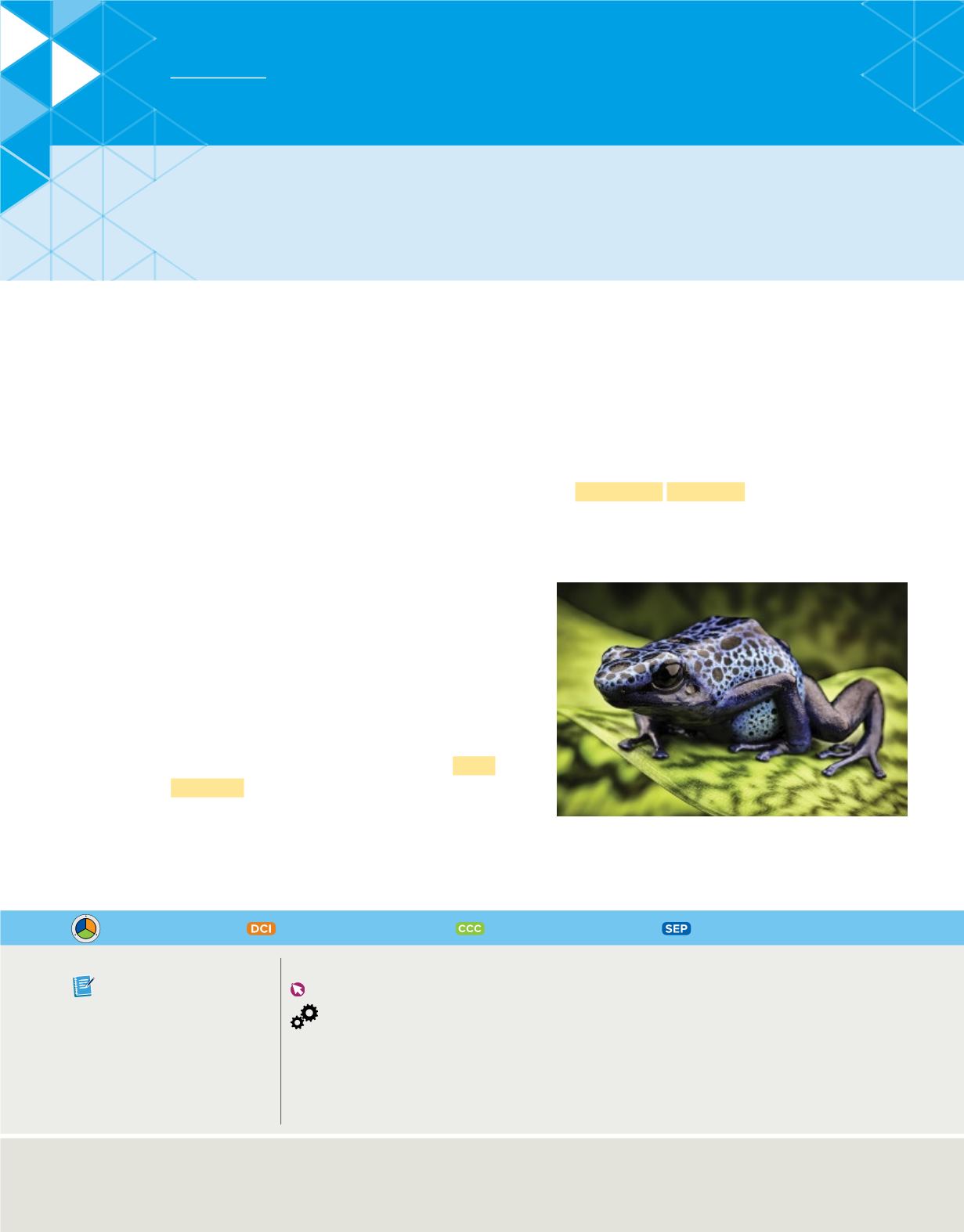
organisms like the frog in
Figure 9
.
Some scientists estimate that the current rate of
extinction is about 1000 times the normal back-
ground extinction rate. They think that we are
witnessing a period of mass extinction.
Mass
extinction
is an event in which a large percentage
of all living species become extinct in a relatively
short period of time. The last mass extinction
occurred about 65 million years ago, as illustrated
in
Table 1
on the next page.
Figure 9
Animals that live in the tropical rain forests, like
the blue poison frog, are more likely to go extinct than
animals in other areas.
LESSON 2
THREATS TO BIODIVERSITY
FOCUS QUESTION
How can the decline of a single species affect an entire
ecosystem?
Disciplinary Core Ideas
Crosscutting Concepts
Science & Engineering Practices
3D THINKING
C
C
C
S
E
P
D
C
I
COLLECT EVIDENCE
Use your Science Journal to
record the evidence you collect as
you complete the readings and
activities in this lesson.
INVESTIGATE
GO ONLINE
to find these activities and more resources.
Applying Practices:
Evaluating Impacts of Environmental Change on
Populations
HS-LS4-5.
Evaluate evidence that supporting claims that
changes in environmental
conditions
may result in:
(1) increases in the number of individuals of some species, (2) the
emergence of new species over time, and (3) the extinction of other species.
Lesson 2 • Threats to Biodiversity
105