


 113 / 121

(t) Adam Gault/Digital Vision/PunchStock; (b) George Clerk/E+/Getty Images
Renewable versus nonrenewable
resources
The classification of a resource as renewable or
nonrenewable depends on the context in which
the resource is being discussed. A single tree or
a small group of trees in a large forest
ecosystem is renewable because replacement
trees can be planted or can regrow from seeds
present in the soil. Enough of the forest is still
intact to serve as a habitat for the organisms
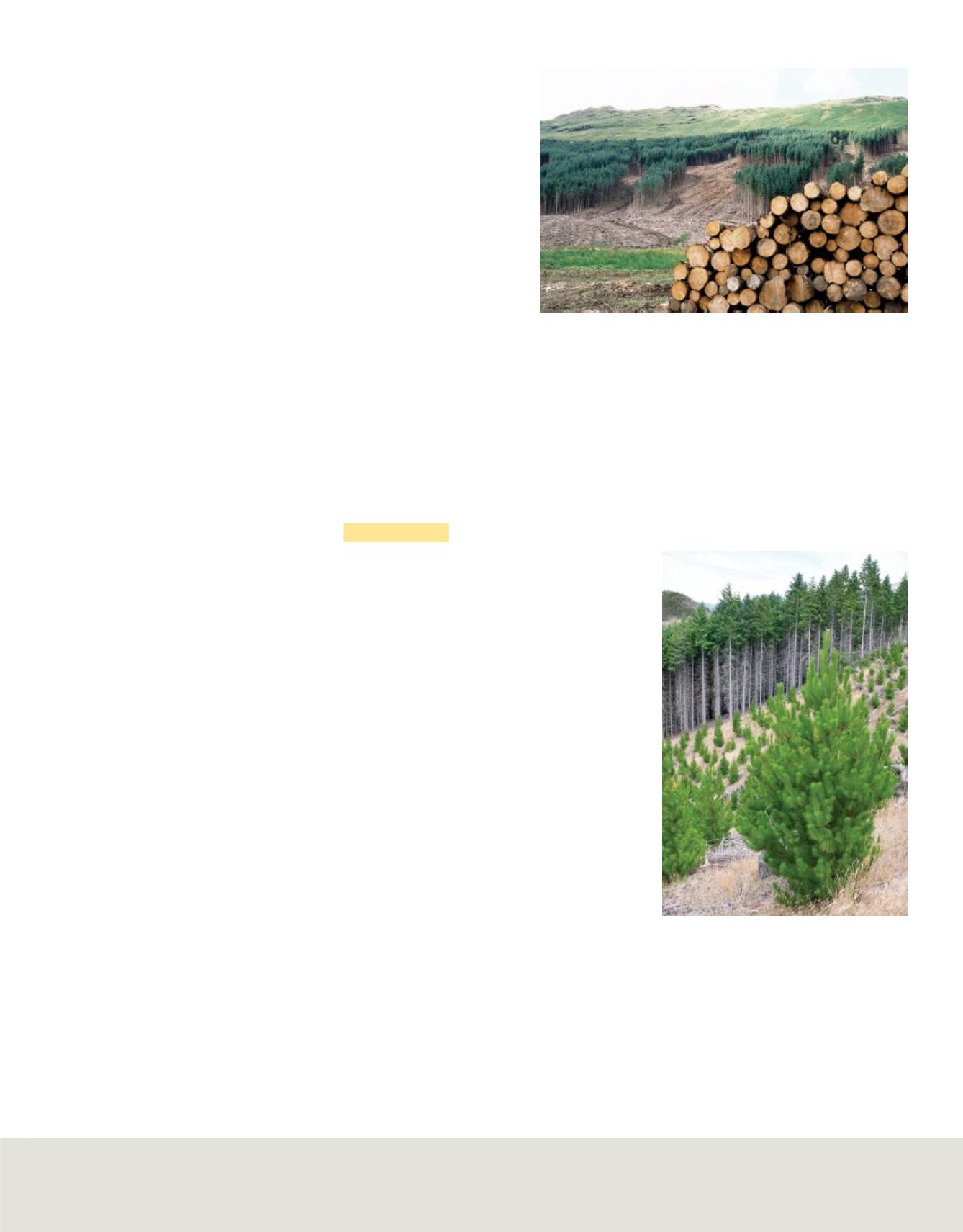
that live there. However, when the entire forest
is cleared, as shown in
Figure 17
, the forest is
not considered a renewable resource. The
organisms living in the forest have lost their
habitat, and they most likely will not survive. In
this example, it is possible that more than one natural resource is nonrenewable:
the forest and any species that might become extinct.
Sustainable use
One approach to using natural resources, called sustainable use, is demonstrated in
Figure 18
.
Just as the name implies,
sustainable use
means using resources at a rate at which they can be
replaced or recycled while preserving the long-term environmental
health of the biosphere. Conservation of resources includes reducing
the amount of resources that are consumed, recycling resources that
can be recycled, and preserving ecosystems, as well as using them in
a responsible manner. Sustainable use can be accomplished on an
individual level, by companies and industries, or by entire countries.
Protecting Biodiversity
In Lesson 2, you learned how human activities have affected
many ecosystems. Many efforts are underway worldwide to
slow the loss of biodiversity and to work toward sustainable use
of natural resources. When evaluating these efforts and other
solutions, it is important to take into account a range of
constraints, including cost, safety, reliability, and aesthetics, and
to consider social, cultural, and environmental impacts.
Protected areas in the United States
Conservation biologists recognize the importance of establishing
protected areas where biodiversity can flourish. Such places
should remain relatively undisturbed by human activies that
could destroy plant and animal life. The United States
established its first national park, Yellowstone National Park, in
1872 to protect the area’s geological features. Many additional
national parks and nature reserves have been established since 1872.
Figure 17
This cleared forest is considered a nonrenewable
resource. There is not enough of it intact to provide a habitat
for the organisms that live there.
Figure 18
Replacing resources
preserves the health of the biosphere.
Explain
why this process is considered a
sustainable use of a resource.
Lesson 3 • Conserving Biodiversity
115