



 55 / 121

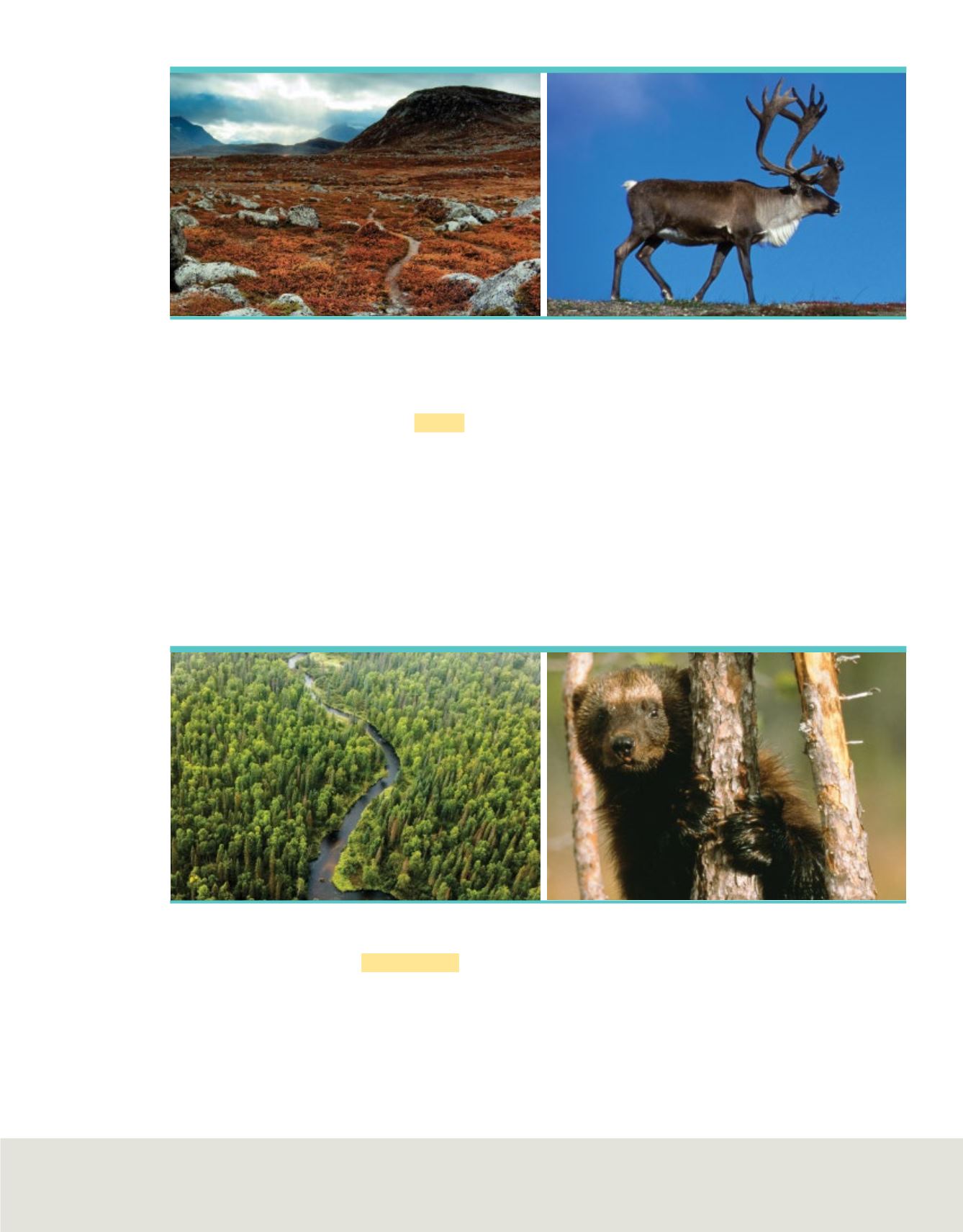
Tundra
Extending in a band below the polar ice caps
across northern Europe, North America, and
Siberia in Asia is the tundra. The
tundra
is a
treeless biome with a layer of permanently
frozen soil below the surface called permafrost.
Although the ground thaws to a depth of a few
centimeters in the summer, its constant cycles
of freezing and thawing do not allow tree roots
to grow. Plants that are able to survive in the
tundra have very shallow roots. Animals like
the caribou in
Figure 7
have adapted to tundra
conditions.
Boreal forest
South of the tundra is the
boreal forest,
a band
of dense evergreen forest extending across
North America, Europe, and Asia. Also called
the northern coniferous forest, or taiga, this
biome’s summers are longer and warmer than
tundra summers, and its ground lacks a
permafrost layer. Animals like the wolverine
in
Figure 8
have adapted to the cold.
Figure 7
Tundra
Average precipitation:
15–25 cm per year
Temperature range:
–70°C to 12°C
Plant species:
short grasses, shrubs
Animal species:
caribou, polar bears, birds, insects, wolves,
arctic hares, musk ox
Geographic location:
south of the polar ice caps in the
Northern Hemisphere
Abiotic factors:
soggy summers; permafrost; cold and dark
much of the year
Figure 8
Boreal forest
Average precipitation:
30–84 cm per year
Temperature range:
–54°C to 21°C
Plant species:
spruce and fir trees, deciduous trees, small
shrubs
Animal species:
birds, moose, beavers, deer, wolverines, lynx
Geographic location:
northern part of North America,
Europe, and Asia
Abiotic factors:
summers are short and moist; winters are
long, cold, and dry
(tl)ajliikala/Moment/Getty Images; (tr)Jason Witherspoon/Design Pics; (bl) Pete Niesen/Alamy Stock Photo; (br)Magnus Elander/Johner Images/Alamy
Lesson 2 • Terrestrial Biomes
57