



 54 / 121

C03_028A
Antarctic circumpolar current
Equatorial counter current
Gulf stream
Japan current
Labrador current
Earth’s Ocean Currents
Warm currents
Cold currents
C03_009A
Winds on Earth
60
°
N
Westerlies
Westerlies
Northeast
trade winds
Southeast
trade winds
60
°
S
30
°
N
30
°
S
0
°
C03_029A
CO
2
(ppm)
Temperature (°C)
Year
Temperature and
CO
2
Concentration
South Pole
Ozone hole
Total Ozone (Dobson Units)
110 220 330 440550
C03_031A
Reflected
solar radiation
Heat from
surface
Heat trapped
by greenhouse
gases
Greenhouse E ect
Solar
radiation
Absorbed solar
radiation
Aura satellite/NASA
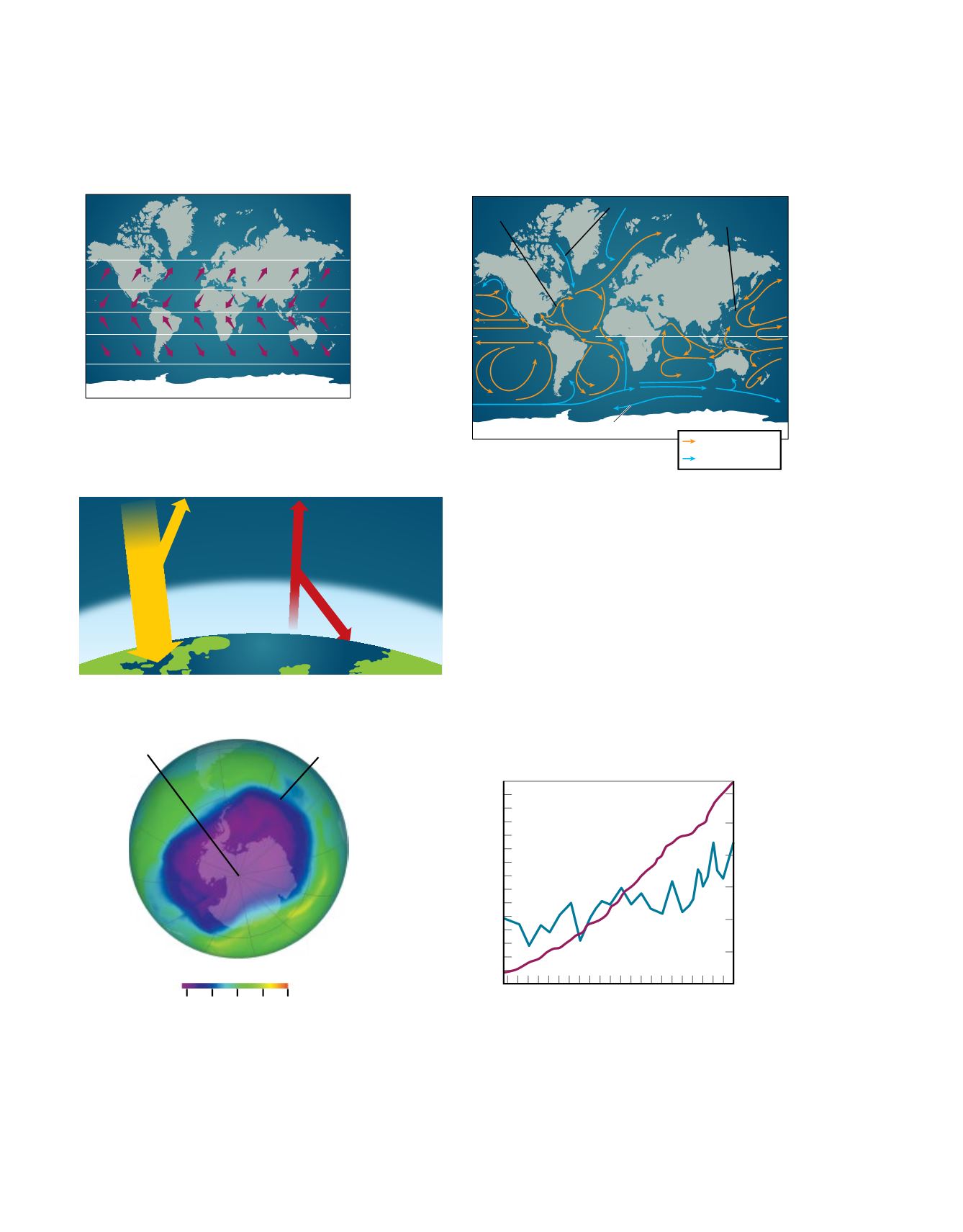
Ocean currents carry warm water toward the poles.
As the water cools, it sinks toward the ocean floor
and moves toward tropical regions.
Human Impact on the Atmosphere
Earth’s surface is warmed by the greenhouse effect.
Certain gases in Earth’s atmosphere, including
naturally occurring water vapor, reduce the amount
of energy Earth radiates into space. Other important
greenhouse gases are carbon dioxide and methane.
The measured increase of carbon dioxide (CO
2
) in
the atmosphere (red line) is mainly due to the
burning of fossil fuels. As carbon dioxide levels have
increased, the average global temperature (blue
line) has increased.
The ozone layer is a protective layer in the atmosphere that
absorbs most of the harmful UV radiation from the Sun.
Atmospheric studies have indicated that chlorofluorocarbons
(CFCs) contribute to a seasonal reduction in ozone
concentration over Antarctica, forming the Antarctic ozone
hole.
Figure 6
Visualizing Global Effects on Climate
Some parts of Earth receive more heat from the Sun. Earth’s winds and ocean
currents contribute to climate and balance the heat on Earth. Many scientists think
human impacts on the atmosphere upset this balance.
Winds are created from temperature imbalances.
Distinct global wind systems transport cold air to warm
areas and warm air to cold areas.
56
Module 3 • Communities, Biomes, and Ecosystems