



 52 / 121

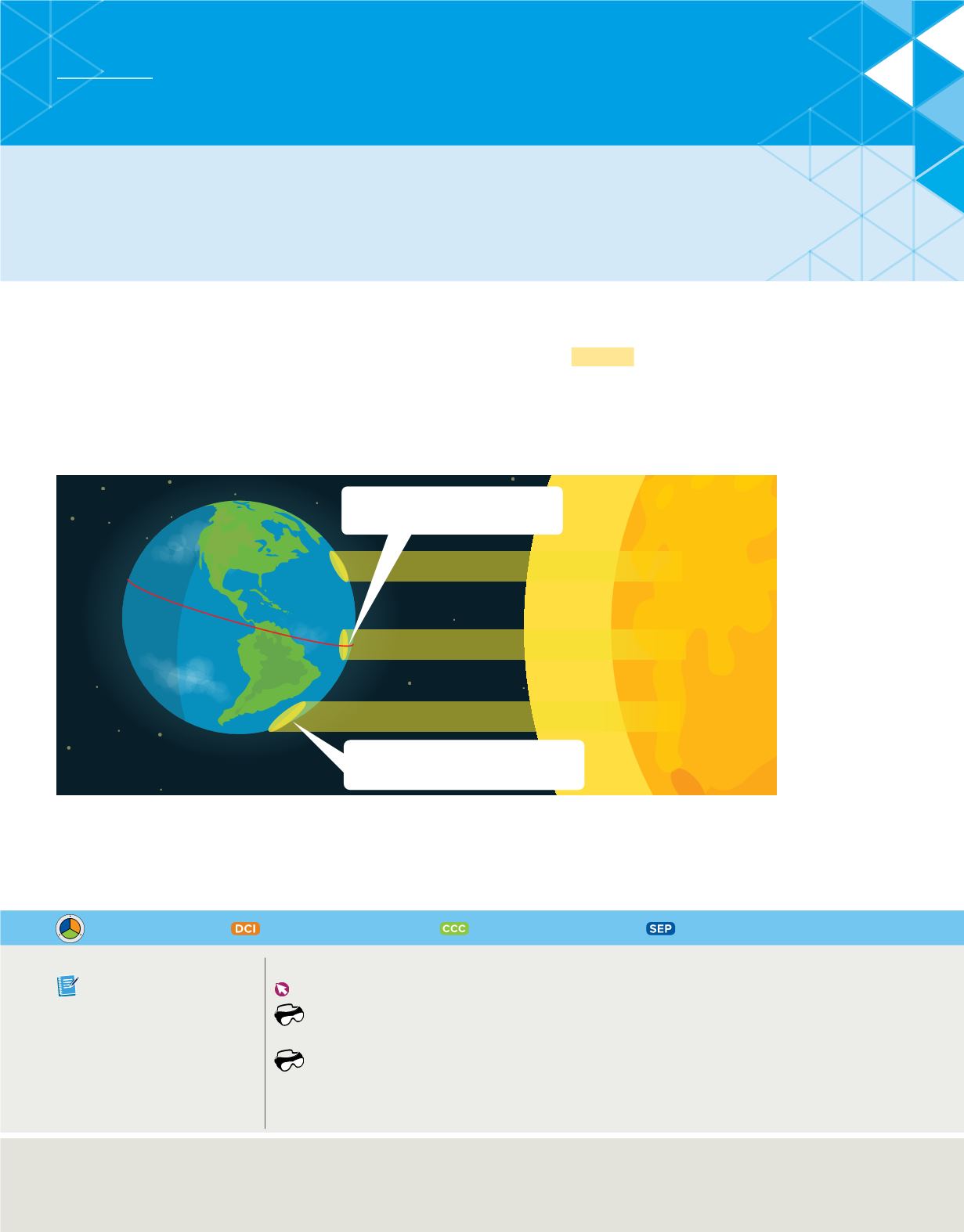
Each square meter of area at the equator
receives more energy from the Sun than
each square meter at the poles.
South Pole
Sun rays
Sun rays
Sun rays
Equator
North Pole
Near the poles, the Sun’s energy strikes Earth
at an angle, spreading out the energy received
over a larger area than near the equator.
Effects of Latitude and Climate
Regardless of where you live, you are affected by weather and climate.
Weather
is the
condition of the atmosphere at a specific place and time. What causes the variation in
the weather patterns on Earth? One of the keys to understanding weather and its effect
on biological communities is to be aware of latitude and climatic conditions.
Figure 4
Because of Earth’s curved surface, the Sun’s rays strike the equator more directly than areas toward the north
or south poles.
FOCUS QUESTION
What characteristics do scientists consider when they are
describing different regions of the world?
LESSON 2
TERRESTRIAL BIOMES
Disciplinary Core Ideas
Crosscutting Concepts
Science & Engineering Practices
3D THINKING
C
C
C
S
E
P
D
C
I
COLLECT EVIDENCE
Use your Science Journal to
record the evidence you collect as
you complete the readings and
activities in this lesson.
INVESTIGATE
GO ONLINE
to find these activities and more resources.
BioLab:
How does your biome grow?
Plan and carry out an investigation
to determine the impact abiotic factors have on biomes.
Virtual Investigation:
Ecosystems, Organisms, and Trophic Levels
Use a model
to determine
energy
flow within
food webs
of biomes and
ecosystems.
54
Module 3 • Communities, Biomes, and Ecosystems