



 39 / 121

sedimentation
bicarbonate (HCO
3
-
)
decay
respiration
Soils
dead
organisms
and animal
waste
coal
natural gas
oil
CO
2
in Atmosphere
di usion
Ocean
Land plants
combustion
photosynthesis
destruction of vegetation
Photo by Dave Carr/Flickr RF/Getty Images
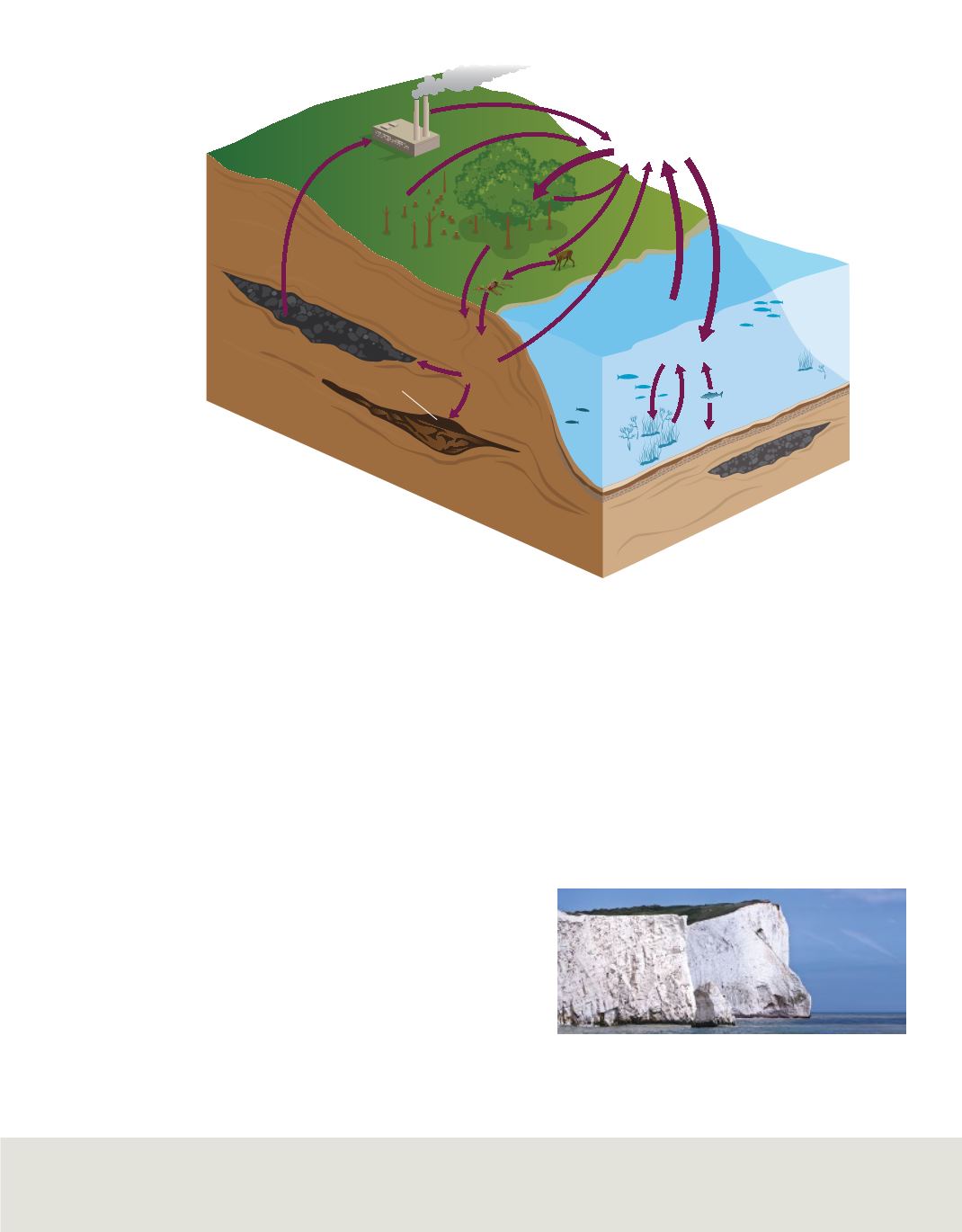
Figure 19
The diagram shows how carbon
and oxygen cycle through the environment.
Describe
how carbon moves from the abiotic
to the biotic parts of the ecosystem.
The carbon and oxygen cycles
Carbon and oxygen often combine to form
molecules essential for life, including carbon
dioxide and simple sugars. The cycles of these
two elements are shown in
Figure 19
.
Photosynthesis and cellular respiration are
important components of the carbon cycle, in
which carbon is exchanged among the bio-
sphere, atmosphere, oceans, and geosphere
through chemical, physical, and biological
processes. During photosynthesis, plants and
algae convert carbon dioxide and water into
carbohydrates and release oxygen back into the
air. Living organisms consume oxygen and
release carbon dioxide during cellular respira-
tion. Carbon dioxide also enters the atmo-
sphere as dead organisms decay, and carbon
enters the soil through the decomposition of
plant and animal matter and animal waste.
Carbon enters a long-term cycle when organic
matter is buried underground and converted to
fossil fuels such as coal, oil, or gas. Carbon
dioxide returns to the atmosphere those fossil
fuels combust (burn).
Carbon and oxygen enter long-term cycles
when they combine with calcium to create
calcium carbonate. When the shells of some sea
creatures fall to the ocean floor, they form vast
deposits of calcium carbonate in limestone
rock, such as those found in the white cliffs
pictured in
Figure 20
. Carbon and oxygen
remain in these deposits until weathering and
erosion release them from the rocks.
Figure 20
The white cliffs in Dover, England, are com-
posed almost entirely of calcium carbonate, or chalk. The
carbon and oxygen found in these cliffs are in the long-
term part of the cycle for carbon and oxygen.
Lesson 3 • Cycling of Matter
41