



 38 / 121

Solar
energy
Lake
Transpiration
Condensation
Evaporation
Precipitation
Ocean
Runo
Percolation
in soil
Groundwater (aquifer)
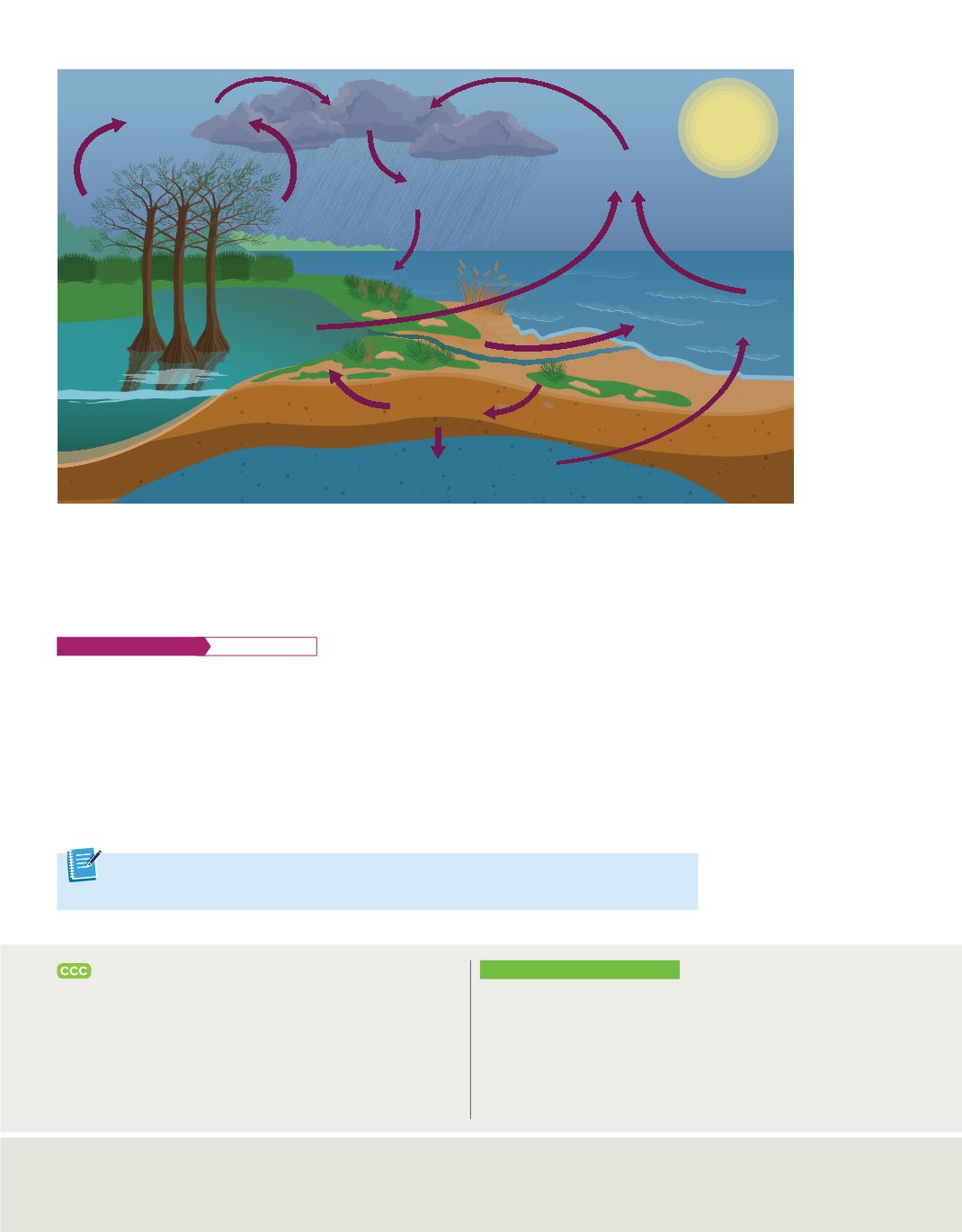
The water cycle
Water moves through the biosphere through the water cycle, shown in
Figure 18.
EARTH SCIENCE
Connection
Energy from the Sun causes water to constantly
evaporate from the Earth’s surface. Water enters the atmosphere in a form called water
vapor. Approximately 90 percent of water vapor evaporates from oceans, lakes, and
rivers; about 10 percent evaporates from the surfaces of plants through a process called
transpiration. Clouds form when water vapor rises, cools, and condenses into droplets
around dust particles in the atmosphere. Water falls from clouds to the Earth’s surface
as precipitation in forms such as rain or snow. Some surface water percolates, or moves
through, the soil, and enters groundwater. Other water flows over the Earth’s surface as
runoff, and enters streams, rivers, lakes, and oceans. The cycle then continues.
Get It?
Identify
three processes in the water cycle.
Figure 18
The water cycle is the process by which water is continuously cycled through the biosphere.
CROSSCUTTING CONCEPTS
Systems and Systems Models
Describe the boundaries and
specifications for a model of an ecosystem at your school. How do
the parameters of your model help make it useful? Write the
specifications into a proposal for the model.
STEM CAREER Connection
Water Resource Engineer
Civil engineers who create systems that ensure that
people have a continuous supply of clean, uncon-
taminated water are called water resource
engineers.
40
Module 2 • Principles of Ecology