



 41 / 121

detritus
mineable rock
plants
decomposers
plant and
animal wastes
Biotic
Community
sewage treatment plants
organisms
phosphate
in solution
phosphate
in soil
fertilizer
Nitrogen moves through the food web as organisms consume plants and each other. It
returns to the soil through animal wastes and by the decomposition of dead matter into
ammonia. Organisms in the soil convert ammonia into nitrogen compounds that can be
used by plants. In a process called
denitrification,
some soil bacteria convert NO
2
−
and
NO
3
−
back into nitrogen gas (N
2
), which returns to the atmosphere. Human activities
also play a role in the nitrogen cycle. The high nitrogen content in runoff from fertilizer
can create algae overgrowth, call algae blooms. Nitrogen-oxygen compounds released
into the atmosphere from factories combine with water to form acid rain.
The phosphorous cycle
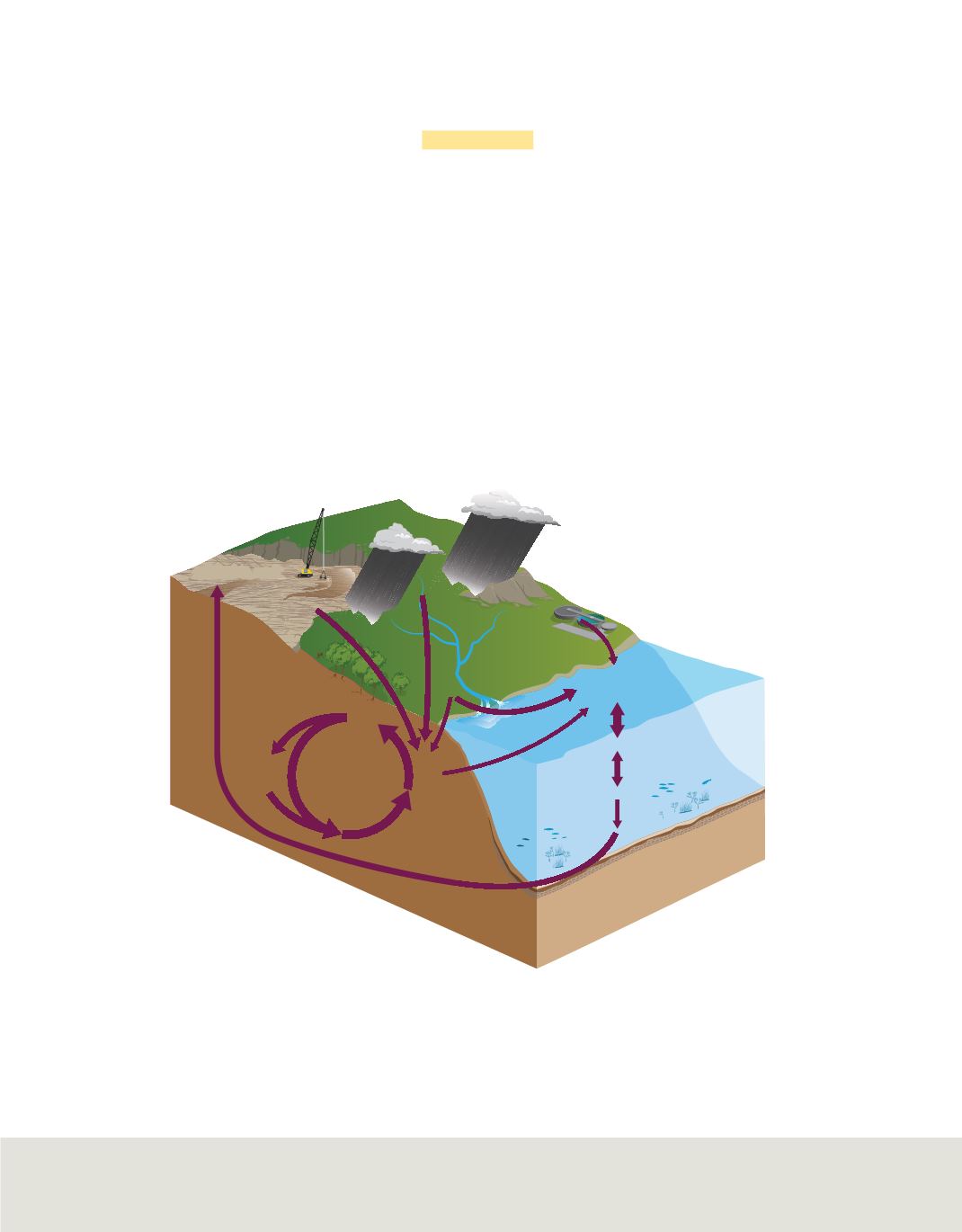
Phosphorus is an element that is essential for the growth and development of
organisms.
Figure 22
shows both the short-term and long-term phases of the
phosphorus cycle. In the short-term cycle, phosphorus in phosphates in solution are
cycled from the soil to producers and then from the producers to consumers. When
organisms die or produce waste products, decomposers return the phosphorus to the
soil where it can be used again.
Figure 22
The phosphorus cycle has a
short-term cycle and a long-term cycle.
Lesson 3 • Cycling of Matter
43